|
|
OPC UA Specification |
|
OPC 10000-12 |
|
|
OPC Unified Architecture Part 12: Discovery and Global Services
Release 1.05.04 2024-10-15
|

|
|
OPC UA Specification |
|
OPC 10000-12 |
|
|
OPC Unified Architecture Part 12: Discovery and Global Services
Release 1.05.04 2024-10-15
|
|
Specification Type |
Industry Standard Specification |
Comments: |
|
|
|
|
|
|
|
Document |
OPC 10000-12 |
|
|
|
Title: |
OPC Unified
Architecture |
Date: |
2024-10-15 |
|
|
|
|
|
|
Version: |
Release 1.05.04 |
Software |
MS-Word |
|
|
|
Source: |
OPC 10000-12 - UA Specification Part 12 - Discovery and Global Services 1.05.04.docx |
|
|
|
|
|
|
Author: |
OPC Foundation |
Status: |
Release |
|
|
|
|
|
Page
3 Terms, definitions, and conventions
4.2 Registration and Announcement of Applications
4.2.2 Hosts with a LocalDiscoveryServer
4.2.3 Hosts without a LocalDiscoveryServer
4.3 The Discovery Process for Clients to Find Servers
4.3.2 Simple Discovery with a DiscoveryUrl
4.3.4 MulticastSubnet Discovery
4.3.6 Combined Discovery Process for Clients
4.4 The Discovery Process for Reverse Connections
4.4.3 Global Discovery for Reverse Connections
5.2 Security Considerations for Multicast DNS
5.3.3 Multiple MulticastSubnet
5.3.5 Domain Names and MulticastSubnets
6.3 Client connections to global services
6.5 Application Registration Workflow
6.6.5 ApplicationRecordDataType
6.6.11 QueryServers (deprecated)
6.6.12 ApplicationRegistrationChangedAuditEventType
7.9 Information Model for Pull Certificate Management
7.9.2 CertificateDirectoryType
7.9.12 CertificateRequestedAuditEventType
7.9.13 CertificateDeliveredAuditEventType
7.10 Information Model for Push Certificate Management
7.10.4 ServerConfigurationType
7.10.12 ApplicationConfigurationType
7.10.13 ApplicationConfigurationFolderType
7.10.15 TransactionDiagnosticsType
7.10.17 CertificateUpdateRequestedAuditEventType
7.10.18 CertificateUpdatedAuditEventType
8.5 Information Model for Pull Management
8.5.2 KeyCredentialManagementFolderType
8.5.4 KeyCredentialServiceType
8.5.8 KeyCredentialAuditEventType
8.5.9 KeyCredentialRequestedAuditEventType
8.5.10 KeyCredentialDeliveredAuditEventType
8.5.11 KeyCredentialRevokedAuditEventType
8.6 Information Model for Push Management
8.6.2 KeyCredentialConfigurationFolderType
8.6.4 KeyCredentialConfiguration
8.6.5 KeyCredentialConfigurationType
8.6.9 KeyCredentialUpdatedAuditEventType
8.6.10 KeyCredentialDeletedAuditEventType
9.6 Information Model for Requesting Access Tokens
9.6.2 AuthorizationServicesFolderType
9.6.4 AuthorizationServiceType
9.6.7 AccessTokenIssuedAuditEventType
9.7 Information Model for Configuring Servers
9.7.2 AuthorizationServiceConfigurationFolderType
9.7.4 AuthorizationServiceConfigurationType
10.2 Handling of OPC UA Namespaces
Annex A (informative) Deployment and Configuration
A.2 Resolving References to Remote Servers
Annex B (normative) NodeSet and Constants
Annex C (normative) OPC UA Mapping to mDNS
C.1 DNS Server (SRV) Record Syntax
C.2 DNS Text (TXT) Record Syntax
Annex D (normative) Server Capability Identifiers
Annex E (normative) DirectoryServices
E.1 Global Discovery via Other Directory Services
Annex F (normative) Local Discovery Server
F.1 Certificate Store Directory Layout
F.2 Installation Directories on Windows
Annex G (normative) Application Setup
G.1 Application Setup with PullManagement
G.2 Application setup with the PushManagement
Annex H (informative) Comparison with RFC 7030
H.4 Client Certificate Reissuance
H.6 Certificate Signing Request (CSR) Attributes Request
Figure 1 – The Registration Process with an LDS
Figure 2 – The Simple Discovery Process
Figure 3 – The Local Discovery Process
Figure 4 – The MulticastSubnet Discovery Process
Figure 5 – The Global Discovery Process
Figure 6 – The Discovery Process for Clients
Figure 7 – The Global Discovery Process for Reverse Connections
Figure 8 – The Single MulticastSubnet Architecture
Figure 9 – The Multiple MulticastSubnet Architecture.
Figure 10 – The No MulticastSubnet Architecture
Figure 11 – The Relationship Between GDS and other components
Figure 12 – Application Registration Workflow
Figure 13 – The Address Space for the GDS
Figure 14 – The Pull Management Model for Certificates
Figure 15 – The Push Certificate Management Model
Figure 16 – Certificate Pull Management Workflow
Figure 17 – The Pull Management Options for Key Pair Creation
Figure 18 – The Certificate Push Management Workflow
Figure 19 – The Push Management Options for Key Pair Creation
Figure 20 – The Certificate Management AddressSpace for the GlobalDiscoveryServer
Figure 21 – The AddressSpace for the Server that supports Push Management
Figure 22 – The Transaction Lifecycle when using PushManagement
Figure 23 – The Pull Model for KeyCredential Management
Figure 24 – The Push Model for KeyCredential Management
Figure 25 – The Address Space used for Pull KeyCredential Management
Figure 26 – The Address Space used for Push KeyCredential Management
Figure 27 – Roles and AuthorizationServices
Figure 28 – Implicit Authorization
Figure 29 – Explicit Authorization
Figure 30 – Chained Authorization
Figure 31 – The Model for Requesting Access Tokens from AuthorizationServices
Figure 32 – The Model for Configuring Servers to use AuthorizationServices
Figure 33 – Discovering Servers Outside a Firewall
Figure 34 – Discovering Servers Behind a Firewall
Figure 35 – Using a Discovery Server with a Firewall
Figure 36 – Following References to Remote Servers
Figure 37 – The UDDI or LDAP Discovery Process
Figure 38 – UDDI Registry Structure
Figure 39 – Sample LDAP Hierarchy
Table 1 – Well-known Roles for a GDS................................................................... 15
Table 2 – Privileges for a GDS.............................................................................. 15
Table 3 – Application Registration Workflow Steps.................................................... 19
Table 4 – Directory Object Definition...................................................................... 20
Table 5 – DirectoryType Definition......................................................................... 20
Table 6 – FindApplications Method AddressSpace Definition........................................ 21
Table 7 – ApplicationRecordDataType Structure....................................................... 22
Table 8 – ApplicationRecordDataType Definition....................................................... 22
Table 9 – RegisterApplication Method AddressSpace Definition.................................... 23
Table 10 – UpdateApplication Method AddressSpace Definition.................................... 24
Table 11 – UnregisterApplication Method AddressSpace Definition................................ 24
Table 12 – GetApplication Method AddressSpace Definition......................................... 25
Table 13 – ApplicationRecordDataType to ApplicationDescription Mapping...................... 26
Table 14 – QueryApplications Method AddressSpace Definition.................................... 27
Table 15 – ApplicationRecordDataType to ServerOnNetwork Mapping............................ 27
Table 16 – QueryServers Method AddressSpace Definition.......................................... 28
Table 17 – ApplicationRegistrationChangedAuditEventType Definition............................ 28
Table 18 – Well-known Roles for a CertificateManager............................................... 29
Table 19 – Well-known Roles for Server managed by a CertificateManager..................... 30
Table 20 – Privileges for a CertificateManager.......................................................... 30
Table 21 – Certificate Pull Management Workflow Steps............................................. 35
Table 22 – TrustListType Definition........................................................................ 39
Table 23 – OpenWithMasks Method AddressSpace Definition...................................... 40
Table 24 – CloseAndUpdate Method AddressSpace Definition...................................... 41
Table 25 – AddCertificate Method AddressSpace Definition......................................... 42
Table 26 – RemoveCertificate Method AddressSpace Definition.................................... 43
Table 27 – TrustListDataType Structure.................................................................. 43
Table 28 – TrustListDataType Definition.................................................................. 43
Table 29 – TrustListMasks Enumeration.................................................................. 44
Table 30 – TrustListMasks Definition...................................................................... 44
Table 31 – TrustListValidationOptions Values........................................................... 44
Table 32 – TrustListValidationOptions Definition....................................................... 45
Table 33 – TrustListOutOfDateAlarmType definition................................................... 45
Table 34 – TrustListUpdateRequestedAuditEventType Definition................................... 45
Table 35 – TrustListUpdatedAuditEventType Definition............................................... 46
Table 36 – CertificateGroupType Definition.............................................................. 46
Table 37 – GetRejectedList Method AddressSpace Definition....................................... 48
Table 38 – CertificateGroupFolderType Definition...................................................... 48
Table 39 – CertificateType Definition...................................................................... 48
Table 40 – ApplicationCertificateType Definition........................................................ 49
Table 41 – HttpsCertificateType Definition............................................................... 49
Table 42 – RsaMinApplicationCertificateType Definition.............................................. 49
Table 43 – RsaSha256ApplicationCertificateType Definition......................................... 50
Table 44 – EccApplicationCertificateType Definition................................................... 50
Table 45 – EccNistP256ApplicationCertificateType Definition....................................... 50
Table 46 – EccNistP384ApplicationCertificateType Definition....................................... 50
Table 47 – EccBrainpoolP256r1ApplicationCertificateType Definition............................. 51
Table 48 – EccBrainpoolP384r1ApplicationCertificateType Definition............................. 51
Table 49 – EccCurve25519ApplicationCertificateType Definition................................... 51
Table 50 – EccCurve448ApplicationCertificateType Definition...................................... 51
Table 51 – CertificateDirectoryType ObjectType Definition........................................... 53
Table 52 – StartSigningRequest Method AddressSpace Definition................................. 55
Table 53 – StartNewKeyPairRequest Method AddressSpace Definition........................... 57
Table 54 – FinishRequest Method AddressSpace Definition......................................... 58
Table 55 – RevokeCertificate Method AddressSpace Definition..................................... 58
Table 56 – GetCertificateGroups Method AddressSpace Definition................................ 59
Table 57 – GetCertificates Method AddressSpace Definition........................................ 60
Table 58 – GetTrustList Method AddressSpace Definition............................................ 60
Table 59 – GetCertificateStatus Method AddressSpace Definition................................. 61
Table 60 – CheckRevocationStatus Method AddressSpace Definition............................. 62
Table 61 – CertificateRequestedAuditEventType Definition.......................................... 62
Table 62 – CertificateDeliveredAuditEventType Definition............................................ 63
Table 63 – ServerConfiguration Object Definition...................................................... 65
Table 64 – ServerConfigurationType Definition......................................................... 65
Table 65 – UpdateCertificate Method AddressSpace Definition..................................... 68
Table 66 – GetCertificates Method AddressSpace Definition........................................ 68
Table 67 – ApplyChanges Method AddressSpace Definition......................................... 69
Table 68 – CreateSigningRequest Method AddressSpace Definition............................... 70
Table 69 – CancelChanges Method AddressSpace Definition....................................... 71
Table 70 – GetRejectedList Method AddressSpace Definition....................................... 71
Table 71 – ResetToServerDefaults Method AddressSpace Definition.............................. 72
Table 72 – ApplicationConfigurationType Definition.................................................... 72
Table 73 – ApplicationConfigurationFolderType Definition........................................... 72
Table 74 – ManagedApplications Object Definition..................................................... 73
Table 75 – TransactionDiagnosticsType Definition..................................................... 73
Table 76 – TransactionErrorType Structure.............................................................. 74
Table 77 – TransactionErrorType Definition............................................................. 74
Table 78 – CertificateUpdateRequestedAuditEventType Definition................................. 74
Table 79 – CertificateUpdatedAuditEventType Definition............................................. 75
Table 80 – Well-known Roles for a KeyCredentialService............................................ 75
Table 81 – Well-known Roles for Server managed by a KeyCredentialService.................. 76
Table 82 – Privileges for a KeyCredentialService...................................................... 76
Table 83 – KeyCredentialManagementFolderType Definition........................................ 78
Table 84 – KeyCredentialManagement Object Definition............................................. 78
Table 85 – KeyCredentialServiceType Definition....................................................... 78
Table 86 – StartRequest Method AddressSpace Definition........................................... 80
Table 87 – FinishRequest Method AddressSpace Definition......................................... 81
Table 88 – Revoke Method AddressSpace Definition.................................................. 81
Table 89 – KeyCredentialAuditEventType Definition................................................... 82
Table 90 – KeyCredentialRequestedAuditEventType Definition..................................... 82
Table 91 – KeyCredentialDeliveredAuditEventType Definition....................................... 82
Table 92 – KeyCredentialRevokedAuditEventType Definition........................................ 83
Table 93 – KeyCredentialConfigurationFolderType Definition....................................... 83
Table 94 – CreateCredential Method AddressSpace Definition...................................... 84
Table 95 – KeyCredentialConfiguration Object Definition............................................. 84
Table 96 – KeyCredentialConfigurationType Definition................................................ 85
Table 97 – GetEncryptingKey Method AddressSpace Definition.................................... 86
Table 98 – UpdateCredential Method AddressSpace Definition..................................... 87
Table 99 – DeleteCredential Method AddressSpace Definition...................................... 87
Table 100 – KeyCredentialUpdatedAuditEventType Definition...................................... 87
Table 101 – KeyCredentialDeletedAuditEventType Definition....................................... 88
Table 102 – Well-known Roles for an AuthorizationService.......................................... 89
Table 103 – Privileges for an AuthorizationService.................................................... 89
Table 104 – AuthorizationServicesFolderType Definition............................................. 92
Table 105 – AuthorizationServices Object Definition.................................................. 92
Table 106 – AuthorizationServiceType Definition....................................................... 92
Table 107 – RequestAccessToken Method AddressSpace Definition.............................. 94
Table 108 – GetServiceDescription Method AddressSpace Definition............................. 94
Table 109 – AccessTokenIssuedAuditEventType Definition.......................................... 95
Table 110 – AuthorizationServicesFolderType Definition............................................. 95
Table 111 – AuthorizationServices Object Definition.................................................. 96
Table 112 – AuthorizationServiceConfigurationType Definition...................................... 96
Table 113 – NamespaceMetadata Object for this Document......................................... 97
Table 114 – Namespaces used in this document....................................................... 97
Table 115 – Allowed mDNS Service Names............................................................ 102
Table 116 – DNS TXT Record String Format.......................................................... 102
Table 117 – DiscoveryUrl to DNS SRV and TXT Record Mapping................................ 103
Table 118 – Examples of CapabilityIdentifiers......................................................... 104
Table 119 – UDDI tModels................................................................................. 106
Table 120 – LDAP Object Class Schema............................................................... 107
Table 121 – Application Certificate Store Directory Layout......................................... 108
Table 122 – Verifying that a Server is allowed to Provide Certificates........................... 112
Table 123 – Verifying that a Client is allowed to request Certificates............................ 112
OPC Foundation
UNIFIED ARCHITECTURE –
This specification is the specification for developers of OPC UA applications. The specification is a result of an analysis and design process to develop a standard interface to facilitate the development of applications by multiple vendors that shall inter-operate seamlessly together.
Copyright © 2006-2024, OPC Foundation, Inc.
COPYRIGHT RESTRICTIONS
Any unauthorized use of this specification may violate copyright laws, trademark laws, and communications regulations and statutes. This document contains information which is protected by copyright. All Rights Reserved. No part of this work covered by copyright herein may be reproduced or used in any form or by any means–graphic, electronic, or mechanical, including photocopying, recording, taping, or information storage and retrieval systems–without permission of the copyright owner.
OPC Foundation members and non-members are prohibited
from copying and redistributing this specification. All copies must be obtained
on an individual basis, directly from the OPC Foundation Web site
http://www.opcfoundation.org.
PATENTS
The attention of adopters is directed to the possibility that compliance with or adoption of OPC specifications may require use of an invention covered by patent rights. OPC shall not be responsible for identifying patents for which a license may be required by any OPC specification, or for conducting legal inquiries into the legal validity or scope of those patents that are brought to its attention. OPC specifications are prospective and advisory only. Prospective users are responsible for protecting themselves against liability for infringement of patents.
WARRANTY AND LIABILITY DISCLAIMERS
WHILE THIS PUBLICATION IS BELIEVED TO BE ACCURATE, IT IS PROVIDED “AS IS” AND MAY CONTAIN ERRORS OR MISPRINTS. THE OPC FOUDATION MAKES NO WARRANTY OF ANY KIND, EXPRESSED OR IMPLIED, WITH REGARD TO THIS PUBLICATION, INCLUDING BUT NOT LIMITED TO ANY WARRANTY OF TITLE OR OWNERSHIP, IMPLIED WARRANTY OF MERCHANTABILITY OR WARRANTY OF FITNESS FOR A PARTICULAR PURPOSE OR USE. IN NO EVENT SHALL THE OPC FOUNDATION BE LIABLE FOR ERRORS CONTAINED HEREIN OR FOR DIRECT, INDIRECT, INCIDENTAL, SPECIAL, CONSEQUENTIAL, RELIANCE OR COVER DAMAGES, INCLUDING LOSS OF PROFITS, REVENUE, DATA OR USE, INCURRED BY ANY USER OR ANY THIRD PARTY IN CONNECTION WITH THE FURNISHING, PERFORMANCE, OR USE OF THIS MATERIAL, EVEN IF ADVISED OF THE POSSIBILITY OF SUCH DAMAGES.
The entire risk as to the quality and performance of software developed using this specification is borne by you.
RESTRICTED RIGHTS LEGEND
This Specification is provided with Restricted Rights. Use, duplication or disclosure by the U.S. government is subject to restrictions as set forth in (a) this Agreement pursuant to DFARs 227.7202-3(a); (b) subparagraph (c)(1)(i) of the Rights in Technical Data and Computer Software clause at DFARs 252.227-7013; or (c) the Commercial Computer Software Restricted Rights clause at FAR 52.227-19 subdivision (c)(1) and (2), as applicable. Contractor / manufacturer are the OPC Foundation, 16101 N. 82nd Street, Suite 3B, Scottsdale, AZ, 85260-1830.
COMPLIANCE
The OPC Foundation shall at all times be the sole entity that may authorize developers, suppliers and sellers of hardware and software to use certification marks, trademarks or other special designations to indicate compliance with these materials. Products developed using this specification may claim compliance or conformance with this specification if and only if the software satisfactorily meets the certification requirements set by the OPC Foundation. Products that do not meet these requirements may claim only that the product was based on this specification and must not claim compliance or conformance with this specification.
Trademarks
Most computer and software brand names have trademarks or registered trademarks. The individual trademarks have not been listed here.
GENERAL PROVISIONS
Should any provision of this Agreement be held to be void, invalid, unenforceable or illegal by a court, the validity and enforceability of the other provisions shall not be affected thereby.
This Agreement shall be governed by and construed under the laws of the State of Minnesota, excluding its choice or law rules.
This Agreement embodies the entire understanding between the parties with respect to, and supersedes any prior understanding or agreement (oral or written) relating to, this specification.
ISSUE REPORTING
The OPC Foundation strives to maintain the highest quality standards for its published specifications, hence they undergo constant review and refinement. Readers are encouraged to report any issues and view any existing errata here: http://www.opcfoundation.org/errata.
Revision 1.05.04 Highlights
The following table includes the Mantis issues resolved with this revision.
|
Mantis ID |
Scope |
Summary |
Resolution |
|
Feature |
No way to get the certificate of a registered application that has a signed certificate from the GDS. |
Added explaination on how to handle errors in 7.9.5. |
|
|
Clarification |
Client connection management with GDS. |
Clarification of client connection behaviour for use of global services in 6.3. |
|
|
Errata |
UpdateApplication allows to change the ApplicationUri. |
No longer allow updates to the ApplicationUri in 6.6.7. |
|
|
Errata |
Explain chicken and egg problem when a Client connects to an unknown GDS. |
Add requirements to prevent securit holes in 7.3. |
|
|
Clarification |
Requirements for setting ApplicationType CLIENTANDSERVER. |
Added detailed requirements to 7.9.3. |
|
|
.9048 |
Clarification |
CertificateManagerEndpoint term not defined. |
Changed text to “All associations with CertificateManagers are deleted” in 7.10.11. |
|
Clarification |
The mDNS section needs more explaination (both Facet/CU and Part 12). |
Updated wording in 4.2.3. |
|
|
Clarification |
Define more details about recommended behaviour for Application Setup state and TOFU. |
Add rules for SecurityAdmin configuration to G.2. |
|
|
Clarification |
Definition of “normal integrity checks” for the ServerConfiguration UpdateCertificate method. |
Added explicit reference to Part 4 in 7.10.5. |
|
|
Clarification |
Missing closing of a secure channel after TrustList update. |
Added SecureChannel to the list of actions taken in 7.8.2.3. |
|
|
Clarification |
CredentialSecret format for UserName/Password is not clear. |
Explicitly state that the credentialId is a user name in 8.5.6. |
|
|
Errata |
Clients without RCP cannot register. |
Removed requirement for RCP support in 6.6.5. |
|
|
Clarification |
Clarifications and fixes for ApplyChanges. |
Updated codes for ApplyChanges. |
|
|
Clarification |
No transaction related results for CreateSigningRequest and TrustList. |
Updated codes for CreateSigningRequest, UpdateCertificate and TrustList::Open Updated codes for all methods that requires signing/encryption. |
|
|
Feature |
Need to define ServerCapabilities for REGISTRAR (Pull) and DCS waiting for Config (Push). |
Added REGISTRAR and DCA to ServerCapabilities in Annex D. |
|
|
Feature |
Make ApplicationConfigurationType defined in Part 21 available in Part 12. |
Added 7.10.12. |
|
|
Clarification |
Clarification for configuration transaction support. |
Added 7.10.2 and SupportsTransactions Property in 7.10.4. |
|
|
Clarification |
Invalid links to references. |
Updated links to reference documents in 2. |
|
|
Clarification |
0009830: Inconsistency between figures for push order. |
Updated Figure 15. |
|
|
Clarification |
Exceeding the MaxTrustListSize Limit when modifying a TrustList |
Added new error code to CloseAndUpdate in 7.8.2.3 |
|
|
Clarification |
No TrustList validation for RemoveCertificate() |
Added new error code to RemoveCertificate in 7.8.2.5. |
|
|
Clarification |
State whether TrustLists can be opened multiple times (concurrently) for reading or not |
Deleted the Bad_InvalidState code from the OpenWithMasks Method in 7.8.2.2. |
|
|
Clarification |
Potential deadlock situation when manipulating TrustLists via File-API |
Added a requirement to report an error if a transaction on another session exists when CloseAndUpdate is called in 7.8.2.3. |
.
OPC UNIFIED ARCHITECTURE
Part 12: Discovery and Global Services
This part specifies how OPC Unified Architecture (OPC UA) Clients and Servers interact with DiscoveryServers when used in different scenarios. It specifies the requirements for the LocalDiscoveryServer, LocalDiscoveryServer-ME and GlobalDiscoveryServer. It also defines information models for Certificate management, KeyCredential management and AuthorizationServices.
The following documents, in whole or in part, are normatively referenced in this document and are indispensable for its application. For dated references, only the edition cited applies. For undated references, the latest edition of the referenced document (including any amendments and errata) applies.
OPC 10000-1, OPC Unified Architecture - Part 1: Overview and Concepts
http://www.opcfoundation.org/UA/Part1/
OPC 10000-2, OPC Unified Architecture - Part 2: Security Model
http://www.opcfoundation.org/UA/Part2/
OPC 10000-3, OPC Unified Architecture - Part 3: Address Space Model
http://www.opcfoundation.org/UA/Part3/
OPC 10000-4, OPC Unified Architecture - Part 4: Services
http://www.opcfoundation.org/UA/Part4/
OPC 10000-5, OPC Unified Architecture - Part 5: Information Model
http://www.opcfoundation.org/UA/Part5/
OPC 10000-6, OPC Unified Architecture - Part 6: Mappings
http://www.opcfoundation.org/UA/Part6/
OPC 10000-7, OPC Unified Architecture - Part 7: Profiles
http://www.opcfoundation.org/UA/Part7/
OPC 10000-9, OPC Unified Architecture - Part 9: Alarms and Conditions
http://www.opcfoundation.org/UA/Part9/
OPC 10000-14, OPC Unified Architecture - Part 14: PubSub
http://www.opcfoundation.org/UA/Part14/
OPC 10000-17, OPC Unified Architecture – Part 17: Alias Names
http://www.opcfoundation.org/UA/Part17/
OPC 10000-20, OPC Unified Architecture – Part 20: File Transfer
http://www.opcfoundation.org/UA/Part20/
OPC 10000-21, OPC Unified Architecture – Part 21: Device Onboarding
http://www.opcfoundation.org/UA/Part21/
OPC 10000-100, OPC UA Specification: Part 100 - Devices
http://www.opcfoundation.org/UA/Part100/
Auto-IP, Dynamic Configuration of IPv4 Link-Local Addresses
https://www.rfc-editor.org/rfc/rfc3927
DNS-Name, Domain Names – Implementation and Specification
https://www.rfc-editor.org/rfc/rfc1035
DHCP, Dynamic Host Configuration Protocol
https://www.rfc-editor.org/rfc/rfc2131
mDNS, Multicast DNS
https://www.rfc-editor.org/rfc/rfc6762
DNS-SD, DNS Based Service Discovery
https://www.rfc-editor.org/rfc/rfc6763
RFC 5958, Asymmetric Key Packages
https://www.rfc-editor.org/rfc/rfc5958
PKCS #10, Certification Request Syntax Specification
https://www.rfc-editor.org/rfc/rfc2986
PKCS #12, Personal Information Exchange Syntax v1.1
https://www.rfc-editor.org/rfc/rfc7292
RFC 7030, Enrollment over Secure Transport
https://www.rfc-editor.org/rfc/rfc7030
DI, OPC Unified Architecture for Devices (DI)
https://opcfoundation.org/documents/10000-100/
ADI, OPC Unified Architecture for Analyzer Devices (ADI)
https://opcfoundation.org/documents/10020/
PLCopen, OPC Unified Architecture / PLCopen Information Model
https://opcfoundation.org/documents/30000/
FDI, OPC Unified Architecture for FDI
https://opcfoundation.org/documents/30080/
ISA-95, ISA-95 Common Object Model
https://opcfoundation.org/documents/10030/
X.500, ISO/IEC 9594-1:2017 – The Directory Part 2: Overview of concepts
https://www.iso.org/standard/72550.html
IEEE 802.1AR, IEEE Std 802.1AR-2018 – Secure Device Identity
https://standards.ieee.org/standard/802_1AR-2018.html
For the purposes of this document the following terms and definitions as well as the terms and definitions given in OPC 10000-1, OPC 10000-2, OPC 10000-3, OPC 10000-4, OPC 10000-6 and OPC 10000-9 apply.
CertificateManager
a software application that manages the Certificates used by Applications in an administrative domain.
CertificateGroup
a context used to manage the TrustList and Certificate(s) associated with Applications or Users.
3.1.3
CertificateRequest
a PKCS #10 encoded structure used to request a new Certificate from a Certificate Authority.
Note 1 to entry: Devices have hardware-based mechanisms, such as a TPM, to protect Private Keys.
3.1.4
ClientUrl
a physical address available on a network that allows Servers to initiate a reverse connection.
3.1.5
DirectoryService
a software application, or a set of applications, that stores and organizes information about resources such as computers or services.
an Application that maintains a list of OPC UA Applications that are available on the network and provides mechanisms for other OPC UA Applications to obtain this list.
3.1.7
DiscoveryUrl
a URL for a network Endpoint that provides the information required to connect to a Client or Server.
GlobalDiscoveryServer (GDS)
a Server that provides numerous services related to discovery and security management.
Note 1 to entry: a GDS may also be a CertificateManager.
Note 2 to entry: a GDS may also be a KeyCredentialService.
Note 3 to entry: a GDS may also be a AuthorizationService.
3.1.9
GlobalService
a Server that provides centrally managed capabilities needed for a system.
Note 4 to entry: a GlobalDiscoveryServer, a CertificateManager, a KeyCredentialService and an AuthorizationService are all examples of GlobalServices.
3.1.10
a unique number assigned to a network interface that allows Internet Protocol (IP) requests to be routed to that interface.
Note 1 to entry: An IPAddress for a host may change over time.
3.1.11
KeyCredential
a unique identifier and a secret used to access an AuthorizationService or a Broker.
Note 1 to entry: a user name and password is an example of a KeyCredential.
3.1.12
KeyCredentialService
a software application that provides KeyCredentials needed to access an AuthorizationService or a Broker.
3.1.13
a DiscoveryServer that maintains a list of all Servers that have registered with it.
Note 1 to entry: Servers normally register with the LDS on the same host.
3.1.14
LocalDiscoveryServer-ME (LDS-ME)
a LocalDiscoveryServer that includes the MulticastExtension.
3.1.15
an extension to a LocalDiscoveryServer that adds support for the mDNS protocol.
3.1.16
a network that allows multicast packets to be sent to all nodes connected to the network.
Note 1 to entry: a MulticastSubnet is not necessarily the same as a TCP/IP subnet.
3.1.17
Privilege
a named set of rights which cannot be expressed as Permissions granted on Nodes.
Note 1 to entry: For example, a Privilege can be defined when the right to call a Method depends on the parameters passed to the Method.
Note 5 to entry: a Privilege is a document convention that does not appear in the Server AddressSpace.
3.1.18
PullManagement
a workflow where a Client manages its configuration by using a GlobalService.
3.1.19
PushManagement
a workflow where a GlobalService manages a Server’s configuration.
ServerCapabilityIdentifier
a short identifier which uniquely identifies a set of discoverable capabilities supported by an OPC UA Application.
Note 1 to entry: the list of the currently defined CapabilityIdentifiers is in Annex D.
API Application Programming Interface
CA Certificate Authority
CRL Certificate Revocation List
CSR Certificate Signing Request
DER Distinguished Encoding Rules
DHCP Dynamic Host Configuration Protocol
DNS Domain Name System
EST Enrolment over Secure Transport
GDS Global Discovery Server
HTTP Hypertext Transfer Protocol
IANA The Internet Assigned Numbers Authority
JWT JSON Web Token
LDAP Lightweight Directory Access Protocol
LDS Local Discovery Server
LDS-ME Local Discovery Server with the Multicast Extension
mDNS Multicast Domain Name System
MQTT Message Queuing Telemetry Transport
NAT Network Address Translation
OCSP Online Certificate Status Protocol
PEM Privacy Enhanced Mail
PFX Personal Information Exchange
PKCS Public Key Cryptography Standards
RSA Rivest–Shamir–Adleman
SHA1 Secure Hash Algorithm
SSL Secure Socket Layer
TLS Transport Layer Security
TPM Trusted Platform Module
UA Unified Architecture
UDDI Universal Description, Discovery and Integration
The discovery process allows applications to find other applications on the network and then discover how to connect to them. Note that this discussion builds on the discovery related concepts defined in OPC 10000-4. Discoverable applications are generally Servers, however, some Clients will support reverse connections as described in OPC 10000-6 and want Servers to be able to discover them.
Clients and Servers can be on the same host, on different hosts in the same subnet, or even on completely different locations in an administrative domain. The following clauses describe the different configurations and how discovery can be accomplished.
The mechanisms for Clients to discover Servers are specified in 4.3.
The mechanisms for Servers to make themselves discoverable are specified in 4.2.
The Discovery Services are specified in OPC 10000-4. They are implemented by individual Servers and by dedicated DiscoveryServers. The following dedicated DiscoveryServers provide a way for applications to discover registered OPC UA applications in different situations:
· A LocalDiscoveryServer (LDS) maintains discovery information for all applications that have registered with it, usually all applications available on the host that it runs on.
· A LocalDiscoveryServer with the MulticastExtension (LDS-ME) maintains discovery information for all applications that have been announced on the local MulticastSubnet.
· A GlobalDiscoveryServer (GDS) maintains discovery information for applications available in an administrative domain.
LDS and LDS-ME are specified in Clause 5. The GDS is specified in Clause 6.
The clause describes how an application registers itself so it can be discovered. Most Applications will want other applications to discover them. Applications that do not wish to be discovered openly should not register with a DiscoveryServer. In this case such Applications should only publish a DiscoveryUrl via some out-of-band mechanism to be discovered by specific Applications.
Applications register themselves with the LDS on the same host if they wish to be discovered. The registration ensures that the applications are visible for local discovery (see 4.3.3) and MulticastSubnet discovery if the LDS is a LDS-ME (see 4.3.4).
The OPC UA Standard (OPC 10000-4) defines a RegisterServer2 Service which provides additional registration information. All Applications and LocalDiscoveryServer shall support the RegisterServer2 Service and, for backwards compatibility, the older RegisterServer Service. If an Application encounters an older LDS that returns a Bad_ServiceUnsupported error when calling RegisterServer2 Service it shall try again with RegisterServer Service.
The RegisterServer2 Service allows the Application to specify zero or more ServerCapability Identifiers. CapabilityIdentifiers are short, string identifiers of well-known OPC UA features. Applications can use these identifiers as a filter during discovery.
The set of known CapabilityIdentifiers is specified in Annex D and is limited to features which are considered to be important enough to report before an application makes a connection. For example, support for the GDS information model or the Alarms information model are Server capabilities that have a ServerCapabilityIdentifier defined.
Before an application registers with the LDS it should call the GetEndpoints Service and choose the most secure endpoint supported by the LDS and then call RegisterServer2 or RegisterServer.
Registration with LDS or LDS-ME is illustrated in Figure 1.
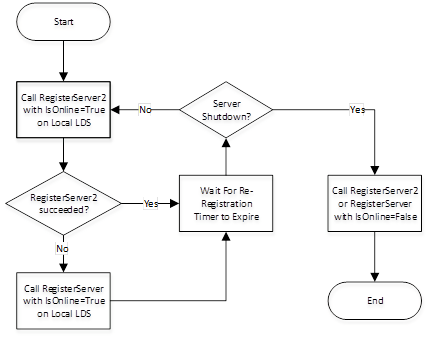
Figure 1 – The Registration Process with an LDS
See OPC 10000-4 for more information on the re-registration timer and the IsOnline flag.
Dedicated systems (usually embedded systems) with exactly one Server installed may not have a separate LDS. Such Servers shall become their own LDS or LDS-ME by implementing FindServers and GetEndpoints Services at the well-known address for an LDS. If implementing an LDS-ME, they should also announce themselves on the MulticastSubnet with a basic MulticastExtension. This requires a small subset of an mDNS Responder (see mDNS and Annex C) that announces the Server and responds to mDNS probes. In addition they shall implement additional OPC UA specific items described in Annex C. The Server may not provide the caching and address resolution implemented by a full mDNS Responder.
The discovery process allows Clients to find Servers on the network and then discover how to connect to them. Once a Client has this information it can save it and use it to connect directly to the Server again without going through the discovery process. Clients that cannot connect with the saved connection information should assume the Server configuration has changed and therefore repeat the discovery process.
A Client has several choices for finding Servers:
· Out-of-band discovery (i.e. entry into a GUI) of a DiscoveryUrl for a Server;
· Calling FindServers on the LDS installed on the Client host;
· Calling FindServers on a remote LDS, where the HostName for the remote host is manually entered;
· Calling FindServersOnNetwork (see OPC 10000-4) on the LDS-ME installed on Client host;
· Supporting the LDS-ME functionality locally in the Client.
· Searching for Servers known to a GlobalDiscoveryServer.
The DiscoveryUrl provides all of the information a Client needs to connect to a DiscoveryEndpoint (see 4.3.2).
Clients should be aware of rogue DiscoveryServers that might direct them to rogue Servers. That said, this problem is mitigated when a Client connects to a Server and verifies that it trusts the Server. In addition, the CreateSession Service returns parameters that allow Client to verify that the previously acquired results from a LDS have not been altered. See OPC 10000-2 and OPC 10000-4 for a detailed discussion of these issues.
A similar potential for a rogue GDS exists if the Client has not been configured to trust the GDS Certificate or if the Client does not use security when connecting to the GDS. Note that a Client that uses security but automatically trusts a GDS Certificate is not protected from a rogue GDS even though the connection itself is secure. This problem is also mitigated by verifying trust whenever a Client connects to a Server discovered via the GDS.
Every Server has one or more DiscoveryUrls that allow access to its Endpoints. Once a Client obtains (e.g. via manual entry into a form) the DiscoveryUrl for the Server, it reads the EndpointDescriptions using the GetEndpoints Service defined in OPC 10000-4.
The discovery process for this scenario is illustrated in Figure 2.
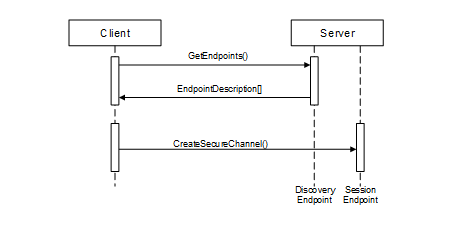
Figure 2 – The Simple Discovery Process
In many cases Clients do not know which Servers exist but possibly know which hosts might have Servers on them. In this situation the Client will look for the LocalDiscoveryServer on a host by constructing a DiscoveryUrl using the well-known addresses defined in OPC 10000-6.
If a Client finds a LocalDiscoveryServer then it will call the FindServers Service on the LDS to obtain a list of Servers and their DiscoveryUrls. The Client would then call the GetEndpoints service for one of the Servers returned. The discovery process for this scenario is illustrated in Figure 3.
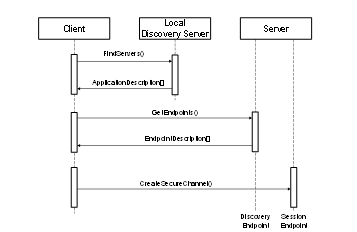
Figure 3 – The Local Discovery Process
In some situations Clients will not know which hosts have Servers. In these situations the Client will look for a LocalDiscoveryServer with the MulticastExtension on its local host and requests a list of DiscoveryUrls for Servers and DiscoveryServers available on the MulticastSubnet.
The discovery process for this scenario is illustrated in Figure 4.
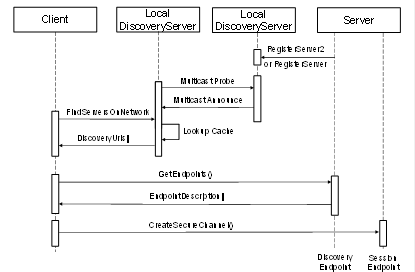
Figure 4 – The MulticastSubnet Discovery Process
In this scenario the Server uses the RegisterServer2 Service to tell a LocalDiscoveryServer to announce the Server on the MulticastSubnet. The Client will receive the DiscoveryUrl and CapabilityIdentifiers for the Server when it calls FindServersOnNetwork and then connects directly to the Server. When a Client calls FindServers it only receives the Servers running on the same host as the LDS.
Clients running on embedded systems may not have a LDS-ME available on the system, These Clients can support an mDNS Responder which understands how OPC UA concepts are mapped to mDNS messages and maintains the same table of servers as maintained by the LDS-ME. This mapping is described in Annex C.
A GDS is an OPC UA Server which allows Clients to search for Servers within the administrative domain of the GDS. It provides Methods that allow applications to search for other applications (see 6). To access the GDS, the Client uses the Call service to invoke the QueryApplications Method (see 6.6.11) to retrieve a list of Servers that meet the filter criteria provided. The QueryApplications Method is similar to the FindServers service except that it provides more advanced search and filter criteria. The discovery process is illustrated in Figure 5.
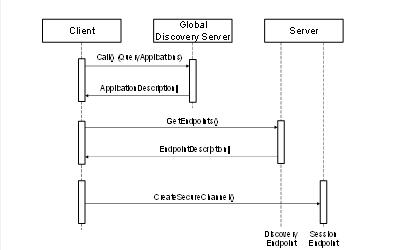
Figure 5 – The Global Discovery Process
The GDS may be coupled with any of the previous network architectures. For each MulticastSubnet, one or more LDSs may be registered with a GDS.
The Client can also be configured with the URL of the GDS using an out of band mechanism.
The complete discovery process is shown in Figure 6.
The use cases in the preceding clauses imply a number of choices that should be made by Clients when a Client needs to connect to a Server. These choices are combined together in Figure 6.
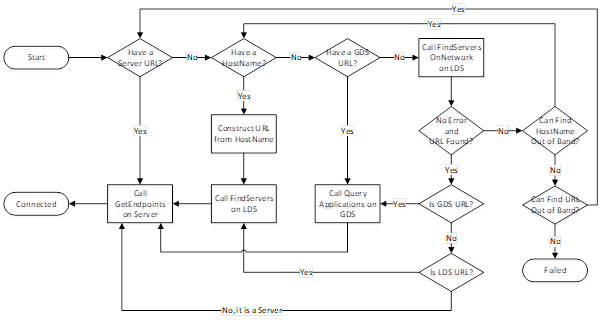
Figure 6 – The Discovery Process for Clients
FindServersOnNetwork can be called on the local LDS, however, it can also be called on a remote LDS which is part of a different MulticastSubnet.
An out-of-band mechanism is a way to find a URL or a HostName that is not described by this standard. For example, a user could manually enter a URL or use system specific APIs to browse the network neighbourhood.
A Client that goes through the discovery process can save the URL that was discovered. If the Client restarts later it can use that URL and bypass the discovery process. If reconnection fails the Client will have to go through the process again.
The discovery process for reverse connect does not serve the same purpose as the discovery process for normal connections because reverse connections require the Server to be configured to automatically attempt to connect to the Client and the Client to be configured so it knows what to do with the Server when it receives the connection. The limited mechanisms discussed here may help SecurityAdmins with the configuration of Servers.
A SecurityAdmin tasked with configuring Servers needs to determine the ClientUrls for Clients that support reverse connect.
The following choices are available:
· Out-of-band discovery (i.e. entry into a GUI) of a ClientUrl for a Client;
· Searching for Clients known to a GlobalDiscoveryServer.
The mechanisms based on an LDS are not available since Clients do not register with the LDS.
Every Client that supports reverse connect has one or more ClientUrls that allow Servers to connect. Once the SecurityAdmin acquires the ClientUrl via an out-of-band mechanism, it can configure the Server to use it.
A GDS is a Server which allows other SecurityAdmins to search for Clients that support reverse connnect within the administrative domain of the GDS. The SecurityAdmin uses the Call service to invoke the QueryApplications Method (see 6.6.11) with “RCP” as a serverCapabilityFilter to get a list of Clients that support reverse connect from the GDS.
The discovery process is illustrated in Figure 5.
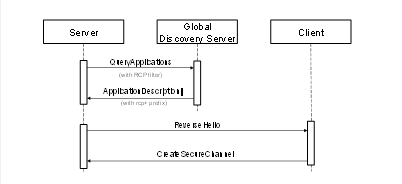
Figure 7 – The Global Discovery Process for Reverse Connections
The ClientUrls are returned in the DiscoveryUrls parameter of the ApplicationDescription record and have the ‘rcp+’ prefix. DiscoveryUrls without the prefix are used for forward connections. Once the SecurityAdmin has a ClientUrl it can configure the Server to use it.
Each host that could have multiple discoverable applications installed should have a standalone LocalDiscoveryServer installed. The LocalDiscoveryServer shall expose one or more Endpoints which support the FindServers and GetEndpoints services defined in OPC 10000-4. In addition, the LocalDiscoveryServer shall provide at least one Endpoint which implements the RegisterServer service for these applications.
The FindServers Service returns the information for the LocalDiscoveryServer and all Servers that are known to the LDS.The GetEndpoints Service returns the EndpointDescriptions for the LocalDiscoveryServer that allow Servers to call the RegisterServer or RegisterServer2 Services. The LocalDiscoveryServer does not support Sessions so information needed for establishing Sessions, such as supported UserTokenPolicies, is not provided.
In systems (usually embedded systems) with exactly one Server installed this Server may also be the LDS (see 4.2.3).
An LDS-ME will announce all applications that it knows about on the local MulticastSubnet. In order to support this, a LocalDiscoveryServer supports the RegisterServer2 Service defined in OPC 10000-4. For backward compatibility a LocalDiscoveryServer also supports the RegisterServer Service which is defined in OPC 10000-4.
Each host with OPC UA Applications (Clients and Servers) installed should have a LocalDiscoveryServer with a MulticastExtension.
The MulticastExtension incorporates the functionality of the mDNS Responder described in the Multicast DNS (mDNS) specification (see mDNS). In addition the LocalDiscoveryServer that supports the MulticastExtension supports the FindServersOnNetwork Service described in OPC 10000-4.
The Multicast DNS (mDNS) specification is used for various commercial and consumer applications. This provides a benefit in that implementations exist, however, system administrators could choose to disable Multicast DNS operations. For this reason, Applications shall not rely on Multicast DNS capabilities.
Multicast DNS operations are insecure because of their nature; therefore they should be disabled in environments where an attacker could cause problems by impersonating another host. This risk is minimized if OPC UA security is enabled and all Applications use Certificate TrustLists to control access.
The discovery mechanisms defined in this standard are expected to be used in many different network architectures. The following three architectures are Illustrated:
· Single MulticastSubnet;
· Multiple MulticastSubnets;
· No MulticastSubnet (or multiple MulticastSubnets with exactly one host each);
A MulticastSubnet is a network segment where all hosts on the segment can receive multicast packets from the other hosts on the segment. A physical LAN segment is typically a MulticastSubnet unless the administrator has specifically disabled multicast communication. In some cases multiple physical LAN segments can be connected as a single MulticastSubnet.
The Single MulticastSubnet Architecture is shown in Figure 8.
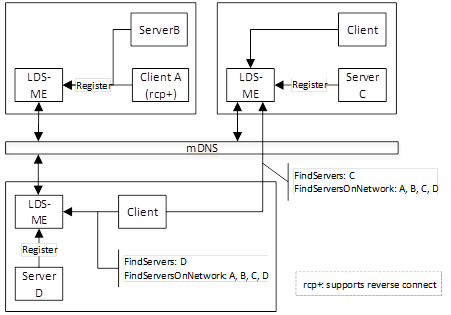
Figure 8 – The Single MulticastSubnet Architecture
In this architecture every host has an LDS-ME and uses mDNS to maintain a cache of the applications on the MulticastSubnet. A Client can call FindServersOnNetwork on any LDS-ME and receive the same set of applications. When a Client calls FindServers it only receives the applications running on the same host as the LDS.
The Multiple MulticastSubnet Architecture is shown in Figure 9.
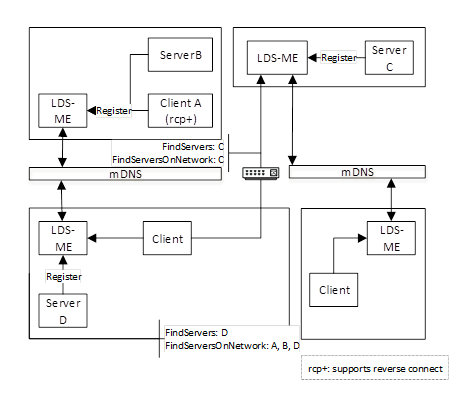
Figure 9 – The Multiple MulticastSubnet Architecture
This architecture is the same as the previous architecture except in this architecture the mDNS messages do not pass through routers connecting the MulticastSubnets. This means that a Client calling FindServersOnNetwork will only receive a list of applications running on the MulticastSubnets that the LDS-ME is connected to.
A Client that wants to connect to a remote MulticastSubnet shall use out of band discovery (i.e. manual entry) of a HostName or DiscoveryUrl. Once a Client finds an LDS-ME on a remote MulticastSubnet it can use FindServersOnNetwork to discover all applications on that MulticastSubnet.
The No MulticastSubnet Architecture is shown in Figure 10.
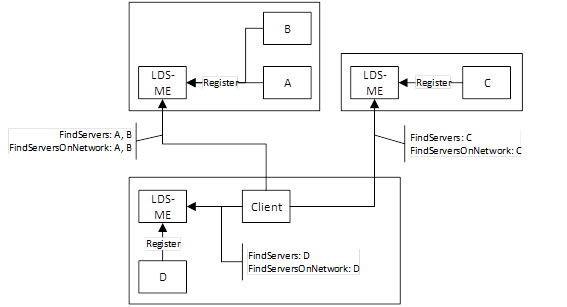
Figure 10 – The No MulticastSubnet Architecture
In this architecture the mDNS is not used at all because the Administrator has disabled multicast at a network level or by turning off multicast capabilities of each LDS-ME.
A Client that wants to discover applications needs to use an out of band mechanism to find the HostName and call FindServers on the LDS of that host. FindServersOnNetwork may also work but it will never return more than what FindServers returns. Clients could also use a GDS if one is available.
The mDNS specification requires that fully qualified domain name be announced on the network. If a Server is not configured with a fully qualified domain name then mDNS requires that the ‘local’ top level domain be appended to the domain names. The ‘local’ top level domain indicates that the domain can only be considered to be unique within the subnet where the domain name was used. This means Clients need to be aware that URLs received from any LDS-ME other than the one on the Client’s computer could contain ‘local’ domains which are not reachable or will connect to a different computer with the same domain name that happens to be on the same subnet as the Client. It is recommended that Clients ignore all URLs with the ‘local’ top level domain unless they are returned from the LDS-ME running on the same computer.
System administrators can eliminate this problem by configuring a normal DNS with the fully qualified domain names for all computers which need to be accessed by Clients outside the MulticastSubnet.
Servers configured with fully qualified domain names should specify the fully qualified domain name in its ApplicationInstance Certificate. Servers shall not append the ‘local’ top level domain to any domains declared in their Certificate; an unqualified domain name is used if a more appropriate qualifer does not exist. Clients using a URL returned from an LDS-ME shall ignore the ‘local’ top level domain when checking the domain against the Server Certificate.
Note that domain name validation is a necessary but not sufficient check against rogue Servers or man-in-the-middle attacks when Server Certificates do not contain fully qualified domain names. The Certificate trust relationship established by administrators is the primary mechanism used to protect against these risks.
The LocalDiscoveryServer is useful for networks where the host names can be discovered. However, this is typically not the case in large systems with multiple servers on multiple subnets. For this reason there is a need for an enterprise wide DiscoveryServer called a GlobalDiscoveryServer.
The GlobalDiscoveryServer (GDS) is an OPC UA Server which allows Clients to search for Servers within the administrative domain. When compared to the LDS, the GDS provides an authorative source for Servers which have been verified by administrators and accessed via a secure communication channel.
The GDS provides Methods that allow administrators to register applications and allow applications to search for other applications.
Some GDS implementations may provide a front-end to an existing DirectoryService such as LDAP (see Annex E). By standardizing on an OPC UA based interface, Clients do not need to have knowledge of different DirectoryServices.
GlobalDiscoveryServers restrict access to many of the features they provide. These restrictions are described either by referring to well-known Roles which a Session must have access to or by referring to Privileges which are assigned to Sessions using mechanisms other than the well-known Roles. The well-known Roles used in for a GDS are listed in Table 1.
Table 1 – Well-known Roles for a GDS
|
Name |
Description |
|
DiscoveryAdmin |
This Role grants rights to register, update and unregister any OPC UA Application. |
|
SecurityAdmin |
This Role grants the right to change the security configuration of a GDS. |
The Privileges used in for a GDS are listed in Table 2.
Table 2 – Privileges for a GDS
|
Name |
Description |
|
ApplicationSelfAdmin |
This Privilege grants an OPC UA Application the right to update its own registration. The Certificate used to create the SecureChannel is used to determine the identity of the OPC UA Application. |
|
ApplicationAdmin |
This Privilege grants rights to update one or more registrations. The Certificate used to create the SecureChannel is used to determine the identity of the OPC UA Application and what the set of registrations it is authorized to update. |
A GlobalDiscoveryServer is an OPC UA Server implementing different global services for discovery, Certificate management, user or PubSub key management, user authorization, software and device management.
The number of OPC UA Applications using the different services as OPC UA Client may be huge and the OPC UA Server is most likely not able to handle connections from all OPC UA Clients at the same time. Therefore an OPC UA Client connected to a GDS should minimize the time it is connected to the GDS to the currently required actions. The OPC UA Client shall disconnect as soon as it completes the sequence of actions needed to interact with the services. The OPC UA Clients shall not keep connections open between the execution of sequences.
A GDS OPC UA Server is allowed to close Sessions with OPC UA Clients not authenticated as one of the GDS administrative Roles if it runs out of connection resources. If the GDS needs to close Sessions, it should first close Sessions without GDS management Privileges. Otherwise it may close the Session that was inactive for the longest time not using GDS global services e.g. Method calls.
It is also recommended to use a short maximum session timeout on the GDS OPC UA Server.
Actions performed cyclically by OPC UA Applications during PullManagement shall start the second cycle with a random delay that is between one and at least ten percent of the cycle period.
If an administrator (e.g. a Client with access to the DirectoryAdmin Role) registers a LocalDiscoveryServer with the GDS, then the GDS periodically adds Servers to a list for review by calling FindServersOnNetwork or FindServers on the LDS. Figure 11 shows the relationship between a GDS and the LDS-ME or LDS.
The GDS shall not make Servers discovered in this manner available via QueryApplications for FindApplications before an administrator has approved the Server on a case by case basis or via automated rules. Note that auto-population can result in conflicts where multiple Servers have the same ApplicationUri due to a configuration error. A GDS should keep track of these conflicts so an administrator can review and resolve them.
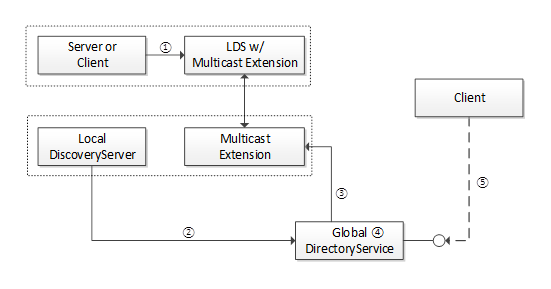
Figure 11 – The Relationship Between GDS and other components
The steps shown in Figure 11 are:
|
1 |
The Server calls RegisterServer2 on the LDS running on the same computer. |
|
2 |
The administrator registers LDS-ME installations with the GDS. |
|
3 |
The GDS calls FindServersOnNetwork on the LDS-ME to find all applications on the same MulticastSubnet. |
|
4 |
The GDS creates a record for each application returned by the LDS-ME. These records shall be approved before they are made available to Clients of the GDS. This approval can be obtained from an DiscoveryAdmin. |
|
5 |
The Client calls QueryApplications Method on the GDS to discover applications. |
The Information Model used for registration and discovery is shown in 6.6.1. Any Client shall be able to call the QueryApplications Method to find applications known to GDS. The complete definitions for each of the types used are described in 0.
Once a Server is registered with the GDS the record does not dissappear if the Server goes offline. If a Server is permentently taken offline the administrator needs to manually remove the registration.The interactions described above apply to Servers automatically discovered via an LDS. Servers can also be discovered by another application and registered automatically with the GDS provided the other application has the necessary administrative rights on the GDS.
The OPC UA Application or the Application configuration tool connects to the GDS for initial installation with GDS including Application registration. This requires a user that has the DiscoveryAdmin Role or the ApplicationAdmin Privilege.
The workflow for the Application registration is shown in Figure 12.
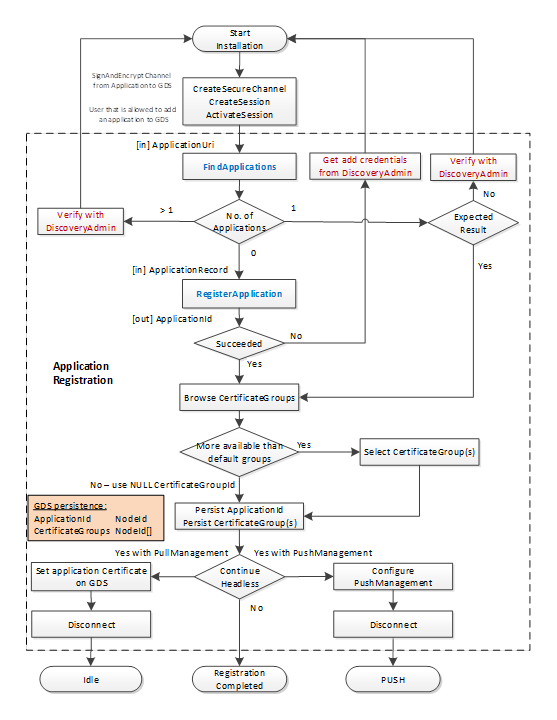
Figure 12 – Application Registration Workflow
The description of the Application registration workflow steps is provided in Table 3.
Table 3 – Application Registration Workflow Steps
|
Step |
Description |
|
Application installation |
The registration of an application with a GDS is normally executed as part of the initial installation and configuration of the application. It can be executed by a configuration tool that is part of the application or by a generic GDS configuration tool. |
|
Connect |
For the connection management with the GDS the services OpenSecureChannel, CreateSession and ActivateSession are used to create a connection with MessageSecurityMode SignAndEncrypt and a user that has the permission to register applications with the GDS. If the user does not have sufficient rights, the GDS can provide a mechanism to accept registrations on the GDS side before they are visible to Clients through QueryApplications. |
|
FindApplications |
The first step after connect is to check if there is already a registration available for the ApplicationUri. The DirectoryType Method FindApplications is used to pass the ApplicationUri of the application to the GDS. The Method returns an array of application records where the size of the array defines the next steps. · If the array is empty, the next step is RegisterApplication. · If the array size is one, and the record matches the expected application record, the next step is Browse CertificateGroups. · If the array size is one and the record does not match the expected application record, the registration must be verified with a DiscoveryAdmin. · If the array size is more than one, this indicates a fatal error and the status must be verified with a DiscoveryAdmin. |
|
RegisterApplication |
The DirectoryType Method RegisterApplication is used to pass in an application record with the application information. If the Method succeeds an ApplicationId is returned. This ApplicationId should be persisted for further interaction with the GDS regarding this application. If the Method fails, a DiscoveryAdmin is needed to identify and correct the issue. Typical errors include insufficient rights or conflicts with other application records. |
|
Browse CertificateGroups |
The Browse Service is used to get the list of GDS managed CertificateGroups by browsing the CertificateGroups Folder of the Directory Object. If more than one CertificateGroup is returned, the user selects the relevant CertificateGroups needed for the application. The selected CertificateGroupIds should be persisted together with the ApplicationId. |
|
Registration end options |
The following options are possible to complete the registration with the CertificateManager: 1. Continue with PullManagement using the existing connection to the GDS. This option is typically used by Clients executing the registration in an interactive mode for their own identity. See 7.6 for the PullManagement workflow. 2. Continue with PullManagement inside a headless application. 3. Continue with PushManagement. |
|
Set application Certificate on GDS |
For option (2) the current application Certificate must be configured for the application on the GDS to allow Application authentication for the initial PullManagement sequence. This configuration in the GDS is currently not in the scope of this specification. |
|
Configure PushManagement |
For option (3) the application must be configured for PushManagement in the CertificateManager. The configuration of the PushManagement in the CertificateManager is currently not in the scope of this specification. |
|
Disconnect |
For options (2) and (3) the configuration tool disconnects from the GDS. |
The GlobalDiscoveryServer Information Model used for discovery is shown in Figure 13. Most of the interactions between the GlobalDiscoveryServer and Application administrator or the Client will be via Methods defined on the Directory folder.
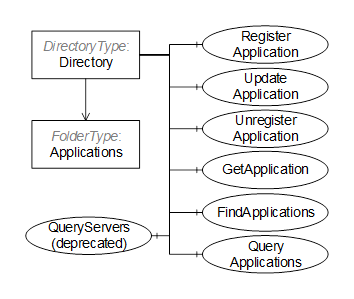
Figure 13 – The Address Space for the GDS
This Object is the root of the GlobalDiscoveryServer AddressSpace and it is the target of an Organizes reference from the Objects folder defined in OPC 10000-5. It organizes the information that can be accessed into subfolders. The implementation of a GDS can customize and organize the folders in any manner it desires. For example folders can exist for information models, or for optional services or for various locations in an administrative domain. It is defined in Table 4.
Table 4 – Directory Object Definition
|
Attribute |
Value |
||||
|
BrowseName |
2:Directory |
||||
|
TypeDefinition |
2:DirectoryType defined in 6.6.3. |
||||
|
References |
NodeClass |
BrowseName |
DataType |
TypeDefinition |
Modelling Rule |
|
Conformance Units |
|||||
|
GDS Application Directory |
|||||
DirectoryType is the ObjectType for the root of the GlobalDiscoveryServer AddressSpace. It organizes the information that can be accessed into subfolders It also provides methods that allow applications to register or find applications. It is defined in Table 5.
Table 5 – DirectoryType Definition
The Applications folder may contain Objects representing the Applications known to the GDS. These Objects may be organized into subfolders as determined by the GDS. Some characteristics for organizing applications are the networks, the physical location, or the supported profiles. The QueryApplications Method can be used to search for OPC UA Applications based on various criteria.
A GDS is not required to expose its Applications as browsable Objects in its AddressSpace, however, each Application shall have a unique NodeId which can be passed to Methods used to administer the GDS.
The FindApplications Method returns the Applications associated with an ApplicationUri. It can be called by any Client application.
The RegisterApplication Method is used to add a new Application to the GDS. It requires administrative privileges.
The UpdateApplication Method is used to update an existing Application in the GDS. It requires administrative privileges.
The UnregisterApplication Method is used to remove an Application from the GDS. It requires administrative privileges.
The QueryApplications Method is used to find Client or Server applications that meet the criteria provided. This Method replaces the QueryServers Method.
The QueryServers Method is used to find Servers that meet the criteria specified. It can be called by any Client application. This Method has been replaced by the QueryApplications Method
FindApplications is used to find the ApplicationId for an approved OPC UA Application (see 6.6.6 or 6.4). This list of records returned shall have zero or one element.
If the returned array is null or zero length then the GDS does not have an entry for the ApplicationUri.
Signature
FindApplications(
[in] String applicationUri
[out] ApplicationRecordDataType[] applications
);
|
Argument |
Description |
|
applicationUri |
The ApplicationUri that identifies the Application of interest. |
|
applications |
A list of application records that match the ApplicationUri. The ApplicationRecordDataType is defined in 6.6.5. |
Method Result Codes (defined in Call Service)
|
Result Code |
Description |
|
Bad_InvalidArgument |
The ApplicationUri is too long or not a valid URI. |
Table 6 specifies the AddressSpace representation for the FindApplications Method.
Table 6 – FindApplications Method AddressSpace Definition
|
Attribute |
Value |
||||
|
BrowseName |
2:FindApplications |
||||
|
References |
NodeClass |
BrowseName |
DataType |
TypeDefinition |
ModellingRule |
|
0:HasProperty |
Variable |
0:InputArguments |
0:Argument[] |
0:PropertyType |
Mandatory |
|
0:HasProperty |
Variable |
0:OutputArguments |
0:Argument[] |
0:PropertyType |
Mandatory |
This type defines a DataType which represents a record in the GDS.
If the ApplicationType is Client and the serverCapabilities includes RCP (reverse connect) then all DiscoveryUrls shall begin with the rcp+ prefix which indicates that reverse connections are supported. Otherwise, the DiscoveryUrls shall be empty.
If the ApplicationType is ClientAndServer the serverCapabilities may include RCP and all DiscoveryUrls that support reverse connect have the rcp+ prefix. If the same URL supports normal connetions and reverse connection then there shall be two elements in the DiscoveryUrls array with and without the rcp+ prefix.
Table 7 – ApplicationRecordDataType Structure
|
Name |
Type |
Description |
|
ApplicationRecordDataType |
Structure |
Subtype of the Structure DataType defined in OPC 10000-5 |
|
ApplicationId |
NodeId |
The unique identifier assigned by the GDS to the record. This NodeId may be passed to other Methods. |
|
ApplicationUri |
String |
The URI for the Application associated with the record. |
|
ApplicationType |
ApplicationType |
The type of application. This type is defined in OPC 10000-4. |
|
ApplicationNames |
LocalizedText[] |
One or more localized names for the application. The first element is the default ApplicationName for the application when a non-localized name is needed. |
|
ProductUri |
String |
A globally unique URI for the product associated with the application. This URI is assigned by the vendor of the application. |
|
DiscoveryUrls |
String[] |
The list of discovery URLs for an application.
The first HTTPS URL specifies the domain used as the Common Name of HTTPS Certificates. |
|
ServerCapabilities |
String[] |
The list of server capability identifiers for the application. The allowed values are defined in Annex D. |
Its representation in the AddressSpace is defined in Table 8.
Table 8 – ApplicationRecordDataType Definition
|
Attribute |
Value |
|||||
|
BrowseName |
2:ApplicationRecordDataType |
|||||
|
IsAbstract |
False |
|||||
|
References |
NodeClass |
BrowseName |
DataType |
TypeDefinition |
Other |
|
|
Subtype of the 0:Structure DataType defined in OPC 10000-5. |
||||||
|
|
||||||
|
Conformance Units |
||||||
|
GDS Application Directory |
||||||
RegisterApplication is used to register a new Application Instance with a GlobalDiscoveryServer.
This Method shall be called from an authenticated SecureChannel and from a Client that has access to the DiscoveryAdmin Role or the ApplicationAdmin Privilege (see 6.2).
Servers that support transparent redundancy shall register as a single application and pass the DiscoveryUrls for all available instances and/or network paths.
Servers that support non-transparent redundancy shall register as different applications. In addition, OPC 10000-4 requires the use of the NTRS ServerCapability defined in Annex D.
RegisterApplication shall not create duplicate records. If the ApplicationUri already exists the Method returns Bad_EntryExists.
If RegisterApplication succeeds the OPC UA Application is approved and is returned by QueryApplications and FindApplications.
If registration was successful and auditing is supported, the GDS shall generate the ApplicationRegistrationChanged AuditEventType (see 6.6.12).
Signature
RegisterApplication(
[in] ApplicationRecordDataType application
[out] NodeId applicationId
);
|
Argument |
Description |
|
application |
The application that is to be registered with the GlobalDiscoveryServer. |
|
applicationId |
A unique identifier for the registered Application. This identifier is persistent and is used in other Methods used to administer applications. |
Method Result Codes (defined in Call Service)
|
Result Code |
Description |
|
Bad_InvalidArgument |
The application or one of the fields of the application record is not valid. The text associated with the error shall indicate the exact problem. |
|
Bad_EntryExists |
A record with the same ApplicationUri already exists. |
|
Bad_UserAccessDenied |
The current user does not have the rights required. |
|
Bad_SecurityModeInsufficient |
The SecureChannel is not authenticated. |
Table 9 specifies the AddressSpace representation for the RegisterApplication Method.
Table 9 – RegisterApplication Method AddressSpace Definition
|
Attribute |
Value |
||||
|
BrowseName |
2:RegisterApplication |
||||
|
References |
NodeClass |
BrowseName |
DataType |
TypeDefinition |
ModellingRule |
|
0:HasProperty |
Variable |
0:InputArguments |
0:Argument[] |
0:PropertyType |
Mandatory |
|
0:HasProperty |
Variable |
0:OutputArguments |
0:Argument[] |
0:PropertyType |
Mandatory |
UpdateApplication is used to update an existing Application in a GlobalDiscoveryServer.
This Method shall be called from an authenticated SecureChannel and from a Client that has access to the DiscoveryAdmin Role, the ApplicationSelfAdmin Privilege, or the ApplicationAdmin Privilege (see 6.2).
When updating an existing Application the ApplicationUri cannot be changed. If it is changed the Method returns Bad_WriteNotSupported.
If the update was successful and auditing is supported, the GDS shall generate the ApplicationRegistrationChanged AuditEventType (see 6.6.12).
Signature
UpdateApplication(
[in] ApplicationRecordDataType application
);
|
Argument |
Description |
|
application |
The application that is to be updated in the GDS database. |
Method Result Codes (defined in Call Service)
|
Result Code |
Description |
|
Bad_NotFound |
The applicationId is not known to the GDS. |
|
Bad_InvalidArgument |
The application or one of the fields of the application record is not valid. The text associated with the error shall indicate the exact problem. |
|
Bad_WriteNotSupported |
The applicationUri was changed and it cannot be updated. |
|
Bad_UserAccessDenied |
The current user does not have the rights required. |
|
Bad_SecurityModeInsufficient |
The SecureChannel is not authenticated. |
Table 10 specifies the AddressSpace representation for the UpdateApplication Method.
Table 10 – UpdateApplication Method AddressSpace Definition
|
Attribute |
Value |
||||
|
BrowseName |
2:UpdateApplication |
||||
|
References |
NodeClass |
BrowseName |
DataType |
TypeDefinition |
ModellingRule |
|
0:HasProperty |
Variable |
0:InputArguments |
0:Argument[] |
0:PropertyType |
Mandatory |
UnregisterApplication is used to remove an Application from a GlobalDiscoveryServer.
This Method shall be called from an authenticated SecureChannel and from a Client that has access to the DiscoveryAdmin Role, the ApplicationSelfAdmin Privilege, or the ApplicationAdmin Privilege (see 6.2).
This Method shall only be invoked by authorized users.
A Server Application that is unregistered may be automatically added again if the GDS is configured to populate itself by calling FindServersOnNetwork and the Server Application is still registering with its local LDS.
If an Application has Certificates issued by the CertificateManager, these Certificates shall be revoked when this Method is called.
If un-registration was successful and auditing is supported, the GDS shall generate the ApplicationRegistrationChanged AuditEventType (see 6.6.12).
Signature
UnregisterApplication(
[in] NodeId applicationId
);
|
Argument |
Description |
|
applicationId |
The identifier assigned by the GDS to the Application. |
Method Result Codes (defined in Call Service)
|
Result Code |
Description |
|
Bad_NotFound |
The applicationId is not known to the GDS. |
|
Bad_UserAccessDenied |
The current user does not have the rights needed to unregister the application. |
|
Bad_SecurityModeInsufficient |
The SecureChannel is not authenticated. |
Table 11 specifies the AddressSpace representation for the UnregisterApplication Method.
Table 11 – UnregisterApplication Method AddressSpace Definition
|
Attribute |
Value |
||||
|
BrowseName |
2:UnregisterApplication |
||||
|
References |
NodeClass |
BrowseName |
DataType |
TypeDefinition |
ModellingRule |
|
0:HasProperty |
Variable |
0:InputArguments |
0:Argument[] |
0:PropertyType |
Mandatory |
GetApplication is used to find an OPC UA Application known to the GDS.
Signature
GetApplication(
[in] NodeId applicationId
[out] ApplicationRecordDataType application
);
|
Argument |
Description |
|
applicationId |
The ApplicationId that identifies the Application of interest. |
|
application |
The application record that matches the ApplicationId. The ApplicationRecordDataType is defined in 6.6.5 |
Method Result Codes (defined in Call Service)
|
Result Code |
Description |
|
Bad_NotFound |
The applicationId is not known to the GDS. |
|
Bad_UserAccessDenied |
The current user does not have the rights needed to read the requested record. |
Table 12 specifies the AddressSpace representation for the GetApplication Method.
Table 12 – GetApplication Method AddressSpace Definition
|
Attribute |
Value |
||||
|
BrowseName |
2:GetApplication |
||||
|
References |
NodeClass |
BrowseName |
DataType |
TypeDefinition |
ModellingRule |
|
0:HasProperty |
Variable |
0:InputArguments |
0:Argument[] |
0:PropertyType |
Mandatory |
|
0:HasProperty |
Variable |
0:OutputArguments |
0:Argument[] |
0:PropertyType |
Mandatory |
QueryApplications is used to find Client or Server applications that meet the specified filters. The only Clients returned are those that support the reverse connection capability described in OPC 10000-6.
QueryApplications returns ApplicationDescriptions instead of the ServerOnNetwork Structures returned by QueryServers. This is more useful to some Clients because it matches the return type of FindServers.
Any Client is able to call this Method, however, the set of results returned may be restricted based on the Client’s user credentials.
The applications returned shall pass all of the filters provided (i.e. the filters are combined in an AND operation). The capabilities parameter is an array and an application will pass this filter if it supports all of the specified capabilities.
Each time the GDS creates or updates an application record it shall assign a monotonically increasing identifier to the record. This allows Clients to request records in batches by specifying the identifier for the last record received in the last call to QueryApplications. To support this the GDS shall return records in order starting from the lowest record identifier. The GDS shall also return the last time the counter was reset. If a Client detects that this time is more recent than the last time the Client called the Method it shall call the Method again with a startingRecordId of 0.
The lastCounterResetTime parameter is used to indicate that the counters on records had to be reset for some reason such as a Server restart. The Client may not use any nextRecordId received prior to this time to set the value for the startingRecordId in a new call.
The return parameter is a list of ApplicationDescriptions. The mapping from a ApplicationRecord to an ApplicationDescriptions is shown in Table 13.
Table 13 – ApplicationRecordDataType to ApplicationDescription Mapping
|
ApplicationRecordDataType |
ApplicationDescription |
Notes |
|
applicationId |
-- |
Ignored |
|
applicationUri |
applicationUri |
|
|
applicationType |
applicationType |
|
|
applicationNames |
applicationName |
The name that best matches the preferredLocales for the current Session is returned. If there is no Session the first element is returned. |
|
productUri |
productUri |
|
|
discoveryUrls |
discoveryUrls |
|
|
-- |
gatewayServerUri |
Set to NULL. |
|
-- |
discoveryProfileUri |
Set to NULL. |
|
serverCapabilities |
-- |
Ignored |
Signature
QueryApplications(
[in] UInt32 startingRecordId
[in] UInt32 maxRecordsToReturn
[in] String applicationName
[in] String applicationUri
[in] UInt32 applicationType
[in] String productUri
[in] String[] capabilities
[out] UtcTime lastCounterResetTime
[out] UInt32 nextRecordId
[out] ApplicationDescription[] applications
);
|
Argument |
Description |
|
INPUTS |
|
|
startingRecordId |
Only records with an identifier greater than this number will be returned. Specify 0 to start with the first record in the database. |
|
maxRecordsToReturn |
The maximum number of records to return in the response. 0 indicates that there is no limit. |
|
applicationName |
The ApplicationName of the applications to return. Supports the syntax used by the LIKE FilterOperator described in OPC 10000-4. Not used if an empty string is specified. The filter is only applied to the default ApplicationName. |
|
applicationUri |
The ApplicationUri of the applications to return. Supports the syntax used by the LIKE FilterOperator described in OPC 10000-4. Not used if an empty string is specified. |
|
applicationType |
A mask indicating what types of applications are returned. The mask values are: 0x1 – Servers; 0x2 – Clients; If the mask is 0 then all applications are returned. |
|
productUri |
The ProductUri of the applications to return. Supports the syntax used by the LIKE FilterOperator described in OPC 10000-4. Not used if an empty string is specified. |
|
capabilities |
The capabilities supported by the applications returned. The
applications returned shall support all of the capabilities specified.
The allowed values are defined in Annex D. |
|
OUTPUTS |
|
|
lastCounterResetTime |
The last time the counters were reset. |
|
nextRecordId |
The identifier of the next record. It is passed as the startingRecordId in subsequent calls to QueryApplications to fetch the next batch of records. It is 0 if there are no more records to return. |
|
applications |
A list of Applications which meet the criteria. The ApplicationDescription structure is defined in OPC 10000-4. |
Table 14 specifies the AddressSpace representation for the QueryApplications Method.
Table 14 – QueryApplications Method AddressSpace Definition
|
Attribute |
Value |
||||
|
BrowseName |
2:QueryApplications |
||||
|
References |
NodeClass |
BrowseName |
DataType |
TypeDefinition |
ModellingRule |
|
0:HasProperty |
Variable |
0:InputArguments |
0:Argument[] |
0:PropertyType |
Mandatory |
|
0:HasProperty |
Variable |
0:OutputArguments |
0:Argument[] |
0:PropertyType |
Mandatory |
QueryServers is used to find Server applications that meet the specified filters.
Any Client is able to call this Method, however, the set of results returned may be restricted based on the Client’s user credentials.
The applications returned shall pass all of the filters provided (i.e. the filters are combined in an AND operation). The serverCapabilities parameter is an array and an application will pass this filter if it supports all of the specified capabilities.
Each time the GDS creates or updates an application record it shall assign a monotonically increasing identifier to the record. This allows Clients to request records in batches by specifying the identifier for the last record received in the last call to QueryServers. To support this the GDS shall return records in order starting from the lowest record identifier. The GDS shall also return the last time the counter was reset. If a Client detects that this time is more recent than the last time the Client called the Method it shall call the Method again with a startingRecordId of 0.
The lastCounterResetTime parameter is used to indicate that the counters on records had to be reset for some reason such as a Server restart. The Client may not use any recordId received prior to this time to set the value for the startingRecordId in a new call.
The return parameter is a list of ServerOnNetwork Structures. The mapping from a ApplicationRecordDataType to an ServerOnNetwork is shown in Table 15.
Table 15 – ApplicationRecordDataType to ServerOnNetwork Mapping
|
ApplicationRecordDataType |
ServerOnNetwork |
Notes |
|
applicationId |
-- |
Ignored |
|
applicationUri |
-- |
Ignored |
|
applicationType |
-- |
Ignored |
|
applicationNames |
serverName |
The name that best matches the preferredLocales for the current Session is returned. If there is no Session the first element is returned. |
|
productUri |
-- |
Ignored |
|
discoveryUrls |
discoveryUrl |
A ServerOnNetwork record is returned for each discoveryUrl in the ApplicationRecord. |
|
serverCapabilities |
serverCapabilities |
|
|
-- |
recordId |
This is the recordId assigned by the QueryServers call. It may be used as the startedRecordId in a subsequent call to QueryServers. |
Signature
QueryServers(
[in] UInt32 startingRecordId
[in] UInt32 maxRecordsToReturn
[in] String applicationName
[in] String applicationUri
[in] String productUri
[in] String[] serverCapabilities
[out] UtcTime lastCounterResetTime
[out] ServerOnNetwork[] servers
);
|
Argument |
Description |
|
INPUTS |
|
|
startingRecordId |
Only records with an identifier greater than this number will be returned. Specify 0 to start with the first record in the database. |
|
maxRecordsToReturn |
The maximum number of records to return in the response. 0 indicates that there is no limit. |
|
applicationName |
The ApplicationName of the Applications to return. Supports the syntax used by the LIKE FilterOperator described in OPC 10000-4. Not used if an empty string is specified. The filter is only applied to the default ApplicationName. |
|
applicationUri |
The ApplicationUri of the Servers to return. Supports the syntax used by the LIKE FilterOperator described in OPC 10000-4. Not used if an empty string is specified. |
|
productUri |
The ProductUri of the Servers to return. Supports the syntax used by the LIKE FilterOperator described in OPC 10000-4. Not used if an empty string is specified. |
|
serverCapabilities |
The applications returned shall support all of the server capabilities specified. If no server capabilities are provided this filter is not used. |
|
OUTPUTS |
|
|
lastCounterResetTime |
The last time the counters were reset. |
|
servers |
A list of Servers which meet the criteria. The ServerOnNetwork structure is defined in OPC 10000-4. |
Method Result Codes (defined in Call Service)
|
Result Code |
Description |
|
Bad_UserAccessDenied |
The current user does not have the rights required. |
Table 16 specifies the AddressSpace representation for the QueryServers Method.
Table 16 – QueryServers Method AddressSpace Definition
|
Attribute |
Value |
||||
|
BrowseName |
2:QueryServers |
||||
|
References |
NodeClass |
BrowseName |
DataType |
TypeDefinition |
ModellingRule |
|
0:HasProperty |
Variable |
0:InputArguments |
0:Argument[] |
0:PropertyType |
Mandatory |
|
0:HasProperty |
Variable |
0:OutputArguments |
0:Argument[] |
0:PropertyType |
Mandatory |
This event is raised when the RegisterApplication, UpdateApplication or UnregisterApplication Methods are called.
Its representation in the AddressSpace is formally defined in Table 17.
Table 17 – ApplicationRegistrationChangedAuditEventType Definition
|
Attribute |
Value |
|||||
|
BrowseName |
2:ApplicationRegistrationChangedAuditEventType |
|||||
|
IsAbstract |
True |
|||||
|
References |
NodeClass |
BrowseName |
DataType |
TypeDefinition |
ModellingRule |
|
|
Subtype of the 0:AuditUpdateMethodEventType defined in OPC 10000-5. |
||||||
|
|
||||||
|
Conformance Units |
||||||
|
GDS Application Directory |
||||||
This EventType inherits all Properties of the AuditUpdateMethodEventType. Their semantics are defined in OPC 10000-5.
Certificate management functions comprise the management and distribution of certificates and TrustLists for OPC UA Applications. An application that provides the certificate management functions is called CertificateManager. GDS and CertificateManager will typically be combined in one application. The basic concepts regarding Certificate management are described in OPC 10000-2.
There are two primary models for Certificate management: PullManagement and PushManagement. In PullManagement, the application acts as a Client and uses the Methods on the CertificateManager to request and update Certificates and TrustLists. The application is responsible for ensuring the Certificates and TrustLists are kept up to date. In PushManagement the application acts as a Server and exposes Methods which the CertificateManager can call to update the Certificates and TrustLists as required.
The CertificateManager is intended to work in conjunction with different Certificate management services such as Active Directory. The CertificateManager provides a standard OPC UA based information model that all OPC UA Applications can support without needing to know the specifics of a particular Certificate management system.
The CertificateManager should support the following features:
· Onboarding (first time setup for a device/application);
· Renewal (renewing expired or compromised certificates);
· TrustList Update (updating the TrustLists including the Revocation Lists);
· Revocation (removing a device/application from the system).
Although it is generally assumed that Client applications will use the Pull model and Server applications will use the Push model, this is not required.
OPC 10000-21 defines the complete process to automatically authenticate and onboard new Devices that depends on the Devices having support built in by the Manufacturer. If this support is not present, Devices and OPC UA Applications have to be manually onboarded using the mechanisms defined in this document.
During manual onboarding, the CertificateManager shall be able to operate in a mode where any Client is allowed to connect securely with any valid Certificate and user credentials are used to determine the rights a Client has; this eliminates the need to configure TrustLists before connecting to the CertificateManager for application setup, Application vendors may decide to build the interaction with the CertificateManager as a separate component, e.g. as part of an administration application with access to the OPC UA configuration of this Application. This is transparent for the CertificateManager and will not be considered further in the rest of this chapter.
Clients shall only connect to a CertificateManager which the Client has been configured to trust. This may require an out of band configuration step which is completed prior to starting the manual onboarding process.
This standard does not define how to administer a CertificateManager but a CertificateManager shall provide an integrated system that includes both push and PullManagement.
CertificateManagers restrict access to many of the features they provide. These restrictions are described either by referring to well-known Roles which a Session must have access to or by referring to Privileges which are assigned to Sessions using mechanisms other than the well-known Roles. The well-known Roles used for CertificateManagers are listed in Table 18.
Table 18 – Well-known Roles for a CertificateManager
|
Name |
Description |
|
CertificateAuthorityAdmin |
This Role grants rights to request or revoke any Certificate, update any TrustList or assign CertificateGroups to OPC UA Applications. |
|
RegistrationAuthorityAdmin |
This Role grants rights to approve Certificate Signing requests or NewKeyPair requests. |
|
SecurityAdmin |
This Role grants the right to change the security configuration of a CertificateManager. |
The well-known Roles for Server managed by a CertificateManager are listed in Table 19.
Table 19 – Well-known Roles for Server managed by a CertificateManager
|
Name |
Description |
|
SecurityAdmin |
For PushManagement, this Role grants the right to change the security configuration of a Server managed by a CertificateManager. |
The Privileges used in for CertificateManagers are listed in Table 20.
Table 20 – Privileges for a CertificateManager
|
Name |
Description |
|
ApplicationSelfAdmin |
This Privilege grants an OPC UA Application the right to renew its own Certificate or read its own CertificateGroups and TrustLists. The Certificate used to create the SecureChannel is used to determine the identity of the OPC UA Application. |
|
ApplicationAdmin |
This Privilege grants rights to request or renew Certificates, read TrustLists or CertificateGroups for one or more OPC UA Applications. The Certificate used to create the SecureChannel is used to determine the identity of the OPC UA Application and the set of OPC UA Applications that it is authorized to manage. |
PullManagement is performed by using the CertificateManager information model, in particular the Methods defined in 7.9. The interactions between Application and CertificateManager during PullManagement are illustrated in Figure 14.
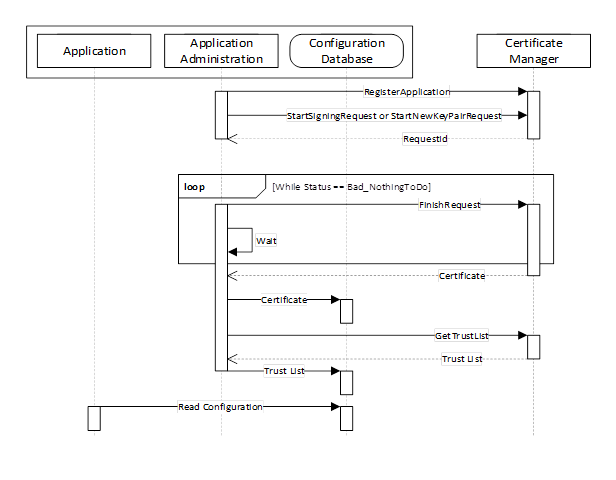
Figure 14 – The Pull Management Model for Certificates
The Application Administration component may be part of the Client or Server or a standalone utility that understands how the application persists its configuration information in its Configuration Database.
A similar process is used to renew certificates or to periodically update TrustList.
Security in PullManagement requires an encrypted channel and authorized credentials. These credentials may be user credentials for a CertificateAuthorityAdmin or application credentials determined by the Certificate used to create the SecureChannel. Examples of the application credentials include Certificates previously issued to the application being accessed, Device Certificates issued by the Registrar defined in OPC 10000-21 or Certificates isssued to an application with accesss to the ApplicationAdmin Privilege (see 6.2).
Before a Client provides any secrets associated with credentials to a CertificateManager it needs to know that it can trust the CertificateManager. This can be done by an administrator that adds the CertificateManager to the Client TrustList before the Client attempts to connect to the CertificateManager. If the Client finds a CertificateManager on a network via mDNS or other insecure mechanism it could trust the CertificateManager if it has some independently acquired information that allows it to trust the CertificateManager. For example, the DNS address of the CertificateManager could be provided by a trusted authority and this address appears in the Certificate of the CertificateManager being used and the address was used to connect.
Once the Client finds a CertificateManager that it can trust, it needs to provide credentials that allows the CertificateManager to know that it can issue Certificates. The Certificate used by the Client can be the credential if there is an out of band process to provide the Certificate to the CertificateManager. The CertificateManager could provide a one-time password to the Client via email or other mechanisms.
The CertificateManager can only issue Certificates to authenticated Clients. There are a number of ways to authenticate Clients:
1) The CertificateManager is pre-configured with information about the Client Certificate that allows the CertificateManager to know that the Client can request Certificates even if anonymous user credentials are used. The Client may be a DCA authenticated by a Registrar (see OPC 10000-21), a Client with a previously issued Certificate, or a Client authorized to create Certificates on behalf of other applications.
2) The CertificateManager may have a manual process where an administrator reviews each request before issuing a Certificate.
3) The Client provides user credentials. A Client shall not provide a secret (e.g. a password) to an untrusted CertificateManager.
PushManagement is targeted at Server applications and relies on Methods defined in 7.10 to get a CertificateRequest which can be passed onto the CertificateManager. After the CertificateManager signs the Certificate the new Certificate is pushed to the Server with the UpdateCertificate Method.
The interactions between a Server Application and CertificateManager during PushManagement are illustrated in Figure 15.
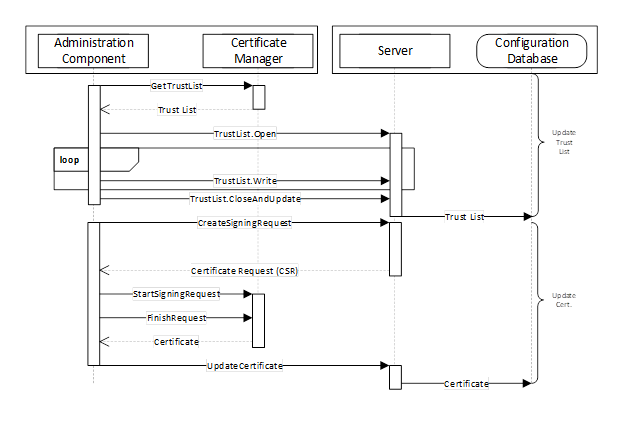
Figure 15 – The Push Certificate Management Model
The Administration Component may be part of the CertificateManager or a standalone utility that uses OPC UA to communicate with the CertificateManager (see 7.3 for a more complete description of the interactions required for this use case). The Configuration Database is used by the Server to persist its configuration information. The RegisterApplication Method (or internal equivalent) is assumed to have been called before the sequence in the diagram starts.
A similar process is used to renew certificates or to periodically update TrustList. In Figure 15 the TrustList update is shown to happen first. This is necessary to ensure any CRLs are provided to the Server before the new Certificate is updated. The TrustList update may be skipped If the current TrustList allows the Server to validate the new Certificate.
Security when using the PushManagement model requires an encrypted channel and a Client with access to the SecurityAdmin Role. For example, SecurityAdmin Role could be mapped to user credentials for an administrator or to a ApplicationInstance Certificate issued to a configuration tool. OPC 10000-21 defines a mechanism to install administrative Client Certificates into the Server TrustList.
Application Setup is the initial installation of an OPC UA Server or Client into a system in which a GDS is available and managing Certificates. Applications using a Client interface can be setup using the PullManagement. Applications using a Server interface can be setup using the PushManagement.
The push and PullManagement are also integrated into OPC 10000-21 which specifies how new Devices can be authenticated when they are added to the network. Once a Device is authenticated the Device is trusted and can use the push or PullManagement without additional administrator credentials.
OPC UA Servers that do not support OPC 10000-21 typically auto-generate a self-signed Certificate when they first start. They may also have a pre-configured TrustList with Applications that are allowed to setup the Server. For example, a machine vendor may use a CA that is used to issue Certificates to Applications used by their field technicians.
For embedded devices, the Server should allow any Client that provides the proper SecurityAdmin credentials to create the secure connection needed for setup using PushManagement. Once the Server has been given its initial TrustList the Server should then restrict access to those Clients with Certificates in the TrustList. A vendor specific process for setup is required if a device restricts the Clients allowed to connect securely.
See Annex G for more specific examples of how to provision an application when OPC 10000-21 is not used.
In this workflow the OPC UA Application that gets Certificates from the CertificateManager is the Client that executes the workflow and the CertificateManager is the Server processing the request in the workflow.
The Application is authenticated with the Certificate signed by the CertificateManager (or the Certificate assigned during registration). The UserTokenType is always Anonymous using the ApplicationSelfAdmin Privilege.
The workflow for PullManagement is shown in Figure 16 and the steps are described in Table 21. The two options for the key pair creation are described in Figure 17. The boxes with blue text indicate Method calls.
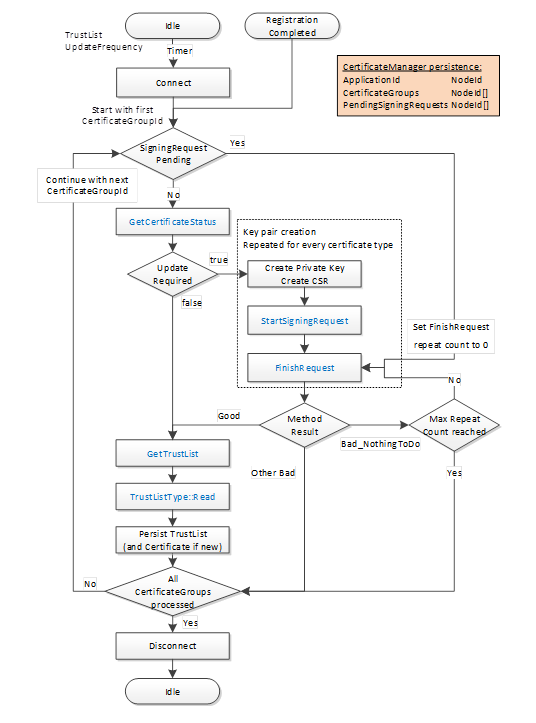
Figure 16 – Certificate Pull Management Workflow
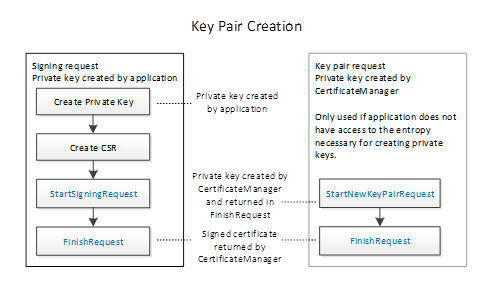
Figure 17 – The Pull Management Options for Key Pair Creation
The steps of the PullManagement workflow are described in detail in Table 21.
Table 21 – Certificate Pull Management Workflow Steps
|
Step |
Description |
|
Certificate management begin options |
The following options are possible to start the PullManagement. 1. Continue application setup using the Session available from the application registration workflow described in 6.5. 2. Cyclic check of the application status using a new connection to the CertificateManager. The cycle time is defined by the UpdateFrequency on the related TrustList Object in the CertificateManager. |
|
Connect |
Create a connection for option (2). For the connection management with the CertificateManager the Services OpenSecureChannel, CreateSession and ActivateSession are used to create a connection with MessageSecurityMode SignAndEncrypt and an Anonymous user. Application authentication is used by the CertificateManager to allow OPC UA Applications to access the necessary resources to update themselves using the ApplicationSelfAdmin Privilege. |
|
Required information |
The OPC UA Application needs to know the following information to execute the PullManagement workflow · ApplicationId · CertificateGroupIds · Pending signing requests |
|
SigningRequestPending |
If one or more signing requests are pending for a CertificateGroup, the FinishRequest Method is called directly with the ApplicationId and the RequestId for the pending signing request. The repeat count is set to 0 in this case. |
|
GetCertificateStatus |
The Method GetCertificateStatus is called with the ApplicationId and the CertificateGroupId to check if a certificate update is needed. This is repeated for each CertificateType needed for the CertificateGroup. |
|
Update Required |
If GetCertificateStatus returns updateRequired set to True for one or more combinations of CertificateGroup and CertificateType, the process for key pair creation is started for the affected combinations. |
|
Create CSR |
The application creates a certificate signing request (CSR). It is strongly recommended, that the OPC UA Application creates a new private key for each signing request. |
|
StartSigningRequest |
The Method StartSigningRequest is called for each CertificateGroup and CertificateType together with the CSR to request a signed Certificate from the CertificateManager. Each Method call needs it’s own CSR. As alternative for OPC UA Applications who do not have access to a cryptograhically sufficient entropy source, the Method StartNewKeyPairRequest can be used. In this case the private key is created by the CertificateManager. Both Methods return a RequestId that can be passed to the FinishRequest Method. The repeat count for FinishRequest is set to a small number like 2. |
|
FinishRequest |
The Method FinishRequest is called to check the results of a previous StartSigningRequest or StartNewKeyPairRequest. The following results are possible: · If FinishRequest returns a Good result, the Method returns the signed Certificate and optionally the private key for the StartNewKeyPairRequest case. · If FinishRequest returns Bad_NothingToDo it indicates that the request is not completed yet. If the repeat count is not 0, the repeat count is decremented and FinishRequest is repeated after a short delay. If the repeat count is 0, the RequestId is persisted and the next CertificateGroup or CertificateType is processed · If FinishRequest returns any other Bad result, a new request must be sent in the next cycle |
|
GetTrustList |
If all Certificates for a CertificateGroup are up-to-date, the TrustList is checked for updates by calling the Method GetTrustList. The Method returns the NodeId of the TrustList Object for the CertificateGroup. The LastUpdateTime of TrustList Object indicates when the contents of the TrustList changed. When using PullManagement, the Client should check this Property before downloading the TrustList. |
|
TrustListType::Read |
The NodeId of the TrustList Object returned by GetTrustList is used to open the TrustList for reading and to read the current content of the TrustList. |
|
Persist TrustList |
If a TrustList update or Certificate updates are available, they are persisted for further use by the OPC UA Application. They must be persisted at the same time to ensure a consistent setup. |
|
Repeat for all CertificateGroups |
Repeat the process for all CertificateGroups. |
|
Disconnect |
Disconnect from CertificateManager. |
In this workflow the CertificateManager is the Client that executes the steps and the OPC UA Application is the Server that is processing the request in the sequence. The workflow is started if the CertificateManager determines that an update is required.
The workflow for PushManagement is shown in Figure 18. The two options for the key pair creation are described in Figure 19. The boxes with blue text indicate Method calls.
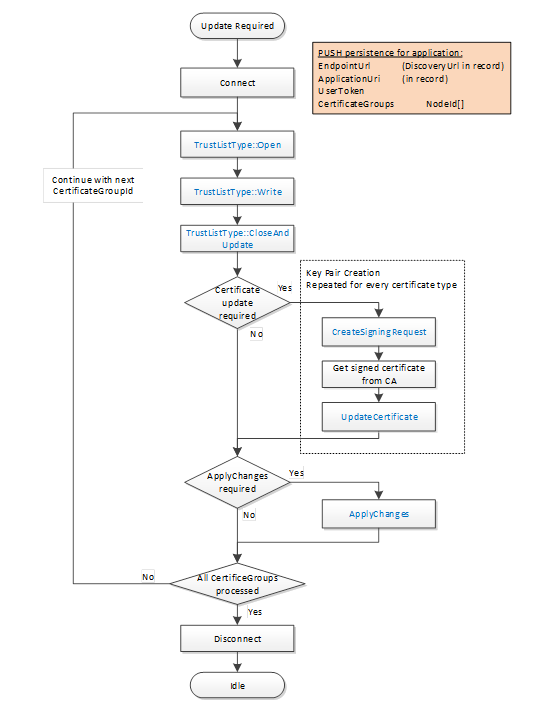
Figure 18 – The Certificate Push Management Workflow
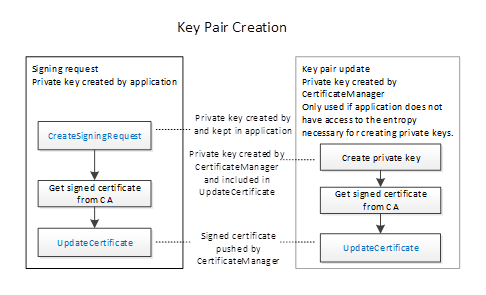
Figure 19 – The Push Management Options for Key Pair Creation
The common information model defines types that are used in both the Push and the Pull Model.
This type defines a FileType that can be used to access a TrustList.
The CertificateManager uses this type to implement the Pull Model.
Servers use this type when implementing the Push Model.
An instance of a TrustListType shall restrict access to appropriate users or applications. This may be a CertificateManager administrative user that can change the contents of a TrustList, it may be an Administrative user that is reading a TrustList to deploy to an Application host or it may be an Application that can only access the TrustList assigned to it.
The TrustList file is a UA Binary encoded stream containing an instance of TrustListDataType (see 7.8.2.6).
The Open Method shall not support modes other than Read (0x01) and the Write + EraseExisting (0x06).
If a transaction is in progress (see 7.10.7) on another Session then the Server shall return Bad_TransactionPending if Open is called with the Write Mode bit set. If the Server supports transactions then the Server creates a new transaction or continues an existing transaction if Open is called with the Write Mode bit set.
If the SecureChannel is not authenticated the Server shall return Bad_SecurityModeInsufficient.
Servers shall automatically Close TrustLists if there are no calls to Methods on the TrustList Object within the time specified by the ActivityTimeout Property.
The Size Property inherited from FileType has no meaning for TrustList and returns the error code defined in OPC 10000-20.
When a Client opens the file for writing the Server will not actually update the TrustList until the CloseAndUpdate Method is called. Simply calling Close will discard the updates. The bit masks in TrustListDataType structure allow the Client to only update part of the TrustList.
When the CloseAndUpdate Method is called the Server will validate all new Certificates and CRLs. If this validation fails the TrustList is not updated and the Server returns the appropriate Certificate error code (see OPC 10000-4).
Its representation in the AddressSpace is formally defined in Table 22.
Table 22 – TrustListType Definition
The LastUpdateTime indicates when the TrustList was last updated. The LastUpdateTime shall reflect changes made using the TrustList Object Methods. A TrustList Object in a CertificateManager shall also reflect changes made in other ways.
The LastUpdateTime of a TrustList Object in a CertificateManager allows Clients using the PullManagement to know whether the TrustList has changed since the last time they accessed it. The LastUpdateTime of a TrustList Object in the ServerConfiguration allows administration Clients to check for out of date TrustLists.
The UpdateFrequency Property specifies how often the TrustList needs to be checked for changes. When the CertificateManager specifies this value, all Clients that read a copy of the TrustList should connect to the CertificateManager and check for updates to the TrustList within 2 times the UpdateFrequency. The choice of UpdateFrequency depends on how quickly system changes need to be detected and the performance constraints of the system. UpdateFrequencies that are too long create security risks because of out of date CRLs. UpdateFrequencies that are too short negatively impact system performance. If the TrustList Object is contained within a ServerConfiguration Object then this Property is not present.
The ActivityTimeout Property specifies the maximum elapsed time between the calls to Methods on the TrustList Object after Open or OpenWithMasks is called. If this time elapses the TrustList is automatically closed by the Server and any changes are discarded. The default value is 60 000 milliseconds (1 minute).
The DefaultValidationOptions Property specifies the default options to use when validating Certificates with the TrustList. The TrustListValidationOptions DataType is defined in 7.8.2.8. This Property may be updated by Clients with access to the SecurityAdmin Role.
If auditing is supported, the CertificateManager shall generate the TrustListUpdatedAuditEventType (see 7.8.2.11) when the TrustList is updated via the CloseAndUpdate, AddCertificate, RemoveCertificate or ApplyChanges (see 7.10.7) Methods. The Event is only raised once after the asynchronous update process completes.
The OpenWithMasks Method allows a Client to read only the portion of the TrustList.
This Method can only be used to read the TrustList.
After calling this Method, the Client calls Read one or more times to get the TrustList. If the Server is able to detect out of band changes to theTrustList before the Client calls the Close Method, then the next Read returns Bad_InvalidState. If the Server cannot detect out of band changes it shall ensure the Client receives a consistent snapshot.
For PullManagement, this Method shall be called from an authenticated SecureChannel and from a Client that has access to the CertificateAuthorityAdmin Role, the ApplicationSelfAdmin Privilege, or the ApplicationAdmin Privilege (see 7.2).
For PushManagement, this Method shall be called from an authenticated SecureChannel and from a Client that has access to the SecurityAdmin Role (see 7.2).
Signature
OpenWithMasks(
[in] UInt32 masks
[out] UInt32 fileHandle
);
|
Argument |
Description |
|
masks |
The parts of the TrustList that are include in the file to read. The masks are defined in 7.8.2.7. |
|
fileHandle |
The handle of the newly opened file. |
Method Result Codes (defined in Call Service)
|
Result Code |
Description |
|
Bad_UserAccessDenied |
The current user does not have the rights required. |
|
Bad_TransactionPending |
The TrustList cannot be opened because it is part of a transaction is in progress. |
|
Bad_SecurityModeInsufficient |
The SecureChannel is not authenticated. |
Table 23 specifies the AddressSpace representation for the OpenWithMasks Method.
Table 23 – OpenWithMasks Method AddressSpace Definition
|
Attribute |
Value |
||||
|
BrowseName |
0:OpenWithMasks |
||||
|
References |
NodeClass |
BrowseName |
DataType |
TypeDefinition |
ModellingRule |
|
0:HasProperty |
Variable |
0:InputArguments |
0:Argument[] |
0:PropertyType |
Mandatory |
|
0:HasProperty |
Variable |
0:OutputArguments |
0:Argument[] |
0:PropertyType |
Mandatory |
The CloseAndUpdate Method closes the TrustList and applies the changes to the TrustList. It can only be called if the TrustList was opened for writing. If the Close Method is called any cached data is discarded and the TrustList is not changed.
If only part of the TrustList is being updated the Server creates a new TrustList that includes the existing TrustList plus any updates and validates the new TrustList.
The Server shall verify that every Certificate in the new TrustList is valid using the validation process defined in OPC 10000-4. If an invalid Certificate is found the Server shall return an error and shall not replace the existing TrustList.
If the Server does not support transactions it applies the changes immediately and sets applyChangesRequired to FALSE. If the Server supports transactions then the Server creates a new transaction or continues an existing transaction and sets applyChangesRequired to TRUE.
If a transaction exists on the current Session, the Server does not update the TrustList until ApplyChanges (see 7.10.7) is called. Any Clients that read the TrustList before ApplyChanges is called will receive the existing TrustList before the transaction started.
If errors occur, the new TrustList is discarded.
When the TrustList changes the Server shall re-evaluate the Certificate associated with any open Sessions and SecureChannels. Sessions or SecureChannels with an untrusted or revoked Certificate shall be closed. This process may not complete before the Method returns and could take a significant amount of time on systems with limited resources.
The structure uploaded includes a mask (see 7.8.2.7) which specifies which fields are updated. If a bit is not set then the associated field is not changed.
Signature
CloseAndUpdate(
[in] UInt32 fileHandle
[out] Boolean applyChangesRequired
);
|
Argument |
Description |
|
fileHandle |
The handle of the previously opened file. |
|
applyChangesRequired |
If TRUE the ApplyChanges Method (see 7.10.7) shall be called before the new TrustList will be used by the Server. If FALSE the TrustList is now in use. |
Method Result Codes (defined in Call Service)
|
Result Code |
Description |
|
Bad_UserAccessDenied |
The current user does not have the rights required. |
|
Bad_CertificateInvalid |
The Server could not validate all Certificates in the TrustList. The DiagnosticInfo shall specify which Certificate(s) are invalid and the specific error. |
|
Bad_RequestTooLarge |
The changes would result in a TrustList that exceeds the MaxTrustListSize for the Server. |
|
Bad_TransactionPending |
Changes are queued on another Session (see 7.10.7) |
Table 24 specifies the AddressSpace representation for the CloseAndUpdate Method.
Table 24 – CloseAndUpdate Method AddressSpace Definition
|
Attribute |
Value |
||||
|
BrowseName |
0:CloseAndUpdate |
||||
|
References |
NodeClass |
BrowseName |
DataType |
TypeDefinition |
ModellingRule |
|
0:HasProperty |
Variable |
0:InputArguments |
0:Argument[] |
0:PropertyType |
Mandatory |
|
0:HasProperty |
Variable |
0:OutputArguments |
0:Argument[] |
0:PropertyType |
Mandatory |
The AddCertificate Method allows a Client to add a single Certificate to the TrustList. The Server shall verify that the Certificate using the validation process defined in OPC 10000-4. If an invalid Certificate is found the Server shall return an error and shall not update the TrustList.
This Method will return a validation error if the Certificate is issued by a CA and the Certificate for the issuer is not in the TrustList.
This Method cannot provide CRLs so issuer Certificates cannot be added with this Method. Instead, CA Certificates and their CRLs shall be managed with the Write Method on the containing TrustList Object.
This Method cannot be called if the containing TrustList Object is open.
This Method returns Bad_TransactionPending if a transaction is in progress (see 7.10.7).
This Method returns Bad_NotWritable if the TrustList Object is read only.
For PullManagement, this Method shall be called from an authenticated SecureChannel and from a Client that has access to the CertificateAuthorityAdmin Role (see 7.2).
For PushManagement, this Method shall be called from an authenticated SecureChannel and from a Client that has access to the SecurityAdmin Role (see 7.2).
Signature
AddCertificate(
[in] ByteString certificate
[in] Boolean isTrustedCertificate
);
|
Argument |
Description |
|
certificate |
The DER encoded Certificate to add. |
|
isTrustedCertificate |
If TRUE the Certificate is added to the trustedCertificates list. If FALSE Bad_CertificateInvalid is returned. |
Method Result Codes (defined in Call Service)
|
Result Code |
Description |
|
Bad_UserAccessDenied |
The current user does not have the rights required. |
|
Bad_CertificateInvalid |
The certificate to add is invalid. |
|
Bad_InvalidState |
The Open Method was called with write access and the CloseAndUpdate Method has not been called. |
|
Bad_RequestTooLarge |
The changes would result in a TrustList that exceeds the MaxTrustListSize for the Server. |
|
Bad_TransactionPending |
Transaction has started and ApplyChanges or CancelChanges has not been called. |
|
Bad_SecurityModeInsufficient |
The SecureChannel is not authenticated. |
Table 25 specifies the AddressSpace representation for the AddCertificate Method.
Table 25 – AddCertificate Method AddressSpace Definition
|
Attribute |
Value |
||||
|
BrowseName |
0:AddCertificate |
||||
|
References |
NodeClass |
BrowseName |
DataType |
TypeDefinition |
ModellingRule |
|
0:HasProperty |
Variable |
0:InputArguments |
0:Argument[] |
0:PropertyType |
Mandatory |
The RemoveCertificate Method allows a Client to remove a single Certificate from the TrustList. It returns Bad_InvalidArgument if the thumbprint does not match a Certificate in the TrustList.
If the Certificate is a CA Certificate that has CRLs then all CRLs for that CA are removed as well.
This Method returns Bad_CertificateChainIncomplete if the Certificate is a CA Certificate needed to validate another Certificate in the TrustList.
This Method returns Bad_TransactionPending if a transaction is in progress (see 7.10.7).
This Method returns Bad_NotWritable if the TrustList Object is read only. For PullManagement, this Method shall be called from an authenticated SecureChannel and from a Session that has access to the CertificateAuthorityAdmin Role (see 7.2).
For PushManagement, this Method shall be called from an authenticated SecureChannel and from a Session that has access to the SecurityAdmin Role (see 7.2).
Signature
RemoveCertificate(
[in] String thumbprint
[in] Boolean isTrustedCertificate
);
|
Argument |
Description |
|
Thumbprint |
The CertificateDigest of the Certificate to remove. |
|
isTrustedCertificate |
If TRUE the Certificate is removed from the Trusted Certificates List. If FALSE the Certificate is removed from the Issuer Certificates List. |
Method Result Codes (defined in Call Service)
|
Result Code |
Description |
|
Bad_UserAccessDenied |
The current user does not have the rights required. |
|
Bad_InvalidArgument |
The certificate to remove was not found. |
|
Bad_InvalidState |
The Open Method was called with write access and the CloseAndUpdate Method has not been called. |
|
Bad_CertificateChainIncomplete |
The Certificate is needed to validate another Certificate in the TrustList. |
|
Bad_TransactionPending |
Transaction has started and ApplyChanges or CancelChanges has not been called. |
|
Bad_SecurityModeInsufficient |
The SecureChannel is not authenticated. |
Table 26 specifies the AddressSpace representation for the RemoveCertificate Method.
Table 26 – RemoveCertificate Method AddressSpace Definition
|
Attribute |
Value |
||||
|
BrowseName |
0:RemoveCertificate |
||||
|
References |
NodeClass |
BrowseName |
DataType |
TypeDefinition |
ModellingRule |
|
0:HasProperty |
Variable |
0:InputArguments |
0:Argument[] |
0:PropertyType |
Mandatory |
This type defines a DataType which stores the TrustList of a Server. Its values are defined in Table 27.
Table 27 – TrustListDataType Structure
|
Name |
Type |
Description |
|
TrustListDataType |
Structure |
Subtype of the Structure DataType defined in OPC 10000-5 |
|
specifiedLists |
UInt32 |
A bit mask which indicates which lists contain information. The TrustListMasks enumeration in 7.8.2.7 defines the allowed values. |
|
trustedCertificates |
ByteString[] |
The list of Application and CA Certificates which are trusted. |
|
trustedCrls |
ByteString[] |
The CRLs for the Certificates in the trustedCertificates list. |
|
issuerCertificates |
ByteString[] |
The list of CA Certificates which are necessary to validate Certificates. |
|
issuerCrls |
ByteString[] |
The CRLs for the CA Certificates in the issuerCertificates list. |
Its representation in the AddressSpace is defined in Table 28.
Table 28 – TrustListDataType Definition
This is a DataType that defines the values used for the SpecifiedLists field in the TrustListDataType. Its values are defined in Table 29.
Table 29 – TrustListMasks Enumeration
|
Name |
Value |
Description |
|
None |
0 |
No fields are provided. |
|
TrustedCertificates |
1 |
The TrustedCertificates are provided. |
|
TrustedCrls |
2 |
The TrustedCrls are provided. |
|
IssuerCertificates |
4 |
The IssuerCertificates are provided. |
|
IssuerCrls |
8 |
The IssuerCrls are provided. |
|
All |
15 |
All fields are provided. |
Its representation in the AddressSpace is defined in Table 30.
Table 30 – TrustListMasks Definition
|
Attribute |
Value |
|||||
|
BrowseName |
0:TrustListMasks |
|||||
|
IsAbstract |
False |
|||||
|
References |
NodeClass |
BrowseName |
DataType |
TypeDefinition |
Other |
|
|
Subtype of the Enumeration DataType defined in OPC 10000-5. |
||||||
|
0:HasProperty |
Variable |
0:EnumValues |
0:EnumValueType [] |
0:PropertyType |
|
|
|
|
||||||
|
Conformance Units |
||||||
|
GDS Certificate Manager Pull Model |
||||||
|
Push Model for Global Certificate and TrustList Management |
||||||
This DataType defines flags for TrustListValidationOptions is formally defined in Table 31.
Table 31 – TrustListValidationOptions Values
|
Value |
Bit No. |
Description |
|
SuppressCertificateExpired |
0 |
Ignore errors related to the validity time of the Certificate. |
|
SuppressHostNameInvalid |
1 |
Ignore mismatches between the host name or ApplicationUri. |
|
SuppressRevocationStatusUnknown |
2 |
Ignore errors if the revocation list cannot be found for the issuer of the Certificate. |
|
SuppressIssuerCertificateExpired |
3 |
Ignore errors if an issuer has an expired Certificate. |
|
SuppressIssuerRevocationStatusUnknown |
4 |
Ignore errors if the revocation list cannot be found for any issuer of issuer Certificates. |
|
CheckRevocationStatusOnline |
5 |
Check the revocation status online. |
|
CheckRevocationStatusOffline |
6 |
Check the revocation status offline. |
If CheckRevocationStatusOnline is set, the Certificate validation process defined in OPC 10000-4 will look for the authorityInformationAccess extension to find an OCSP (RFC 6960) endpoint which can be used to determine if the Certificate has been revoked.
If the OCSP endpoint is not reachable then the Certificate validation process looks for offline CRLs if the CheckRevocationStatusOffline bit is set. Otherwise, validation fails.
The revocation status flags only have meaning for issuer Certificates and are used when validating Certificates issued by that issuer.
The default value for this DataType only has the CheckRevocationStatusOffline bit set.
The TrustListValidationOptions representation in the AddressSpace is defined in Table 32.
Table 32 – TrustListValidationOptions Definition
This SystemOffNormalAlarmType is raised by the Server when the UpdateFrequency elapses and the TrustList has not been updated. This alarm automatically returns to normal when the TrustList is updated.
Table 33 – TrustListOutOfDateAlarmType definition
|
Attribute |
Value |
||||
|
BrowseName |
0:TrustListOutOfDateAlarmType |
||||
|
IsAbstract |
False |
||||
|
References |
NodeClass |
BrowseName |
DataType |
TypeDefinition |
ModellingRule |
|
Subtype of the SystemOffNormalAlarmType defined in OPC 10000-9. |
|||||
|
0:HasProperty |
Variable |
0:TrustListId |
0:NodeId |
0:PropertyType |
Mandatory |
|
0:HasProperty |
Variable |
0:LastUpdateTime |
0:UtcTime |
0:PropertyType |
Mandatory |
|
0:HasProperty |
Variable |
0:UpdateFrequency |
0:Duration |
0:PropertyType |
Mandatory |
|
|
|||||
|
Conformance Units |
|||||
|
GDS Certificate Manager Pull Model |
|||||
|
Push Model for Global Certificate and TrustList Management |
|||||
TrustListId Property specifies the NodeId of the out-of-date TrustList Object.
LastUpdateTime Property specifies when the TrustList was last updated.
UpdateFrequency Property specifies how frequently the TrustList needs to be updated.
This event is raised when a Method that changes the TrustList is called
It is raised when CloseAndUpdate, AddCertificate or RemoveCertificate Method on a TrustListType Object is called.
Its representation in the AddressSpace is formally defined in Table 34.
Table 34 – TrustListUpdateRequestedAuditEventType Definition
|
Attribute |
Value |
|||||
|
BrowseName |
0:TrustListUpdateRequestedAuditEventType |
|||||
|
IsAbstract |
True |
|||||
|
References |
NodeClass |
BrowseName |
DataType |
TypeDefinition |
ModellingRule |
|
|
Subtype of the 0:AuditUpdateMethodEventType defined in OPC 10000-5. |
||||||
|
|
||||||
|
Conformance Units |
||||||
|
GDS Certificate Manager Pull Model |
||||||
|
Push Model for Global Certificate and TrustList Management |
||||||
This EventType inherits all Properties of the AuditUpdateMethodEventType. Their semantic is defined in OPC 10000-5.
This event is raised when a TrustList is successfully changed.
This is the result of a CloseAndUpdate Method on a TrustListType Object or the result of a ApplyChanges Method on the ServerConfigurationType Object being called.
It shall also be raised when the AddCertificate or RemoveCertificate Method causes an update to the TrustList.
Its representation in the AddressSpace is formally defined inTable 35.
Table 35 – TrustListUpdatedAuditEventType Definition
|
Attribute |
Value |
|||||
|
BrowseName |
0:TrustListUpdatedAuditEventType |
|||||
|
IsAbstract |
True |
|||||
|
References |
NodeClass |
BrowseName |
DataType |
TypeDefinition |
ModellingRule |
|
|
Subtype of the 0:AuditUpdateMethodEventType defined in OPC 10000-5. |
||||||
|
0:HasProperty |
Variable |
0:TrustListId |
0:NodeId |
0:PropertyType |
Mandatory |
|
|
|
||||||
|
Conformance Units |
||||||
|
GDS Certificate Manager Pull Model |
||||||
|
Push Model for Global Certificate and TrustList Management |
||||||
This EventType inherits all Properties of the AuditUpdateMethodEventType. Their semantic is defined in OPC 10000-5.
The TrustListId Property is the NodeId of the TrustList Object that was changed.
This ObjectType is used for Objects which represent CertificateGroups in the AddressSpace. A CertificateGroup is a context that contains a TrustList and one or more CertificateTypes that can be assigned to an Application. This ObjectType allows an Application which has multiple TrustLists and/or ApplicationInstance Certificates to express them in its AddressSpace.
A CertificateManager can have many CertificateGroups which manage CertificateTypes and TrustLists for the applications in the system.
A Server has one or more CertificateGroups which specify the CertificateTypes and TrustLists managed by the Server. Typically, there is a mapping between a CertificateGroup in a Server and a CertificateGroup in the CertificateManager. The mechanisms for creating that mapping are outside the scope of this specification.
This type is defined in Table 36.
Table 36 – CertificateGroupType Definition
|
Attribute |
Value |
|||||
|
BrowseName |
0:CertificateGroupType |
|||||
|
IsAbstract |
False |
|||||
|
References |
NodeClass |
BrowseName |
DataType |
TypeDefinition |
Modelling Rule |
|
|
Subtype of the BaseObjectType defined in OPC 10000-5. |
||||||
|
|
||||||
|
0:HasComponent |
Object |
0:TrustList |
|
0:TrustListType |
Mandatory |
|
|
0:HasProperty |
Variable |
0:CertificateTypes |
0:NodeId[] |
0:PropertyType |
Mandatory |
|
|
0:HasComponent |
Object |
0:CertificateExpired |
|
0:CertificateExpirationAlarmType |
Optional |
|
|
0:HasCondition |
ObjectType |
0:CertificateExpirationAlarmType |
|
|
|
|
|
0:HasComponent |
Object |
0:TrustListOutOfDate |
|
0:TrustListOutOfDateAlarmType |
Optional |
|
|
0:HasComponent |
Method |
0:GetRejectedList |
Defined in 7.8.3.2. |
Optional |
||
|
|
||||||
|
Conformance Units |
||||||
|
GDS Certificate Manager Pull Model |
||||||
|
Push Model for Global Certificate and TrustList Management |
||||||
The TrustList Object is the TrustList associated with the CertificateGroup.
The CertificateTypes Property specifies the NodeIds of the CertificateTypes which may be assigned to Applications which belong to the CertificateGroup. For example, a CertificateGroup with the NodeId of RsaMinApplicationCertificateType (see 7.8.4.4) and the NodeId RsaSha256ApplicationCertificate (see 7.8.4.5) specified allows an Application to have one Application Instance Certificates for each type. Abstract base types may be used in this value and indicate that any subtype is allowed. If this list is empty then the CertificateGroup does not allow Certificates to be assigned to Applications (i.e. a UserToken CertificateGroup only exists to allow the associated TrustList to be read or updated). All CertificateTypes for a given CertificateGroup shall be subtypes of a single common type which shall be either ApplicationCertificateType or HttpsCertificateType.
The CertificateExpired Object is an Alarm which is raised when a Certificate associated with the CertificateGroup is about to expire. If multiple Certificates are about to expiry an Alarm for each Certificate is raised. The CertificateExpirationAlarmType is defined in OPC 10000-9.
The TrustListOutOfDate Object is an Alarm which is raised when the TrustList has not been updated within the period specified by the UpdateFrequency (see 7.8.2.1). The TrustListOutOfDateAlarmType is defined in 7.8.2.9.
The GetRejectedList Method returns the list of Certificates that have been rejected by the Server when using the TrustList associated with the CertificateGroup. It can be used to track activity or allow administrators to move a rejected Certificate into the TrustList. This Method shall only be present on CertificateGroups which are part of the ServerConfiguration Object defined in 7.10.3.
GetRejectedList Method returns the list of Certificates that have been rejected by the Server.
No rules are defined for how the Server updates this list or how long a Certificate is kept in the list. It is recommended that every valid but untrusted Certificate be added to the rejected list as long as storage is available. Servers can delete entries from the list returned if the maximum message size is not large enough to allow the entire list to be returned.
Servers only add Certificates to this list that have no unsuppressed validation errors but are not trusted.
For PullManagement, this Method is not present on the CertificateGroup.
For PushManagement, this Method shall be called from an authenticated SecureChannel and from a Client that has access to the SecurityAdmin Role (see 7.2).
Signature
GetRejectedList(
[out] ByteString[] certificates
);
|
Argument |
Description |
|
certificates |
The DER encoded form of the Certificates rejected by the Server. |
Method Result Codes (defined in Call Service)
|
Result Code |
Description |
|
Bad_UserAccessDenied |
The current user does not have the rights required. |
|
Bad_SecurityModeInsufficient |
The SecureChannel is not authenticated. |
Table 37 specifies the AddressSpace representation for the GetRejectedList Method.
Table 37 – GetRejectedList Method AddressSpace Definition
|
Attribute |
Value |
||||
|
BrowseName |
0:GetRejectedList |
||||
|
References |
NodeClass |
BrowseName |
DataType |
TypeDefinition |
ModellingRule |
|
0:HasProperty |
Variable |
0:OutputArguments |
0:Argument[] |
0:PropertyType |
Mandatory |
This type is used for Folders which organize Certificate Groups in the AddressSpace. This type is defined in Table 38.
Table 38 – CertificateGroupFolderType Definition
|
Attribute |
Value |
||||
|
BrowseName |
0:CertificateGroupFolderType |
||||
|
IsAbstract |
False |
||||
|
References |
Node Class |
BrowseName |
Data Type |
TypeDefinition |
Modelling Rule |
|
Subtype of the FolderType defined in OPC 10000-5. |
|||||
|
|
|||||
|
0:HasComponent |
Object |
0:DefaultApplicationGroup |
|
0:CertificateGroupType |
Mandatory |
|
0:HasComponent |
Object |
0:DefaultHttpsGroup |
|
0:CertificateGroupType |
Optional |
|
0:HasComponent |
Object |
0:DefaultUserTokenGroup |
|
0:CertificateGroupType |
Optional |
|
0:Organizes |
Object |
0:<AdditionalGroup> |
|
0:CertificateGroupType |
Optional |
|
|
|||||
|
Conformance Units |
|||||
|
GDS Certificate Manager Pull Model |
|||||
|
Push Model for Global Certificate and TrustList Management |
|||||
The DefaultApplicationGroup Object represents the default CertificateGroup for Applications. It is used to access the default Application TrustList and to define the CertificateTypes allowed for the ApplicationInstanceCertificate. This Object shall specify the ApplicationCertificateType NodeId (see 7.8.4.2) as a single entry in the CertificateTypes list or it shall specify one or more subtypes of ApplicationCertificateType.
The DefaultHttpsGroup Object represents the default CertificateGroup for HTTPS communication. It is used to access the default HTTPS TrustList and to define the CertificateTypes allowed for the HTTPS Certificate. This Object shall specify the HttpsCertificateType NodeId (see 7.8.4.3) as a single entry in the CertificateTypes list or it shall specify one or more subtypes of HttpsCertificateType.
This DefaultUserTokenGroup Object represents the default CertificateGroup for validating user credentials. It is used to access the default user credential TrustList and to define the CertificateTypes allowed for user credentials Certificate. This Object shall leave CertificateTypes list empty.
Any additional CertificateGroups shall have a BrowseName where the Name is unique within the CertificateGroupFolder.
This type is an abstract base type for types that describe the purpose of a Certificate. This type is defined in Table 39.
Table 39 – CertificateType Definition
|
Attribute |
Value |
||||
|
BrowseName |
0:CertificateType |
||||
|
IsAbstract |
True |
||||
|
References |
NodeClass |
BrowseName |
DataType |
TypeDefinition |
Modelling Rule |
|
Subtype of the 0:BaseObjectType defined in OPC 10000-5. |
|||||
|
0:HasSubtype |
ObjectType |
0:ApplicationCertificateType |
Defined in 7.8.4.2. |
||
|
0:HasSubtype |
ObjectType |
0:HttpsCertificateType |
Defined in 7.8.4.3. |
||
|
|
|||||
|
Conformance Units |
|||||
|
GDS Certificate Manager Pull Model |
|||||
|
Push Model for Global Certificate and TrustList Management |
|||||
This type is an abstract base type for types that describe the purpose of an ApplicationInstanceCertificate. This type is defined in Table 40.
Table 40 – ApplicationCertificateType Definition
|
Attribute |
Value |
|||||
|
BrowseName |
0:ApplicationCertificateType |
|||||
|
IsAbstract |
True |
|||||
|
References |
NodeClass |
BrowseName |
DataType |
TypeDefinition |
Modelling Rule |
|
|
Subtype of the CertificateType defined in 7.8.4. |
||||||
|
ObjectType |
0:RsaMinApplicationCertificateType |
Defined in 7.8.4.4. |
||||
|
0:HasSubtype |
ObjectType |
0:RsaSha256ApplicationCertificateType |
Defined in 7.8.4.5. |
|||
|
0:HasSubtype |
ObjectType |
0:EccApplicationCertificateType |
Defined in 7.8.4.6. |
|||
|
|
||||||
|
Conformance Units |
||||||
|
GDS Certificate Manager Pull Model |
||||||
|
Push Model for Global Certificate and TrustList Management |
||||||
This type is used to describe Certificates that are intended for use as HTTPS Certificates. This type is defined in Table 41.
Table 41 – HttpsCertificateType Definition
|
Attribute |
Value |
||||
|
BrowseName |
0:HttpsCertificateType |
||||
|
IsAbstract |
False |
||||
|
References |
NodeClass |
BrowseName |
DataType |
TypeDefinition |
Modelling Rule |
|
Subtype of the 0:CertificateType defined in 7.8.4. |
|||||
|
|
|||||
|
Conformance Units |
|||||
|
GDS Certificate Manager Pull Model |
|||||
|
Push Model for Global Certificate and TrustList Management |
|||||
This type is used to describe Certificates intended for use as an ApplicationInstanceCertificate. They shall have an RSA key size of 1024 or 2048 bits. All Applications which support the Basic128Rsa15 and Basic256 profiles (see OPC 10000-7) shall have a Certificate of this type. This type is defined in Table 42.
Table 42 – RsaMinApplicationCertificateType Definition
|
Attribute |
Value |
||||
|
BrowseName |
0:RsaMinApplicationCertificateType |
||||
|
IsAbstract |
False |
||||
|
References |
NodeClass |
BrowseName |
DataType |
TypeDefinition |
Modelling Rule |
|
Subtype of the 0:ApplicationCertificateType defined in 7.8.4.2 |
|||||
|
|
|||||
|
Conformance Units |
|||||
|
GDS Certificate Manager Pull Model |
|||||
|
Push Model for Global Certificate and TrustList Management |
|||||
This type is used to describe Certificates intended for use as an ApplicationInstanceCertificate. They shall have an RSA key size of 2048, 3072 or 4096 bits. All Applications which support the Basic256Sha256 profile (see OPC 10000-7) shall have a Certificate of this type. This type is defined in Table 43.
Table 43 – RsaSha256ApplicationCertificateType Definition
|
Attribute |
Value |
||||
|
BrowseName |
0:RsaSha256ApplicationCertificateType |
||||
|
IsAbstract |
False |
||||
|
References |
NodeClass |
BrowseName |
DataType |
TypeDefinition |
Modelling Rule |
|
Subtype of the 0:ApplicationCertificateType defined in 7.8.4.2 |
|||||
|
|
|||||
|
Conformance Units |
|||||
|
GDS Certificate Manager Pull Model |
|||||
|
Push Model for Global Certificate and TrustList Management |
|||||
This type is used to describe Certificates intended for use as an ApplicationInstanceCertificate. They shall have an ECC Public Key. Applications which support the ECC profiles (see OPC 10000-7) shall have a Certificate of this type. This type is defined in Table 44.
Table 44 – EccApplicationCertificateType Definition
|
Attribute |
Value |
||||
|
BrowseName |
0:EccApplicationCertificateType |
||||
|
IsAbstract |
False |
||||
|
References |
NodeClass |
BrowseName |
DataType |
TypeDefinition |
Modelling Rule |
|
Subtype of the 0:ApplicationCertificateType defined in 7.8.4.2. |
|||||
|
|
|||||
|
Conformance Units |
|||||
|
GDS Certificate Manager Pull Model |
|||||
|
Push Model for Global Certificate and TrustList Management |
|||||
This type is used to describe Certificates intended for use as an ApplicationInstanceCertificate. They shall have an ECC nistP256 Public Key. Applications which support the ECC NIST P256 curve profiles (see OPC 10000-7) shall have a Certificate of this type or a Certificate of the EccNistP384ApplicationCertificateType defined in 7.8.4.8. This type is defined in Table 45.
Table 45 – EccNistP256ApplicationCertificateType Definition
|
Attribute |
Value |
||||
|
BrowseName |
0:EccNistP256ApplicationCertificateType |
||||
|
IsAbstract |
False |
||||
|
References |
NodeClass |
BrowseName |
DataType |
TypeDefinition |
Modelling Rule |
|
Subtype of the 0:EccApplicationCertificateType defined in 7.8.4.6. |
|||||
|
|
|||||
|
Conformance Units |
|||||
|
GDS Certificate Manager Pull Model |
|||||
|
Push Model for Global Certificate and TrustList Management |
|||||
This type is used to describe Certificates intended for use as an ApplicationInstanceCertificate. They shall have an ECC nistP384 Public Key. Applications which support the ECC NIST P384 curve profiles (see OPC 10000-7) shall have a Certificate of this type. This type is defined in Table 46.
Table 46 – EccNistP384ApplicationCertificateType Definition
|
Attribute |
Value |
||||
|
BrowseName |
0:EccNistP384ApplicationCertificateType |
||||
|
IsAbstract |
False |
||||
|
References |
NodeClass |
BrowseName |
DataType |
TypeDefinition |
Modelling Rule |
|
Subtype of the 0:EccApplicationCertificateType defined in 7.8.4.6. |
|||||
|
|
|||||
|
Conformance Units |
|||||
|
GDS Certificate Manager Pull Model |
|||||
|
Push Model for Global Certificate and TrustList Management |
|||||
This type is used to describe Certificates intended for use as an ApplicationInstanceCertificate. They shall have an ECC brainpoolP256r1 Public Key. Applications which support the ECC brainpoolP256r1 curve profiles (see OPC 10000-7) shall have a Certificate of this type or a Certificate of the EccBrainpoolP384r1ApplicationCertificateType defined in 7.8.4.10. This type is defined in Table 47.
Table 47 – EccBrainpoolP256r1ApplicationCertificateType Definition
|
Attribute |
Value |
||||
|
BrowseName |
0:EccBrainpoolP256r1ApplicationCertificateType |
||||
|
IsAbstract |
False |
||||
|
References |
NodeClass |
BrowseName |
DataType |
TypeDefinition |
Modelling Rule |
|
Subtype of the 0:EccApplicationCertificateType defined in 7.8.4.6. |
|||||
|
|
|||||
|
Conformance Units |
|||||
|
GDS Certificate Manager Pull Model |
|||||
|
Push Model for Global Certificate and TrustList Management |
|||||
This type is used to describe Certificates intended for use as an ApplicationInstanceCertificate. They shall have an ECC brainpoolP384r1 Public Key. Applications which support the ECC brainpoolP384r1 curve profiles (see OPC 10000-7) shall have a Certificate of this type. This type is defined in Table 48.
Table 48 – EccBrainpoolP384r1ApplicationCertificateType Definition
|
Attribute |
Value |
||||
|
BrowseName |
0:EccBrainpoolP384r1ApplicationCertificateType |
||||
|
IsAbstract |
False |
||||
|
References |
NodeClass |
BrowseName |
DataType |
TypeDefinition |
Modelling Rule |
|
Subtype of the 0:EccApplicationCertificateType defined in 7.8.4.6. |
|||||
|
|
|||||
|
Conformance Units |
|||||
|
GDS Certificate Manager Pull Model |
|||||
|
Push Model for Global Certificate and TrustList Management |
|||||
This type is used to describe Certificates intended for use as an ApplicationInstanceCertificate. They shall have an ECC curve25519 Public Key. Applications which support the ECC curve25519 curve profiles (see OPC 10000-7) shall have a Certificate of this type. This type is defined in Table 49.
Table 49 – EccCurve25519ApplicationCertificateType Definition
|
Attribute |
Value |
||||
|
BrowseName |
0:EccCurve25519ApplicationCertificateType |
||||
|
IsAbstract |
False |
||||
|
References |
NodeClass |
BrowseName |
DataType |
TypeDefinition |
Modelling Rule |
|
Subtype of the 0:EccApplicationCertificateType defined in 7.8.4.6. |
|||||
|
|
|||||
|
Conformance Units |
|||||
|
GDS Certificate Manager Pull Model |
|||||
|
Push Model for Global Certificate and TrustList Management |
|||||
This type is used to describe Certificates intended for use as an ApplicationInstanceCertificate. They shall have an ECC curve448 Public Key. Applications which support the ECC curve448 curve profiles (see OPC 10000-7) shall have a Certificate of this type. This type is defined in Table 50.
Table 50 – EccCurve448ApplicationCertificateType Definition
|
Attribute |
Value |
||||
|
BrowseName |
0:EccCurve448ApplicationCertificateType |
||||
|
IsAbstract |
False |
||||
|
References |
NodeClass |
BrowseName |
DataType |
TypeDefinition |
Modelling Rule |
|
Subtype of the 0:EccApplicationCertificateType defined in 7.8.4.6. |
|||||
|
|
|||||
|
Conformance Units |
|||||
|
GDS Certificate Manager Pull Model |
|||||
|
Push Model for Global Certificate and TrustList Management |
|||||
The GlobalDiscoveryServer AddressSpace used for Certificate management is shown in Figure 20. Most of the interactions between the GlobalDiscoveryServer and Application administrator or the Client will be via Methods defined on the Directory folder.
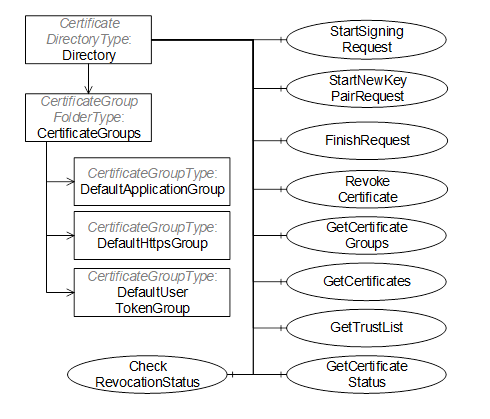
Figure 20 – The Certificate Management AddressSpace for the GlobalDiscoveryServer
This ObjectType is the TypeDefinition for the root of the CertificateManager AddressSpace. It provides additional Methods for Certificate management which are shown in Table 51.
Table 51 – CertificateDirectoryType ObjectType Definition
|
Attribute |
Value |
||||
|
BrowseName |
2:CertificateDirectoryType |
||||
|
IsAbstract |
False |
||||
|
References |
NodeClass |
BrowseName |
DataType |
TypeDefinition |
Modelling Rule |
|
Subtype of the 2:DirectoryType defined in 6.6.3. |
|||||
|
|
|
|
|
|
|
|
0:Organizes |
Object |
2:CertificateGroups |
|
0:CertificateGroup FolderType |
Mandatory |
|
0:HasComponent |
Method |
2:StartSigningRequest |
Defined in 7.9.3. |
Mandatory |
|
|
0:HasComponent |
Method |
2:StartNewKeyPairRequest |
Defined in 7.9.4. |
Mandatory |
|
|
0:HasComponent |
Method |
2:FinishRequest |
Defined in 7.9.5. |
Mandatory |
|
|
0:HasComponent |
Method |
2:RevokeCertificate |
Defined in 7.9.6. |
Optional |
|
|
0:HasComponent |
Method |
2:GetCertificateGroups |
Defined in 7.9.7. |
Mandatory |
|
|
0:HasComponent |
Method |
2:GetCertificates |
Defined in 7.9.8. |
Optional |
|
|
0:HasComponent |
Method |
2:GetTrustList |
Defined in 7.9.9. |
Mandatory |
|
|
0:HasComponent |
Method |
2:GetCertificateStatus |
Defined in 7.9.10. |
Mandatory |
|
|
0:HasComponent |
Method |
2:CheckRevocationStatus |
Defined in 7.9.11. |
Optional |
|
|
|
|||||
|
Conformance Units |
|||||
|
GDS Certificate Manager Pull Model |
|||||
The CertificateGroups Object organizes the CertificateGroups supported by the CertificateManager. It is described in 7.8.4.6. CertificateManagers shall support the DefaultApplicationGroup and may support the DefaultHttpsGroup or the DefaultUserTokenGroup. CertificateManagers may support additional CertificateGroups depending on their requirements. For example, a CertificateManager with multiple Certificate Authorities would represent each as a CertificateGroupType Object organized by CertificateGroups Folder. Clients could then request Certificates issued by a specific CA by passing the appropriate NodeId to the StartSigningRequest or StartNewKeyPairRequest Methods.
CertificateGroups assigned by the CertificateManager to specific applications are persisted by PullManagement Clients. These Clients use the NodeIds to relate their local configuration to the CertificateGroup in the CertificateManager.
The StartSigningRequest Method is used to request a new a Certificate that is signed by a CA managed by the CertificateManager. This Method is recommended when the caller already has a private key.
The StartNewKeyPairRequest Method is used to request a new Certificate that is signed by a CA managed by the CertificateManager along with a new private key. This Method is used only when the caller does not have a private key and cannot generate one.
The FinishRequest Method is used to check that a Certificate request has been approved by an entity with access to the RegistrationAuthorityAdmin Role. If successful the Certificate and Private Key (if requested) are returned.
The GetCertificateGroups Method returns a list of NodeIds for CertificateGroupType Objects that can be used to request Certificates or TrustLists for an Application.
The GetCertificates Method returns a list of Certificates assigned to the Application for a CertificateGroup.
The GetTrustList Method returns a NodeId of a TrustListType Object that belongs to a CertificateGroup assigned to an Application.
The GetCertificateStatus Method checks whether the Application needs to update the Certificate identified in the call.
The CheckRevocationStatus Method checks the revocation status of a Certificate.
StartSigningRequest is used to initiate a request to create a Certificate which uses the private key which the caller currently has. The new Certificate is returned in the FinishRequest response.
Signature
StartSigningRequest(
[in] NodeId applicationId
[in] NodeId certificateGroupId
[in] NodeId certificateTypeId
[in] ByteString certificateRequest
[out] NodeId requestId
);
|
Argument |
Description |
|
applicationId |
The identifier assigned to the Application record by the CertificateManager. |
|
certificateGroupId |
The NodeId of the CertificateGroup which provides the context for the new request. If null the CertificateManager shall choose the DefaultApplicationGroup. |
|
certificateTypeId |
The NodeId of the CertificateType for the new Certificate. If null the CertificateManager shall generate a Certificate based on the value of the certificateGroupId argument. |
|
certificateRequest |
A CertificateRequest used to prove possession of the Private Key. It is a PKCS #10 encoded blob in DER format. If the CertificateRequest is for an ApplicationInstance Certificate then it shall include all fields required by OPC 10000-6 such as the subjectAltName. |
|
requestId |
The NodeId that represents the request. This value is passed to FinishRequest. |
The call returns the NodeId that is passed to the FinishRequest Method.
The certificateGroupId parameter allows the caller to specify a CertificateGroup that provides context for the request. If null the CertificateManager shall choose the DefaultApplicationGroup. If the Application does not currently belong to the requested CertificateGroup the CertificateManager shall verify that the Application is allowed to join the CertificateGroup and then, if permitted, add the Application to the CertificateGroup.The CertificateGroup verification and assignment may occur anytime before FinishRequest returns success.
The set of available CertificateGroups are found in the CertificateGroups folder described in 7.9.2. The CertificateGroups allowed for an Application are returned by the GetCertificateGroups Method (see 7.9.7).
The certificateTypeId parameter specifies the type of Certificate to return. The permitted values are specified by the CertificateTypes Property of the Object specified by the certificateGroupId parameter.
The certificateRequest parameter is a DER encoded CertificateRequest. The subject, subjectAltName and Public Key are copied into the new Certificate.
If the certificateTypeId is a subtype of ApplicationCertificateType the subject conforms to the requirements defined in OPC 10000-6. The public key length shall meet the length restrictions for the CertificateType. If the certificateType is a subtype of HttpsCertificateType the Certificate common name (CN=) shall be the same as a domain from a DiscoveryUrl which uses HTTPS and the subject shall have an organization (O=) field.
The ApplicationUri shall be specified in the CSR. The CertificateManager shall return Bad_CertificateUriInvalid if the stored ApplicationUri for the Application is different from what is in the CSR.
The subject in the CSR may be ignored by the CertificateManager. The CertificateManager may update the subject to comply with policy requirements and to ensure global uniqueness.
Any bits set in basicConstraints or extendedKeyUsage fields in the CSR are ignored by the CertificateManager. The CertificateManager uses values that are appropriate and compliant with requirements defined for Application Instance Certificates in OPC 10000-6.
For Servers, the list of domain names shall be specified in the CSR. The domains shall include the domain(s) in the DiscoveryUrls known to the CertificateManager.
This Method shall be called from an encrypted SecureChannel and from a Session that has access to the CertificateAuthorityAdmin Role, the ApplicationAdmin Privilege, or the ApplicationSelfAdmin Privilege (see 7.2).
If auditing is supported, the CertificateManager shall generate the CertificateRequested AuditEventType (see 7.9.12) if this Method succeeds or fails.
Method Result Codes (defined in Call Service)
|
Result Code |
Description |
|
Bad_NotFound |
The applicationId does not refer to a registered Application. |
|
Bad_InvalidArgument |
One or more of the certificateGroupId, certificateTypeId or certificateRequest arguments is not valid. The text associated with the error shall indicate the exact problem. |
|
Bad_UserAccessDenied |
The current user does not have the rights required. |
|
Bad_RequestNotAllowed |
The current configuration of the CertificateManager does not allow the request. The text associated with the error should indicate the exact reason. |
|
Bad_CertificateUriInvalid |
The ApplicationUri was not specified in the CSR or does not match the Application record. |
|
Bad_NotSupported |
The signing algorithm, public algorithm or public key size are not supported by the CertificateManager. The text associated with the error shall indicate the exact problem. |
|
Bad_SecurityModeInsufficient |
The SecureChannel is not encrypted. |
Table 52 specifies the AddressSpace representation for the StartSigningRequest Method.
Table 52 – StartSigningRequest Method AddressSpace Definition
|
Attribute |
Value |
||||
|
BrowseName |
2:StartSigningRequest |
||||
|
References |
NodeClass |
BrowseName |
DataType |
TypeDefinition |
ModellingRule |
|
0:HasProperty |
Variable |
0:InputArguments |
0:Argument[] |
0:PropertyType |
Mandatory |
|
0:HasProperty |
Variable |
0:OutputArguments |
0:Argument[] |
0:PropertyType |
Mandatory |
This Method is used to start a request for a new Certificate and Private Key. The Certificate and Private Key. are returned in the FinishRequest response.
Signature
StartNewKeyPairRequest(
[in] NodeId applicationId
[in] NodeId certificateGroupId
[in] NodeId certificateTypeId
[in] String subjectName
[in] String[] domainNames
[in] String privateKeyFormat
[in] String privateKeyPassword
[out] NodeId requestId
);
|
Argument |
Description |
|
applicationId |
The identifier assigned to the Application Instance by the CertificateManager. |
|
certificateGroupId |
The NodeId of the CertificateGroup which provides the context for the new request. If null the CertificateManager shall choose the DefaultApplicationGroup. |
|
certificateTypeId |
The NodeId of the CertificateType for the new Certificate. If null the CertificateManager shall generate a Certificate based on the value of the certificateGroupId argument. |
|
subjectName |
The subject to use for the Certificate. If not specified the ApplicationName and/or domainNames are used to create a suitable default value. The format of the subject is a sequence of name value pairs separated by a ‘/’. The name shall be one of ‘CN’, ‘O’, ‘OU’, ‘DC’, ‘L’, ‘S’ or ‘C’ and shall be followed by a ‘=’ and then followed by the value. The value may be any printable character except for ‘”’. If the value contains a ‘/’ or a ‘=’ then it shall be enclosed in double quotes (‘”’). |
|
domainNames |
The domain names to include in the Certificate. If not specified the DiscoveryUrls are used to create suitable defaults. |
|
privateKeyFormat |
The format of the private key. The following values are always supported: PFX - PKCS #12 encoded PEM - PKCS #8 Base64 encoded DER (see RFC 5958). |
|
privateKeyPassword |
The password to use for the private key. |
|
requestId |
The NodeId that represents the request. This value is passed to FinishRequest. |
The call returns the NodeId that is passed to the FinishRequest Method.
The certificateGroupId parameter allows the caller to specify a CertificateGroup that provides context for the request. If null the CertificateManager shall choose the DefaultApplicationGroup. If the Application does not currently belong to the requested CertificateGroup the CertificateManager shall verify that the Application is allowed to join the CertificateGroup and then, if permitted, add the Application to the CertificateGroup.
The set of available CertificateGroups are found in the CertificateGroups folder described in 7.9.2. The CertificateGroups allowed for an Application are returned by the GetCertificateGroups Method (see 7.9.7).
The certificateTypeId parameter specifies the type of Certificate to return. The permitted values are specified by the CertificateTypes Property of the Object specified by the certificateGroupId parameter.
The subjectName parameter is a sequence of X.500 name value pairs separated by a ‘/’. For example: CN=ApplicationName/OU=Group/O=Company.
If the certificateType is a subtype of ApplicationCertificateType the Certificate subject shall have an organization (O=) or domain name (DC=) field. The public key length shall meet the length restrictions for the CertificateType. The domain name field specified in the subject is a logical domain used to qualify the subject that may or may not be the same as a domain or IP address in the subjectAltName field of the Certificate.
If the certificateType is a subtype of HttpsCertificateType the Certificate common name (CN=) shall be the same as a domain from a DiscoveryUrl which uses HTTPS and the subject shall have an organization (O=) field.
If the subjectName is blank or null the CertificateManager generates a suitable default.
The requested subject may be ignored by the CertificateManager. The CertificateManager may update the subject to comply with policy requirements and to ensure global uniqueness.
The domainNames parameter is list of domains to be includes in the Certificate. If it is null or empty the GDS uses the DiscoveryUrls of the Server to create a list. For Clients the domainNames are omitted from the Certificate if they are not explicitly provided.
The privateKeyFormat specifies the format of the private key returned. All CertificateManager implementations shall support “PEM” and “PFX”.
The privateKeyPassword specifies the password on the private key. The CertificateManager shall not persist this information and shall discard it once the new private key is generated.
This Method shall be called from an encrypted SecureChannel and from a Session that has access to the CertificateAuthorityAdmin Role, the ApplicationAdmin Privilege, or the ApplicationSelfAdmin Privilege (see 7.2).
If auditing is supported, the CertificateManager shall generate the CertificateRequested AuditEventType (see 7.9.12) if this Method succeeds or fails.
Method Result Codes (defined in Call Service)
|
Result Code |
Description |
|
Bad_NodeIdUnknown |
The applicationId does not refer to a registered Application (deprecated). |
|
Bad_NotFound |
The applicationId does not refer to a registered Application. |
|
Bad_InvalidArgument |
One or more of the certificateGroupId, certificateTypeId, subjectName, domainNames or privateKeyFormat parameters is not valid. The text associated with the error shall indicate the exact problem. |
|
Bad_UserAccessDenied |
The current user does not have the rights required. |
|
Bad_RequestNotAllowed |
The current configuration of the CertificateManager does not allow the request. The text associated with the error should indicate the exact reason. |
|
Bad_SecurityModeInsufficient |
The SecureChannel is not encrypted. |
Table 53 specifies the AddressSpace representation for the StartNewKeyPairRequest Method.
Table 53 – StartNewKeyPairRequest Method AddressSpace Definition
|
Attribute |
Value |
||||
|
BrowseName |
2:StartNewKeyPairRequest |
||||
|
References |
NodeClass |
BrowseName |
DataType |
TypeDefinition |
ModellingRule |
|
0:HasProperty |
Variable |
0:InputArguments |
0:Argument[] |
0:PropertyType |
Mandatory |
|
0:HasProperty |
Variable |
0:OutputArguments |
0:Argument[] |
0:PropertyType |
Mandatory |
FinishRequest is used to finish a certificate request started with a call to StartNewKeyPairRequest or StartSigningRequest.
Signature
FinishRequest (
[in] NodeId applicationId
[in] NodeId requestId
[out] ByteString certificate
[out] ByteString privateKey
[out] ByteString[] issuerCertificates
);
|
Argument |
Description |
|
applicationId |
The identifier assigned to the Application Instance by the GDS. |
|
requestId |
The NodeId returned by StartNewKeyPairRequest or StartSigningRequest. |
|
certificate |
The DER encoded Certificate. |
|
privateKey |
The private key encoded in the format requested. If a password was supplied the blob is protected with it. This field is null if no private key was requested. |
|
issuerCertificates |
The Certificates required to validate the new Certificate. |
This call is passes the NodeId returned by a previous call to StartNewKeyPairRequest or StartSigningRequest.
It is expected that a Client will periodically call this Method until an entity with access to the RegistrationAuthorityAdmin Role has approved the request.
If the Client experiences a network failure while waiting for a completed request it may receive a Bad_InvalidArgument error when it calls the Method again. Recovering from this error is done by:
· If the Client originally called StartSigningRequest it can retrieve the Certificate by calling GetCertificates (see 7.9.8).
· If the Client originally called StartNewKeyPairRequest it shall restart the process by calling StartNewKeyPairRequest again.
This Method shall be called from an encrypted SecureChannel and from a Session that has access to the CertificateAuthorityAdmin Role, the ApplicationAdmin Privilege, or the ApplicationSelfAdmin Privilege (see 7.2). In addition, the Client Certificate shall be the same as the one used to call StartSigningRequest or StartNewKeyPairRequest.
If auditing is supported, the CertificateManager shall generate the CertificateDeliveredAuditEventType (see 7.9.13) if this Method succeeds or if it fails with anything but Bad_NothingToDo.
Method Result Codes (defined in Call Service)
|
Result Code |
Description |
|
Bad_NotFound |
The applicationId does not refer to a registered Application. |
|
Bad_InvalidArgument |
The requestId is does not reference to a valid request for the Application. |
|
Bad_NothingToDo |
There is nothing to do because request has not yet completed. |
|
Bad_UserAccessDenied |
The current user does not have the rights required. |
|
Bad_RequestNotAllowed |
The CertificateManager rejected the request. The text associated with the error should indicate the exact reason. |
|
Bad_SecurityModeInsufficient |
The SecureChannel is not encrypted. |
Table 54 specifies the AddressSpace representation for the FinishRequest Method.
Table 54 – FinishRequest Method AddressSpace Definition
|
Attribute |
Value |
||||
|
BrowseName |
2:FinishRequest |
||||
|
References |
NodeClass |
BrowseName |
DataType |
TypeDefinition |
ModellingRule |
|
0:HasProperty |
Variable |
0:InputArguments |
0:Argument[] |
0:PropertyType |
Mandatory |
|
0:HasProperty |
Variable |
0:OutputArguments |
0:Argument[] |
0:PropertyType |
Mandatory |
RevokeCertificate is used to revoke a Certificate issued by the CertificateManager.
When a Certificate is revoked it shall be removed from any TrustLists that it is in and TrustLists with the issuer Certificate shall be updated with the new CRL.
Certificates assigned to an Application are automatically revoked when the UnregisterApplication Method is called (see 6.6.8).
This Method shall be called from an authenticated SecureChannel and from a Client that has access to the CertificateAuthorityAdmin Role (see 7.2).
Signature
RevokeCertificate (
[in] NodeId applicationId
[in] ByteString certificate
);
|
Argument |
Description |
|
applicationId |
The identifier assigned to the Application by the CertificateManager. |
|
certificate |
The DER encoded Certificate to revoke. |
Method Result Codes (defined in Call Service)
|
Result Code |
Description |
|
Bad_NotFound |
The applicationId does not refer to a registered Application. |
|
Bad_InvalidArgument |
The certificate is not a Certificate for the specified Application that was issued by the CertificateManager. |
|
Bad_UserAccessDenied |
The current user does not have the rights required. |
|
Bad_SecurityModeInsufficient |
The SecureChannel is not authenticated. |
Table 55 specifies the AddressSpace representation for the RevokeCertificate Method.
Table 55 – RevokeCertificate Method AddressSpace Definition
|
Attribute |
Value |
||||
|
BrowseName |
2:RevokeCertificate |
||||
|
References |
NodeClass |
BrowseName |
DataType |
TypeDefinition |
ModellingRule |
|
0:HasProperty |
Variable |
0:InputArguments |
0:Argument[] |
0:PropertyType |
Mandatory |
GetCertificateGroups returns the CertificateGroups assigned to Application.
Signature
GetCertificateGroups(
[in] NodeId applicationId
[out] NodeId[] certificateGroupIds
);
|
Argument |
Description |
|
applicationId |
The identifier assigned to the Application by the GDS. |
|
certificateGroupIds |
An identifier for the CertificateGroups assigned to the Application. |
A CertificateGroup provides a TrustList and one or more CertificateTypes which may be assigned to an Application.
This Method shall be called from an authenticated SecureChannel and from a Client that has access to the CertificateAuthorityAdmin Role, the ApplicationAdmin Privilege, or the ApplicationSelfAdmin Privilege (see 7.2).
Method Result Codes (defined in Call Service)
|
Result Code |
Description |
|
Bad_NotFound |
The applicationId does not refer to a registered Application. |
|
Bad_UserAccessDenied |
The current user does not have the rights required. |
|
Bad_SecurityModeInsufficient |
The SecureChannel is not authenticated. |
Table 58 specifies the AddressSpace representation for the GetCertificateGroups Method.
Table 56 – GetCertificateGroups Method AddressSpace Definition
|
Attribute |
Value |
||||
|
BrowseName |
2:GetCertificateGroups |
||||
|
References |
NodeClass |
BrowseName |
DataType |
TypeDefinition |
ModellingRule |
|
0:HasProperty |
Variable |
0:InputArguments |
0:Argument[] |
0:PropertyType |
Mandatory |
|
0:HasProperty |
Variable |
0:OutputArguments |
0:Argument[] |
0:PropertyType |
Mandatory |
GetCertificates returns the Certificates assigned to Application and associated with the CertificateGroup.
This Method shall be called from an authenticated SecureChannel and from a Client that has access to the CertificateAuthorityAdmin Role, the ApplicationAdmin Privilege, or the ApplicationSelfAdmin Privilege (see 7.2).
Signature
GetCertificates(
[in] NodeId applicationId
[in] NodeId certificateGroupId
[out] NodeId[] certificateTypeIds
[out] ByteString[] certificates
);
|
Argument |
Description |
|
applicationId |
The identifier assigned to the Application by the GDS. |
|
certificateGroupId |
An identifier for the CertificateGroup that the Certificates belong to. If null, the CertificateManager shall return the Certificates for all CertificateGroups assigned to the Application. |
|
certificateTypeIds |
The CertificateTypes that currently have a Certificate assigned. The length of this list is the same as the length as certificates list. |
|
certificates |
A list of DER encoded Certificates assigned to Application. This list only includes Certificates that are currently valid. |
Method Result Codes (defined in Call Service)
|
Result Code |
Description |
|
Bad_NotFound |
The applicationId does not refer to a registered Application. |
|
Bad_InvalidArgument |
The certificateGroupId is not recognized or not valid for the Application. |
|
Bad_UserAccessDenied |
The current user does not have the rights required. |
|
Bad_SecurityModeInsufficient |
The SecureChannel is not authenticated. |
Table 57 specifies the AddressSpace representation for the GetCertificates Method.
Table 57 – GetCertificates Method AddressSpace Definition
|
Attribute |
Value |
||||
|
BrowseName |
2:GetCertificates |
||||
|
References |
NodeClass |
BrowseName |
DataType |
TypeDefinition |
ModellingRule |
|
0:HasProperty |
Variable |
0:InputArguments |
0:Argument[] |
0:PropertyType |
Mandatory |
|
0:HasProperty |
Variable |
0:OutputArguments |
0:Argument[] |
0:PropertyType |
Mandatory |
GetTrustList is used to retrieve the NodeId of a TrustList assigned to an Application.
Signature
GetTrustList(
[in] NodeId applicationId
[in] NodeId certificateGroupId
[out] NodeId trustListId
);
|
Argument |
Description |
|
applicationId |
The identifier assigned to the Application by the GDS. |
|
certificateGroupId |
An identifier for a CertificateGroup that the Application belongs to. If null, the CertificateManager shall return the trustListId for a suitable default group for the Application. |
|
trustListId |
The NodeId for a TrustList Object that can be used to download the TrustList assigned to the Application. |
Access permissions also apply to the TrustList Objects which are returned by this Method. This TrustList includes any Certificate Revocation Lists (CRLs) associated with issuer Certificates in the TrustList.
This Method shall be called from an authenticated SecureChannel and from a Client that has access to the CertificateAuthorityAdmin Role, the ApplicationAdmin Privilege, or the ApplicationSelfAdmin Privilege (see 7.2).
Method Result Codes (defined in Call Service)
|
Result Code |
Description |
|
Bad_NotFound |
The applicationId does not refer to a registered Application. |
|
Bad_InvalidArgument |
The certificateGroupId parameter is not valid. The text associated with the error shall indicate the exact problem. |
|
Bad_UserAccessDenied |
The current user does not have the rights required. |
|
Bad_SecurityModeInsufficient |
The SecureChannel is not authenticated. |
Table 58 specifies the AddressSpace representation for the GetTrustList Method.
Table 58 – GetTrustList Method AddressSpace Definition
|
Attribute |
Value |
||||
|
BrowseName |
2:GetTrustList |
||||
|
References |
NodeClass |
BrowseName |
DataType |
TypeDefinition |
ModellingRule |
|
0:HasProperty |
Variable |
0:InputArguments |
0:Argument[] |
0:PropertyType |
Mandatory |
|
0:HasProperty |
Variable |
0:OutputArguments |
0:Argument[] |
0:PropertyType |
Mandatory |
GetCertificateStatus is used to check if an Application needs to update its Certificate.
This Method shall be called from an authenticated SecureChannel and from a Client that has access to the CertificateAuthorityAdmin Role, the ApplicationAdmin Privilege, or the ApplicationSelfAdmin Privilege (see 7.2).
Signature
GetCertificateStatus(
[in] NodeId applicationId
[in] NodeId certificateGroupId
[in] NodeId certificateTypeId
[out] Boolean updateRequired
);
|
Argument |
Description |
|
applicationId |
The identifier assigned to the Application Instance by the GDS. |
|
certificateGroupId |
The NodeId of the CertificateGroup which provides the context. If null the CertificateManager shall choose the DefaultApplicationGroup. |
|
certificateTypeId |
The NodeId of the CertificateType for the Certificate. If null the CertificateManager shall select a Certificate based on the value of the certificateGroupId argument. |
|
updateRequired |
TRUE if the Application needs to request a new Certificate from the GDS. FALSE if the Application can keep using the existing Certificate. |
Method Result Codes (defined in Call Service)
|
Result Code |
Description |
|
Bad_NotFound |
The applicationId does not refer to a registered Application. |
|
Bad_InvalidArgument |
The certificateGroupId or certificateTypeId parameter is not valid. The text associated with the error shall indicate the exact problem. |
|
Bad_UserAccessDenied |
The current user does not have the rights required. |
|
Bad_SecurityModeInsufficient |
The SecureChannel is not authenticated. |
Table 59 specifies the AddressSpace representation for the GetCertificateStatus Method.
Table 59 – GetCertificateStatus Method AddressSpace Definition
|
Attribute |
Value |
||||
|
BrowseName |
2:GetCertificateStatus |
||||
|
References |
NodeClass |
BrowseName |
DataType |
TypeDefinition |
ModellingRule |
|
0:HasProperty |
Variable |
0:InputArguments |
0:Argument[] |
0:PropertyType |
Mandatory |
|
0:HasProperty |
Variable |
0:OutputArguments |
0:Argument[] |
0:PropertyType |
Mandatory |
CheckRevocationStatus Method is used to check the revocation status of an Certificate.
Clients or Servers may use this Method if the issuer Certificate has a crlDistributionPoint extension, an authorityInformationAccess extension (see RFC 6960) or the TrustList is configured to require online Certificate revocation checks (see 7.8.2.1).
The CertificateManager will typically use a protocol such as OCSP (see RFC 6960) to verify the Certificate status using the endpoint in the CDP extension, however, it may also optimize performance by maintaining a cache of recently verified Certificate and/or maintaining it’s own offline CRLs. The validityTime parameter provides guidance on how long a result can be kept in a local cache.
The caller shall perform all validation checks other than the revocation status check (see OPC 10000-4) on the Certificate before calling this Method. The CertificateManager shall check the Signature on the Certificate and may do additional validation.
This Method shall be called from an authenticated SecureChannel.
Signature
CheckRevocationStatus (
[in] ByteString certificate
[out] StatusCode certificateStatus
[out] UtcTime validityTime
);
|
Argument |
Description |
|
INPUTS |
|
|
certificate |
The DER encoded form of the Certificate to check. |
|
OUTPUTS |
|
|
certificateStatus |
The first error encountered when validating the Certificate. |
|
validityTime |
When the result expires and should be rechecked. DateTime.MinValue is this is unknown. |
Method Result Codes (defined in Call Service)
|
Result Code |
Description |
|
Bad_UserAccessDenied |
The current user does not have the rights required. |
|
Bad_SecurityModeInsufficient |
The SecureChannel is not authenticated. |
Table 60 specifies the AddressSpace representation for the CheckRevocationStatus Method.
Table 60 – CheckRevocationStatus Method AddressSpace Definition
|
Attribute |
Value |
||||
|
BrowseName |
2:CheckRevocationStatus |
||||
|
References |
NodeClass |
BrowseName |
DataType |
TypeDefinition |
ModellingRule |
|
0:HasProperty |
Variable |
0:InputArguments |
0:Argument[] |
0:PropertyType |
Mandatory |
|
0:HasProperty |
Variable |
0:OutputArguments |
0:Argument[] |
0:PropertyType |
Mandatory |
This event is raised when a new certificate request has been accepted or rejected by the CertificateManager.
This can be the result of a StartNewKeyPairRequest or StartSigningRequest Method calls.
Its representation in the AddressSpace is formally defined in Table 61.
Table 61 – CertificateRequestedAuditEventType Definition
|
Attribute |
Value |
|||||
|
BrowseName |
2:CertificateRequestedAuditEventType |
|||||
|
IsAbstract |
True |
|||||
|
References |
NodeClass |
BrowseName |
DataType |
TypeDefinition |
Modelling Rule |
|
|
Subtype of the 0:AuditUpdateMethodEventType defined in OPC 10000-5. |
||||||
|
0:HasProperty |
Variable |
2:CertificateGroup |
0:NodeId |
0:PropertyType |
Mandatory |
|
|
0:HasProperty |
Variable |
2:CertificateType |
0:NodeId |
0:PropertyType |
Mandatory |
|
|
|
||||||
|
Conformance Units |
||||||
|
GDS Certificate Manager Pull Model |
||||||
This EventType inherits all Properties of the AuditUpdateMethodEventType. Their semantic is defined in OPC 10000-5.
The CertificateGroup Property specifies the CertificateGroup that was affected by the update.
The CertificateType Property specifies the type of Certificate that was updated.
This event is raised when a certificate is delivered by the CertificateManager to a Client.
This is the result of a FinishRequest Method completing successfully.
Its representation in the AddressSpace is formally defined in Table 62.
Table 62 – CertificateDeliveredAuditEventType Definition
|
Attribute |
Value |
|||||
|
BrowseName |
2:CertificateDeliveredAuditEventType |
|||||
|
IsAbstract |
True |
|||||
|
References |
NodeClass |
BrowseName |
DataType |
TypeDefinition |
Modelling Rule |
|
|
Subtype of the 0:AuditUpdateMethodEventType defined in OPC 10000-5. |
||||||
|
0:HasProperty |
Variable |
2:CertificateGroup |
0:NodeId |
0:PropertyType |
Mandatory |
|
|
0:HasProperty |
Variable |
2:CertificateType |
0:NodeId |
0:PropertyType |
Mandatory |
|
|
|
||||||
|
Conformance Units |
||||||
|
GDS Certificate Manager Pull Model |
||||||
This EventType inherits all Properties of the AuditUpdateMethodEventType. Their semantic is defined in OPC 10000-5.
The CertificateGroup Property specifies the CertificateGroup that was affected by the update.
The CertificateType Property specifies the type of Certificate that was updated.
If a Server supports PushManagement it is required to support an information model as part of its AddressSpace. It shall support the ServerConfiguration Object shown in Figure 21.
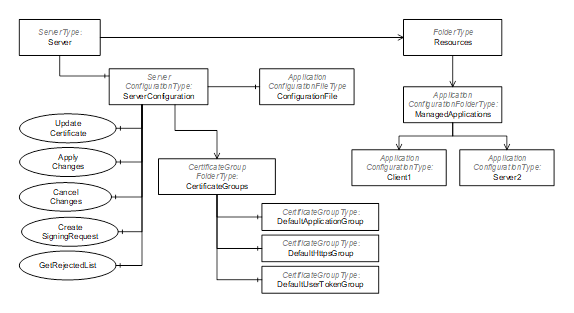
Figure 21 – The AddressSpace for the Server that supports Push Management
The ServerConfiguration Object is used to manage the Server. The ManagedApplications Folder collects ApplicationConfiguration Objects for other applications which the Server is able to manage. For example, a Server may have associated Client applications that do not support PushManagement so the Server can become a proxy for these Clients.
The CertificateGroups and TrustLists used by a Server may be updated as part of a transaction where multiple Methods are invoked, however, no changes will have any effect until ApplyChanges is called (see 7.10.7). These transactions are created automatically and the Server returns applyChangesRequired =TRUE in a Method response to tell the Client that a transaction is active. Servers that do not support transactions return applyChangesRequired =FALSE and apply any changes before returning a Method response.
If a Method called within a transaction fails (e.g. a parameter was invalid) the transaction state shall not change and all previous changes are applied when ApplyChanges is called.
Once a transaction is created, a Server shall queue the changes in the order that they were requested within the current Session. When ApplyChanges is called the Server verifies that all the changes are consistent and can be applied without errors. If any errors are found then all changes are discarded. If no errors are found, the Server applies all changes.
If errors occur, they are reported in the TransactionDiagnostics Object (see 7.10.12).
The life cycle of a transaction is shown in Figure 22.
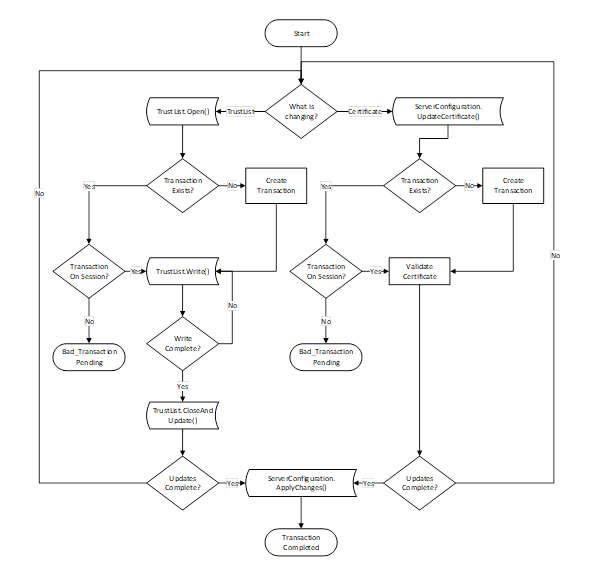
Figure 22 – The Transaction Lifecycle when using PushManagement
Servers that implement the transaction model shall support the CancelChanges Method and always set applyChangesRequired to TRUE.
Servers that support the transaction model are expected to support exactly one active transaction. Once a transaction has started in Session all other Sessions will not be able to modify TrustLists or Certificates. Transactions are automatically cancelled when the Session that created it is closed or when the CancelChanges Method is called.
If the transaction model is not supported and applyChangesRequired is TRUE then the behaviour of the Server for multiple changes is undefined.
If applyChangesRequired is FALSE then any changes are applied before the Method response is sent.
This Object allows access to the Server’s configuration and it is the target of an HasComponent reference from the Server Object defined in OPC 10000-5.
This Object and its immediate children shall be visible (i.e. browse access is available) to users who can access the Server Object. The children of the CertificateGroups Object should only be visible to Clients with access to the SecurityAdmin Role.
Its representation in the AddressSpace is formally defined in Table 63.
Table 63 – ServerConfiguration Object Definition
|
Attribute |
Value |
||||
|
BrowseName |
0:ServerConfiguration |
||||
|
TypeDefinition |
0:ServerConfigurationType defined in 7.10.4. |
||||
|
References |
NodeClass |
BrowseName |
DataType |
TypeDefinition |
Modelling Rule |
|
|
|||||
|
Conformance Units |
|||||
|
Push Model for Global Certificate and TrustList Management |
|||||
This type defines an ObjectType which represents the configuration of a Server which supports PushManagement. Its values are defined in Table 64. There is always a well-known instance in the Server AddressSpace (see 7.10.3) that can be use to configure a Server.
Table 64 – ServerConfigurationType Definition
|
Attribute |
Value |
|||||
|
BrowseName |
0:ServerConfigurationType |
|||||
|
IsAbstract |
False |
|||||
|
References |
NodeClass |
BrowseName |
DataType |
Type Definition |
Modelling Rule |
|
|
Subtype of the BaseObjectType defined in OPC 10000-5. |
||||||
|
0:HasProperty |
Variable |
0:ApplicationUri |
0:UriString |
0:PropertyType |
Optional |
|
|
0:HasProperty |
Variable |
0:ProductUri |
0:UriString |
0:PropertyType |
Optional |
|
|
0:HasProperty |
Variable |
0:ApplicationType |
0:PropertyType |
Optional |
||
|
0:HasProperty |
Variable |
0:ApplicationNames |
0:LocalizedText[] |
0:PropertyType |
Optional |
|
|
0:HasProperty |
Variable |
0:ServerCapabilities |
0:String[] |
0:PropertyType |
Mandatory |
|
|
0:HasProperty |
Variable |
0:SupportedPrivateKeyFormats |
0:String[] |
0:PropertyType |
Mandatory |
|
|
0:HasProperty |
Variable |
0:MaxTrustListSize |
0:UInt32 |
0:PropertyType |
Mandatory |
|
|
0:HasProperty |
Variable |
0:MulticastDnsEnabled |
0:Boolean |
0:PropertyType |
Mandatory |
|
|
0:HasProperty |
Variable |
0:HasSecureElement |
0:Boolean |
0:PropertyType |
Optional |
|
|
0:HasProperty |
Variable |
0:SupportsTransactions |
0:Boolean |
0:PropertyType |
Optional |
|
|
0:HasProperty |
Variable |
0:InApplicationSetup |
0:Boolean |
0:PropertyType |
Optional |
|
|
0:HasComponent |
Method |
0:UpdateCertificate |
See 7.10.5. |
Mandatory |
||
|
0:HasComponent |
Method |
0:GetCertificates |
See 7.10.6. |
Optional |
||
|
0:HasComponent |
Method |
0:ApplyChanges |
See 7.10.7. |
Mandatory |
||
|
0:HasComponent |
Method |
0:CancelChanges |
See 7.10.9. |
Optional |
||
|
0:HasComponent |
Method |
0:CreateSigningRequest |
See 7.10.8. |
Mandatory |
||
|
Method |
0:GetRejectedList |
See 7.10.10. |
Mandatory |
|||
|
0:HasComponent |
Method |
See 7.10.11. |
Optional |
|||
|
0:HasComponent |
Object |
0:CertificateGroups |
|
0:CertificateGroupFolderType |
Mandatory |
|
|
0:HasComponent |
Object |
0:TransactionDiagnostics |
|
0:TransactionDiagnosticsType |
Optional |
|
|
|
||||||
|
Conformance Units |
||||||
|
Push Model for Global Certificate and TrustList Management |
||||||
The CertificateGroups Object organizes the Certificate Groups supported by the Server. It is described in 7.8.4.6. Servers shall support the DefaultApplicationGroup and may support the DefaultHttpsGroup or the DefaultUserTokenGroup. Servers may support additional Certificate Groups depending on their requirements. For example, a Server with two network interfaces should have a different TrustList for each interface. The second TrustList would be represented as a new CertificateGroupType Object organized by CertificateGroups Folder.
The ApplicationUri Property specifies the ApplicationUri assigned to the Server. It can be updated by a Client with access to the SecurityAdmin Role.
The ApplicationNames Property is a list of localized names for the application that may be used to when registering with a GDS.
The ProductUri Property specifies the ProductUri for the Server that appears in the ApplicationDescription. It is read-only.
The ApplicationType Property specifies the ApplicationType for the Server that appears in the ApplicationDescription. It is read-only.
The ServerCapabilities Property specifies the capabilities from Annex D which the Server supports. The value is the same as the value reported to the LocalDiscoveryServer when the Server calls the RegisterServer2 Service.
The SupportedPrivateKeyFormats specifies the PrivateKey formats supported by the Server. Possible values include “PEM” (see RFC 5958) or “PFX” (see PKCS #12). The array is empty if the Server does not allow external Clients to update the PrivateKey.
The MaxTrustListSize is the maximum size of the TrustList in bytes. 0 means no limit. The default is 65 535 bytes.
If MulticastDnsEnabled is TRUE then the Server announces itself using multicast DNS. It can be changed by writing to the Variable.
If HasSecureElement is TRUE then the Server has access to hardware based secure storage for the PrivateKeys associated with its Certificates.
If the SupportsTransactions Property is TRUE, the Server supports the transaction lifecyle defined in 7.10.2. If it is FALSE or not present, the Server only supports delaying application of changes until ApplyChanges is called.
If the InApplicationSetup Property is TRUE then the Server is in the application setup state described in G.2.The UpdateCertificate Method is used to update a Certificate.
The GetCertificates Method returns the Certificates assigned to each of the CertificateTypes in a CertificateGroup.
The ApplyChanges Method is used complete changes made to CertificateGroups and/or TrustLists within the context of a transaction.
The CancelChanges Method is used to cancel an existing transaction.
The CreateSigningRequest Method asks the Server to create a PKCS #10 encoded Certificate Request that is signed with the Server’s private key.
The GetRejectedList Method returns the list of Certificates which have been rejected by the Server. It can be used to track activity or allow administrators to move a rejected Certificate into the TrustList. This Method is the a shortcut for the GetRejectedList Method (see 7.8.3.2) on the DefaultApplicationGroup CertificateGroup (see 7.8.3.3).
The ResetToServerDefaults Method is used reset the Server security configuration to a default state.
The TransactionDiagnostics Object reports detailed error information for the current or most recently completed transaction. The TransactionDiagnostics Object is only visible to Clients with access to the SecurityAdmin Role.
UpdateCertificate is used to update a Certificate for a Server.
There are the following three use cases for this Method:
· The new Certificate was created based on a signing request created with the Method CreateSigningRequest defined in 7.10.8. In this case there is no privateKey provided.
· A new privateKey and Certificate was created outside the Server and both are updated with this Method.
· A new Certificate was created and signed with the information from the old Certificate. In this case there is no privateKey provided.
The Server shall follow the validation process defined in OPC 10000-4 on the Certificate and all of the issuer Certificates. If errors occur the Bad_SecurityChecksFailed error is returned. Note that the validation process requires that the TrustList associated with the CertificateGroup already contain the Issuer Certificates and their CRLs or that the issuers support online CRL checks.
The Server shall report an error if the public key does not match the existing Certificate and the PrivateKey was not provided.
If the Server returns applyChangesRequired=FALSE then it is indicating that it is able to satisfy the requirements specified for the ApplyChanges Method.
This Method shall be called from an encrypted SecureChannel and from a Client that has access to the SecurityAdmin Role (see 7.2).
Signature
UpdateCertificate(
[in] NodeId certificateGroupId
[in] NodeId certificateTypeId
[in] ByteString certificate
[in] ByteString[] issuerCertificates
[in] String privateKeyFormat
[in] ByteString privateKey
[out] Boolean applyChangesRequired
);
|
Argument |
Description |
|
certificateGroupId |
The NodeId of the Certificate Group Object which is affected by the update. If null the DefaultApplicationGroup is used. |
|
certificateTypeId |
The type of Certificate being updated. The set of permitted types is specified by the CertificateTypes Property belonging to the Certificate Group. |
|
certificate |
The DER encoded Certificate which replaces the existing Certificate. |
|
issuerCertificates |
The issuer Certificates needed to verify the signature on the new Certificate. |
|
privateKeyFormat |
The format of the Private Key (PKCS #12 encoded and PKCS #8 Base64 encoded DER (see RFC 5958) ). If the privateKey is not specified the privateKeyFormat is null or empty. |
|
privateKey |
The Private Key encoded in the privateKeyFormat. |
|
applyChangesRequired |
Indicates that the ApplyChanges Method shall be called before the new Certificate will be used. |
Method Result Codes (defined in Call Service)
|
Result Code |
Description |
|
Bad_InvalidArgument |
The certificateTypeId or certificateGroupId is not valid. |
|
Bad_CertificateInvalid |
The Certificate is invalid or the format is not supported. |
|
Bad_NotSupported |
The PrivateKey is invalid or the format is not supported. |
|
Bad_UserAccessDenied |
The current user does not have the rights required. |
|
Bad_SecurityChecksFailed |
Some failure occurred verifying the integrity of the Certificate. |
|
Bad_TransactionPending |
There is already a transaction active for another session. |
|
Bad_SecurityModeInsufficient |
The SecureChannel is not encrypted. |
Table 65 specifies the AddressSpace representation for the UpdateCertificate Method.
Table 65 – UpdateCertificate Method AddressSpace Definition
|
Attribute |
Value |
||||
|
BrowseName |
0:UpdateCertificate |
||||
|
References |
NodeClass |
BrowseName |
DataType |
TypeDefinition |
ModellingRule |
|
HasProperty |
Variable |
InputArguments |
Argument[] |
PropertyType |
Mandatory |
|
HasProperty |
Variable |
OutputArguments |
Argument[] |
PropertyType |
Mandatory |
GetCertificates returns the Certificates assigned to CertificateTypes associated with a CertificateGroup.
This Method shall be called from an authenticated SecureChannel and from a Client that has access to the SecurityAdmin Role (see 7.2).
Signature
GetCertificates(
[in] NodeId certificateGroupId
[out] NodeId[] certificateTypeIds
[out] ByteString[] certificates
);
|
Argument |
Description |
|
certificateGroupId |
The identifier for the CertificateGroup. |
|
certificateTypeIds |
The CertificateTypes that currently have a Certificate assigned. The length of this list is the same as the length as certificates list. An empty list if the CertificateGroup does not have any CertificateTypes. |
|
certificates |
A list of DER encoded Certificates assigned to CertificateGroup. The certificateType for the Certificate is specified by the corresponding element in the certificateTypes parameter. |
Method Result Codes (defined in Call Service)
|
Result Code |
Description |
|
Bad_UserAccessDenied |
The current user does not have the rights required. |
|
Bad_InvalidArgument |
The certificateGroupId is not valid. |
|
Bad_SecurityModeInsufficient |
The SecureChannel is not authenticated. |
Table 66 specifies the AddressSpace representation for the GetCertificates Method.
Table 66 – GetCertificates Method AddressSpace Definition
|
Attribute |
Value |
||||
|
BrowseName |
0:GetCertificates |
||||
|
References |
NodeClass |
BrowseName |
DataType |
TypeDefinition |
ModellingRule |
|
0:HasProperty |
Variable |
0:InputArguments |
0:Argument[] |
0:PropertyType |
Mandatory |
|
0:HasProperty |
Variable |
0:OutputArguments |
0:Argument[] |
0:PropertyType |
Mandatory |
ApplyChanges is used to apply pending Certificate and TrustList updates and to complete a transaction as described in 7.10.2.
ApplyChanges returns Bad_InvalidState if any TrustList is still open for writing. No changes are applied and ApplyChanges can be called again after the TrustList is closed.
If a Session is closed or abandoned then the transaction is closed and all pending changes are discarded.
If ApplyChanges is called and there is no active transaction then the Server returns Bad_NothingToDo. If there is an active transaction, however, no changes are pending the result is Good and the transaction is closed.
When a Server Certificate or TrustList changes active SecureChannels are not immediately affected. This ensures the caller of ApplyChanges can get a response to the Method call. Once the Method response is returned the Server shall force existing SecureChannels affected by the changes to renegotiate and use the new Server Certificate and/or TrustLists.
Servers may close SecureChannels without discarding any Sessions or Subscriptions. This will seem like a network interruption from the perspective of the Client and the Client reconnect logic (see OPC 10000-4) allows them to recover their Session and Subscriptions. Note that some Clients may not be able to reconnect because they are no longer trusted.
Other Servers may need to do a complete shutdown. In these cases, the Server shall advertise its intent to interrupt connections by setting the SecondsTillShutdown and ShutdownReason Properties in the ServerStatus Variable.
If a TrustList change only affects UserIdentity associated with a Session then Servers shall re-evaluate the UserIdentity and if it is no longer valid the Session and associated Subscriptions are closed.
This Method shall be called from an authenticated SecureChannel and from the Session that created the transaction and has access to the SecurityAdmin Role (see 7.2).
Signature
ApplyChanges();
Method Result Codes (defined in Call Service)
|
Result Code |
Description |
|
Bad_UserAccessDenied |
The current user does not have the rights required. |
|
Bad_SecurityModeInsufficient |
The SecureChannel is not authenticated. |
|
Bad_NothingToDo |
There is no active transaction. |
|
Bad_BadSessionIdInvalid |
The session is not valid for the active transaction. |
Table 67 specifies the AddressSpace representation for the ApplyChanges Method.
Table 67 – ApplyChanges Method AddressSpace Definition
|
Attribute |
Value |
||||
|
BrowseName |
0:ApplyChanges |
||||
|
References |
NodeClass |
BrowseName |
DataType |
TypeDefinition |
ModellingRule |
CreateSigningRequest Method asks the Server to create a PKCS #10 DER encoded Certificate Request that is signed with the Server’s private key. This request can be then used to request a Certificate from a CA that expects requests in this format.
Servers shall support one active and one new key pair for each combination of certificateGroupId and certificateTypeId. If this Method is called multiple times with the same certificateGroupId and certificateTypeId then any previously generated new key pair, that has not been made active, is discarded. If a key pair is made active by a call to UpdateCertificate then the previously active key pair is deleted.
If Certificate associated with the certificateGroupId and certificateTypeId is deleted or replaced via CreateSelfSignedCertificate (see Error! Reference source not found.) or DeleteCertificate (see Error! Reference source not found.) then the new key pair is discarded.
The new key pair created with CreateSigningRequest shall be persisted and shall be available for UpdateCertificate even if it is called from a different Session.
This Method shall be called from an encrypted SecureChannel and from a Client that has access to the SecurityAdmin Role (see 7.2).
Signature
CreateSigningRequest(
[in] NodeId certificateGroupId
[in] NodeId certificateTypeId
[in] String subjectName
[in] Boolean regeneratePrivateKey
[in] ByteString nonce
[out] ByteString certificateRequest
);
|
Argument |
Description |
|
certificateGroupId |
The NodeId of the Certificate Group Object which is affected by the request. If null the DefaultApplicationGroup is used. |
|
certificateTypeId |
The type of Certificate being requested. The set of permitted types is specified by the CertificateTypes Property belonging to the Certificate Group. |
|
subjectName |
The subject name to use in the Certificate Request. If not specified the SubjectName from the current Certificate is used. The format of the subjectName is defined in 7.9.4. |
|
regeneratePrivateKey |
If TRUE the Server shall create a new Private Key which it stores until the matching signed Certificate is uploaded with the UpdateCertificate Method. Previously created Private Keys may be discarded if UpdateCertificate was not called before calling this method again. If FALSE the Server uses its existing Private Key. |
|
nonce |
Additional entropy which the caller shall provide if regeneratePrivateKey is TRUE. It shall be at least 32 bytes long. |
|
certificateRequest |
The PKCS #10 DER encoded Certificate Request. If the CertificateRequest is for an ApplicationInstance Certificate then it shall include all fields required by OPC 10000-6 such as the subjectAltName. |
Method Result Codes (defined in Call Service)
|
Result Code |
Description |
|
Bad_InvalidArgument |
One or more of the certificateTypeId, certificateGroupId, nonce, or subjectName paremeters is not valid. |
|
Bad_UserAccessDenied |
The current user does not have the rights required. |
|
Bad_TransactionPending |
There is already a transaction active for another session. |
|
Bad_SecurityModeInsufficient |
The SecureChannel is not encrypted. |
Table 68 specifies the AddressSpace representation for the CreateSigningRequest Method.
Table 68 – CreateSigningRequest Method AddressSpace Definition
|
Attribute |
Value |
||||
|
BrowseName |
0:CreateSigningRequest |
||||
|
References |
NodeClass |
BrowseName |
DataType |
TypeDefinition |
ModellingRule |
|
0:HasProperty |
Variable |
0:InputArguments |
0:Argument[] |
0:PropertyType |
Mandatory |
|
0:HasProperty |
Variable |
0:OutputArguments |
0:Argument[] |
0:PropertyType |
Mandatory |
CancelChanges is used to tell the Server to discard changes to the TrustLists or Certificates which were waiting for the Client to ApplyChanges.
This Method shall be called from an authenticated SecureChannel and from the Session that created the transaction and has access to the SecurityAdmin Role (see 7.2).
Signature
CancelChanges();
Method Result Codes (defined in Call Service)
|
Result Code |
Description |
|
Bad_UserAccessDenied |
The current user does not have the rights required. |
|
Bad_SecurityModeInsufficient |
The SecureChannel is not authenticated. |
Table 67 specifies the AddressSpace representation for the CancelChanges Method.
Table 69 – CancelChanges Method AddressSpace Definition
|
Attribute |
Value |
||||
|
BrowseName |
0:CancelChanges |
||||
|
References |
NodeClass |
BrowseName |
DataType |
TypeDefinition |
ModellingRule |
GetRejectedList Method returns the list of Certificates that have been rejected by the Server.
No rules are defined for how the Server updates this list or how long a Certificate is kept in the list. It is recommended that every valid but untrusted Certificate be added to the rejected list as long as storage is available. Servers should omit older entries from the list returned if the maximum message size is not large enough to allow the entire list to be returned.
This Method shall be called from an authenticated SecureChannel and from a Client that has access to the SecurityAdmin Role (see 7.2).
Signature
GetRejectedList(
[out] ByteString[] certificates
);
|
Argument |
Description |
|
certificates |
The DER encoded form of the Certificates rejected by the Server. |
Method Result Codes (defined in Call Service)
|
Result Code |
Description |
|
Bad_UserAccessDenied |
The current user does not have the rights required. |
|
Bad_SecurityModeInsufficient |
The SecureChannel is not authenticated. |
Table 70 specifies the AddressSpace representation for the GetRejectedList Method.
Table 70 – GetRejectedList Method AddressSpace Definition
|
Attribute |
Value |
||||
|
BrowseName |
0:GetRejectedList |
||||
|
References |
NodeClass |
BrowseName |
DataType |
TypeDefinition |
ModellingRule |
|
0:HasProperty |
Variable |
0:OutputArguments |
0:Argument[] |
0:PropertyType |
Mandatory |
The ResetToServerDefaults Method resets the Server configuration to its default settings.
If the Server is running on a Device that supports OPC 10000-21 the Device is placed in a state where the Onboarding process has to restart. If the Device does not support OPC 10000-21, the Server repeats the Application Setup process described in Annex G.
After this Method completes the Server shall set the ServerState to SHUTDOWN and the shutdownReason to a localized message that warns Clients that their credentials may not work when the Server restarts. The Server should set the secondsTillShutdown to a time that gives the Client a chance to receive the response to this Method.
Note that the default configuration for a Server is set by configuration and is not necessarily the “factory default”. For example, a machine builder could update the default configuration to ensure that the Server can still communicate with other Servers within the machine after the reset.
The mechanisms for setting the default configuration is vendor specific.
This Method shall be called from an authenticated SecureChannel and from a Client that has access to the SecurityAdmin Role (see 7.2).
Signature
ResetToServerDefaults ();
Method Result Codes (defined in Call Service)
|
Result Code |
Description |
|
Bad_UserAccessDenied |
The current user does not have the rights required. |
|
Bad_SecurityModeInsufficient |
The SecureChannel is not authenticated. |
Table 71 specifies the AddressSpace representation for the ResetToServerDefaults Method.
Table 71 – ResetToServerDefaults Method AddressSpace Definition
|
Attribute |
Value |
|
BrowseName |
0:ResetToServerDefaults |
The ApplicationConfigurationType ObjectType defines a model which represents the configuration of a Client or Server. A Server acting as a proxy will add the Objects that represent the Applications it manages to the ManagedApplications Object (see 7.10.14).
Table 72 – ApplicationConfigurationType Definition
|
Attribute |
Value |
||||
|
BrowseName |
0:ApplicationConfigurationType |
||||
|
IsAbstract |
False |
||||
|
References |
NodeClass |
BrowseName |
DataType |
Type Definition |
Modelling Rule |
|
Subtype of the ServerConfigurationType defined in 7.10.4. |
|||||
|
0:HasProperty |
Variable |
0:Enabled |
0:Boolean |
0:PropertyType |
Mandatory |
|
0:HasProperty |
Variable |
0:ProductUri |
0:UriString |
0:PropertyType |
Mandatory |
|
0:HasProperty |
Variable |
0:ApplicationUri |
0:UriString |
0:PropertyType |
Mandatory |
|
0:HasProperty |
Variable |
0:ApplicationType |
0:ApplicationType |
0:PropertyType |
Mandatory |
|
|
|||||
|
Conformance Units |
|||||
|
Managed Application Configuration |
|||||
The Enabled Property indicates whether the Application is enabled. If FALSE the Application will not run. If TRUE the Application runs.
The ProductUri Property is the unique identifier for the product. Applications running on different Devices with the same ProductUri are based on the same software.
The ApplicationUri Property is the unique identifier for the Application which is not the same as the ProductInstanceUri which identifiers the Device that is executing the Application.
The ApplicationType Property specifies whether the Application is a Client, a Server or both Applications which do not support OPC UA specify an ApplicationType of Client.
An LDS is exposed an ApplicationConfiguration Object for it with ApplicationType set to DiscoveryServer. Applications which do not support OPC UA specify an ApplicationType of Client.
The Application may require software updates. In this case, the software update model described in OPC 10000-100 specifies an instance of the SoftwareUpdateType that may be added to the ApplicationConfiguration instance.
A Folder for ApplicationConfiguration Objects which a Server exposes in its AddressSpace.
Table 73 – ApplicationConfigurationFolderType Definition
|
Attribute |
Value |
||||
|
BrowseName |
0:ApplicationConfigurationFolderType |
||||
|
IsAbstract |
False |
||||
|
References |
NodeClass |
BrowseName |
DataType |
Type Definition |
Modelling Rule |
|
Subtype of the FolderType defined in OPC 10000-5. |
|||||
|
0:Organizes |
Object |
0:<ApplicationName> |
|
0:ApplicationConfigurationType |
OptionalPlaceholder |
|
|
|||||
|
Conformance Units |
|||||
|
|
|||||
|
Managed Application Configuration |
|||||
This Object allows access to the application configurations and it is the target of an Organizes reference from the Resources Object defined in OPC 10000-5.
Its representation in the AddressSpace is formally defined in Table 74.
Table 74 – ManagedApplications Object Definition
|
Attribute |
Value |
||||
|
BrowseName |
0:ManagedApplications |
||||
|
TypeDefinition |
0:ApplicationConfigurationFolderType defined in 7.10.13. |
||||
|
References |
NodeClass |
BrowseName |
DataType |
TypeDefinition |
Modelling Rule |
|
|
|||||
|
Conformance Units |
|||||
|
Managed Application Configuration |
|||||
This type defines an ObjectType which represents the diagnostics for the last transaction (see 7.10.1. If no transaction has started the values of all Variables have a status of Bad_OutOfService. All existing results are discarded when a new transaction starts.
Table 75 – TransactionDiagnosticsType Definition
|
Attribute |
Value |
||||
|
BrowseName |
0:TransactionDiagnosticsType |
||||
|
IsAbstract |
False |
||||
|
References |
NodeClass |
BrowseName |
DataType |
Type Definition |
Modelling Rule |
|
Subtype of the BaseObjectType defined in OPC 10000-5. |
|||||
|
0:HasProperty |
Variable |
0:StartTime |
0:UtcTime |
0:PropertyType |
Mandatory |
|
0:HasProperty |
Variable |
0:EndTime |
0:UtcTime |
0:PropertyType |
Mandatory |
|
0:HasProperty |
Variable |
0:Result |
0:StatusCode |
0:PropertyType |
Mandatory |
|
0:HasProperty |
Variable |
0:AffectedTrustLists |
0:NodeId [] |
0:PropertyType |
Mandatory |
|
0:HasProperty |
Variable |
0:AffectedCertificateGroups |
0:NodeId [] |
0:PropertyType |
Mandatory |
|
0:HasProperty |
Variable |
0:Errors |
0:TransactionErrorType [] |
0:PropertyType |
Mandatory |
|
|
|||||
|
Conformance Units |
|||||
|
Push Model for Global Certificate and TrustList Management |
|||||
The StartTime Property indicates when transaction started. It has a status of Bad_OutOfService if a transaction has not started
The EndTime Property indicates when transaction ended. It has a value of DateTime.MinValue if the transaction has not completed.
The Result Property indicates the overall transaction result. It has a status of Bad_InvalidState if a transaction has started but not completed. If the transaction has completed the status is Good and the value is the StatusCode that was returned from the ApplyChanges Method. If the CancelChanges Method was called the value is Bad_RequestCancelledByClient.
The AffectedTrustLists Property specifies the NodeIds of the TrustLists that are included in the transaction. It is updated each time as soon as a TrustList is added to the transaction.
The AffectedCertificateGroups Property specifies the NodeIds of the CertificateGroups are included in the transaction. It is updated each time as soon as a CertificateGroup is added to the transaction.The Errors Property has a list of errors that occurred when the changes were applied. Empty if no errors occurred. The TransactionErrorType is defined in 7.10.16.
This type defines a DataType which stores an error that occurred when processing a transaction. Its values are defined in Table 76.
Table 76 – TransactionErrorType Structure
|
Name |
Type |
Description |
|
TransactionErrorType |
Structure |
Subtype of the Structure DataType defined in OPC 10000-5 |
|
targetId |
NodeId |
The NodeId of the Object that had the error. It is either a TrustListId or a CertificateGroupId. |
|
error |
StatusCode |
The code describing the error. |
|
message |
LocalizedText |
A description of the error. It should include enough information to allow the Client to understand which Certificate(s) and/or CRL(s) are the source of the problem. |
Its representation in the AddressSpace is defined in Table 77.
Table 77 – TransactionErrorType Definition
|
Attribute |
Value |
|||||
|
BrowseName |
0:TransactionErrorType |
|||||
|
IsAbstract |
False |
|||||
|
References |
NodeClass |
BrowseName |
DataType |
TypeDefinition |
Other |
|
|
Subtype of the 0:Structure DataType defined in OPC 10000-5. |
||||||
|
|
||||||
|
Conformance Units |
||||||
|
Push Model for Global Certificate and TrustList Management |
||||||
This event is raised when the UpdateCertificate Method is called
Its representation in the AddressSpace is formally defined in Table 78.
Table 78 – CertificateUpdateRequestedAuditEventType Definition
|
Attribute |
Value |
|||||
|
BrowseName |
0:CertificateUpdateRequestedAuditEventType |
|||||
|
IsAbstract |
True |
|||||
|
References |
NodeClass |
BrowseName |
DataType |
TypeDefinition |
ModellingRule |
|
|
Subtype of the 0:AuditUpdateMethodEventType defined in OPC 10000-5. |
||||||
|
|
||||||
|
Conformance Units |
||||||
|
Push Model for Global Certificate and TrustList Management |
||||||
This EventType inherits all Properties of the AuditUpdateMethodEventType. Their semantic is defined in OPC 10000-5.
This event is raised when a Certificate is actually changed.
This is the result of a sucessful call to UpdateCertificate or ApplyChanges on a ServerConfigurationType Object.
Its representation in the AddressSpace is formally defined in Table 79.
Table 79 – CertificateUpdatedAuditEventType Definition
|
Attribute |
Value |
|||||
|
BrowseName |
0:CertificateUpdatedAuditEventType |
|||||
|
IsAbstract |
True |
|||||
|
References |
NodeClass |
BrowseName |
DataType |
TypeDefinition |
ModellingRule |
|
|
Subtype of the 0:AuditUpdateMethodEventType defined in OPC 10000-5. |
||||||
|
0:HasProperty |
Variable |
0:CertificateGroup |
0:NodeId |
0:PropertyType |
Mandatory |
|
|
0:HasProperty |
Variable |
0:CertificateType |
0:NodeId |
0:PropertyType |
Mandatory |
|
|
|
||||||
|
Conformance Units |
||||||
|
Push Model for Global Certificate and TrustList Management |
||||||
This EventType inherits all Properties of the AuditUpdateMethodEventType. Their semantic is defined in OPC 10000-5.
The SourceNode Property for Events of this type shall be assigned to the NodeId of the Object with the Method that triggered the Event.
The CertificateGroup Property specifies the CertificateGroup that was affected by the update.
The CertificateType Property specifies the type of Certificate that was updated.
KeyCredential management functions allow the management and distribution of KeyCredentials which OPC UA Applications use to access AuthorizationServices and/or Brokers. An application that provides the KeyCredential management functions is called a KeyCredentialService and is typically combined with the GDS into a single application.
There are two primary models for KeyCredential management: pull and PushManagement. In PullManagement, the application acts as a Client and uses the Methods on the KeyCredentialService to request and update KeyCredentials. The application is responsible for ensuring the KeyCredentials are kept up to date. In PushManagement the application acts as a Server and exposes Methods which the KeyCredentialService can call to update the KeyCredentials as required.
A KeyCredentialService can directly manage the KeyCredentials it supplies or it may act as an intermediary between a Client and a system that does not support OPC UA such as Azure AD or LDAP.
Note that KeyCredentials are secrets that are directly passed to AuthorizationServices and/or Brokers and are not Certificates with private keys. Certificate distribution is managed by the Certificate management model described in 7. For example, AuthorizationServices that support OAuth2 often require the client to provide a client_id and client_secret parameter with any request. The KeyCredentials are the values that the application shall place in these parameters.
KeyCredentialServices restrict access to many of the features they provide. These restrictions are described either by referring to well-known Roles which a Session must have access to or by referring to Privileges which are assigned to Sessions using mechanisms other than the well-known Roles. The well-known Roles used for a KeyCredentialService are listed in Table 80.
Table 80 – Well-known Roles for a KeyCredentialService
|
Name |
Description |
|
KeyCredentialAdmin |
This Role grants rights to request or revoke any KeyCredential. |
|
SecurityAdmin |
This Role grants the right to change the security configuration of a KeyCredentialService. |
The well-known Roles for Server managed by a KeyCredentialService are listed in Table 81.
Table 81 – Well-known Roles for Server managed by a KeyCredentialService
|
Name |
Description |
|
SecurityAdmin |
For PushManagement, this Role grants the right to change the security configuration of a Server managed by a KeyCredentialService. |
The Privileges used for a KeyCredentialService are listed in Table 82.
Table 82 – Privileges for a KeyCredentialService
|
Name |
Description |
|
ApplicationSelfAdmin |
This Privilege grants an OPC UA Application the right to request its own KeyCredentials. The Certificate used to create the SecureChannel is used to determine the identity of the OPC UA Application. |
|
ApplicationAdmin |
This Privilege grants rights to request KeyCredentials for one or more OPC UA Applications. The Certificate used to create the SecureChannel is used to determine the identity of the OPC UA Application and the set of OPC UA Applications that it is authorized to manage. |
Pull management is performed by using a KeyCredentialManagement Object (see 8.5.4). It allows Clients to request credentials for AuthorizationServices or Brokers which are supported by the KeyCredentialService. The interactions between the Client and the KeyCredentialService during PullManagement are illustrated in Figure 23.
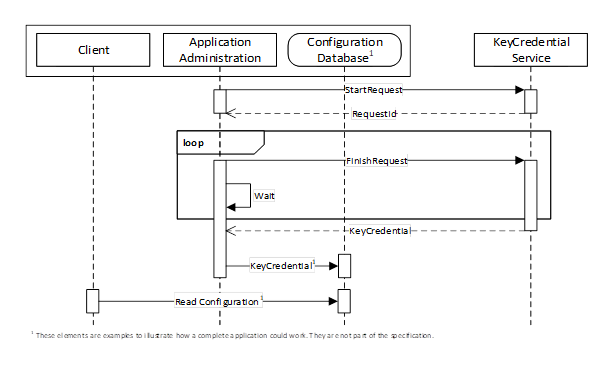
Figure 23 – The Pull Model for KeyCredential Management
The Application Administration component may be part of the Client or a standalone utility that understands how the Client persists its configuration information in its Configuration Database. The administration and database components are examples to illustrate how an application could be built and are not a requirement.
Requesting credentials is a two stage process because some KeyCredentialServices require a human to review and approve requests. The calls to the FinishRequest Method may not be periodic and could be initiated by events such as a user starting up the application or interacting with a UI element such as a button.
KeyCredentials shall only be returned to applications which are authorized by the KeyCredentialService.
Security in PullManagement requires an encrypted channel and Clients with access to the KeyCredentialAdmin Role, the ApplicationAdmin Priviledge or the ApplicationSelfAdmin Priviledge.
Push management is performed by using a KeyCredentialConfiguration Object (see 8.6.5) which is a component of the KeyCredentialConfigurationFolder Object which, in turn, is component of the ServerConfiguration Object in a Server. The interactions between the Administration application and the KeyCredentialService during PushManagement are illustrated in Figure 24.
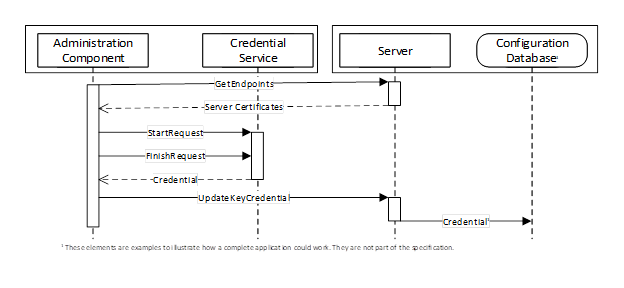
Figure 24 – The Push Model for KeyCredential Management
The Administration Component may use internal APIs to manage KeyCredentials or it could be a standalone utility that uses OPC UA to communicate with a Server which supports the pull model (see 8.3). The Configuration Database is used by the Server to persist its configuration information. The administration and database components are examples to illustrate how an application could be built and are not a requirement.
To ensure security of the KeyCredentials, the KeyCredentialService component can require that secrets be encrypted with a key only known to the intended recipient of the KeyCredentials. For this reason, the Administration Component uses the GetEndpoints Service to read the Certificate from the Server before initiating the credential request on behalf of the Server.
Security, when using the PushManagement model, requires an encrypted channel and Clients with acccess to the SecurityAdmin Role.
The AddressSpace used for PullManagement is shown in Figure 25. Clients interact with the Nodes defined in this model when they need to request or revoke KeyCredentials for themselves or for another application. The KeyCredentialManagement Folder is a well-known Object that appears in the AddressSpace of any Server which supports KeyCredential management.
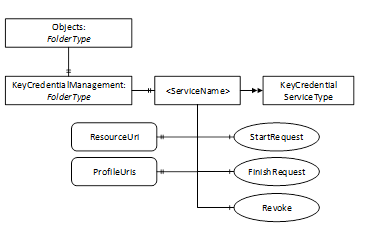
Figure 25 – The Address Space used for Pull KeyCredential Management
This ObjectType represents a Folder that contains KeyCredentialService Objects which may be accessed via the Server. It is defined in Table 83.
Table 83 – KeyCredentialManagementFolderType Definition
|
Attribute |
Value |
|||
|
BrowseName |
2:KeyCredentialManagementFolderType |
|||
|
IsAbstract |
False |
|||
|
References |
NodeClass |
BrowseName |
TypeDefinition |
Modelling Rule |
|
Subtype of the 0:FolderType defined in OPC 10000-5. |
||||
|
0:HasComponent |
Object |
2:<ServiceName> |
2:KeyCredentialServiceType |
OptionalPlaceholder |
|
|
||||
|
Conformance Units |
||||
|
GDS Key Credential Service Pull Model |
||||
This Object contains the KeyCredentialService Objects which may be accessed via the Server. It is the target of an Organizes reference from the Objects Folder defined in OPC 10000-5. It is defined in Table 84.
Table 84 – KeyCredentialManagement Object Definition
This ObjectType is the TypeDefinition for an Object that allows the management of KeyCredentials. It is defined in Table 85.
Table 85 – KeyCredentialServiceType Definition
|
Attribute |
Value |
||||
|
BrowseName |
2:KeyCredentialServiceType |
||||
|
IsAbstract |
False |
||||
|
References |
NodeClass |
BrowseName |
DataType |
TypeDefinition |
Modelling Rule |
|
Subtype of the BaseObjectType defined in OPC 10000-5. |
|||||
|
0:HasProperty |
Variable |
2:ResourceUri |
0:String |
0:PropertyType |
Mandatory |
|
0:HasProperty |
Variable |
2:ProfileUris |
0:String[] |
0:PropertyType |
Mandatory |
|
0:HasProperty |
Variable |
2:SecurityPolicyUris |
0:String[] |
0:PropertyType |
Optional |
|
0:HasComponent |
Method |
2:StartRequest |
|
Defined in 8.5.5. |
Mandatory |
|
0:HasComponent |
Method |
2:FinishRequest |
|
Defined in 8.5.6. |
Mandatory |
|
0:HasComponent |
Method |
2:Revoke |
|
Defined in 8.5.7. |
Optional |
|
|
|||||
|
Conformance Units |
|||||
|
GDS Key Credential Service Pull Model |
|||||
The ResourceUri Property uniquely identifies the resource that accepts the KeyCredentials provided by the KeyCredentialService Object.
The ProfileUris Property specifies URIs assigned in OPC 10000-7 to the authentication mechanism used to communicate with the resource that accepts KeyCredentials provided by the Object. For example, it could specify that the resource returns JWTs using OAuth2 HTTP based APIs. As another example, it could specify an MQTT broker that expects a username/password.
The SecurityPolicyUris Property is the list of SecurityPolicies that may be used when encrypting the KeyCredentials. One of these URIs is passed in the StartRequest Method. If not present, The Server shall support all of the SecurityPoliciesUris returned by GetEndpoints,
The StartRequest Method is used to initiate a request for new KeyCredentials for an application. This request may complete immediately or it can require offline approval by an administrator.
The FinishRequest Method is used to complete a request created by calling StartRequest . If the KeyCredential is available it is returned. If request is not yet completed it returns Bad_NothingToDo.
The Revoke Method is used to revoke a previously issued KeyCredential.
StartRequest is used to request a new KeyCredential.
The KeyCredential secret may be encrypted with the public key of the Certificate supplied in the request. The SecurityPolicyUri specifies the security profile used for the encryption.
This Method shall be called from an encrypted SecureChannel and from a Client that has access to the KeyCredentialAdmin Role, the ApplicationAdmin Privilege, or the ApplicationSelfAdmin Privilege (see 8.2).
Signature
StartRequest (
[in] String applicationUri
[in] ByteString publicKey
[in] String securityPolicyUri
[in] NodeId[] requestedRoles
[out] NodeId requestId
);
|
Argument |
Description |
|
applicationUri |
The applicationUri of the application receiving the KeyCredentials. The request is rejected applicationUri does not uniquely identify an application known to the GDS (see 6.6.6). If the requestor is not the same as the application used to create the Secure Channel then a Certificate should be provided. |
|
publicKey |
A Public Key used to encrypt the returned KeyCredential secret. For RSA SecurityPolicies this is the DER encoded form of an X.509 v3 Certificate as described in OPC 10000-6. For ECC SecurityPolicies this is an ephemeral key created by the owner of the KeyCredentials. Not specified if no encryption is required. If the securityPolicyUri is provided this field shall be provided. |
|
securityPolicyUri |
The SecurityPolicy used to encrypt the secret. If the certificate is provided this field shall be provided. |
|
requestedRoles |
A list of Roles which should be assigned to the KeyCredential. If not provided the Server chooses suitable defaults. The Server ignores Roles which it does not recognize or if the caller is not authorized to request access to the Role. |
|
requestId |
A unique identifier for the request. This identifier shall be passed to the FinishRequest (see 8.5.6). |
Method Result Codes (defined in Call Service)
|
Result Code |
Description |
|
Bad_NotFound |
The applicationUri is not known to the GDS. |
|
Bad_ConfigurationError |
The applicationUri is used by multiple records in the GDS. |
|
Bad_CertificateInvalid |
The Certificate is invalid. |
|
Bad_SecurityPolicyRejected |
The SecurityPolicy is unrecognized or not allowed or does not match the Certificate. |
|
Bad_UserAccessDenied |
The current user does not have the rights required. |
|
Bad_SecurityModeInsufficient |
The SecureChannel is not encrypted. |
Table 86 specifies the AddressSpace representation for the StartRequest Method.
Table 86 – StartRequest Method AddressSpace Definition
|
Attribute |
Value |
||||
|
BrowseName |
2:StartRequest |
||||
|
References |
NodeClass |
BrowseName |
DataType |
TypeDefinition |
ModellingRule |
|
0:HasProperty |
Variable |
0:InputArguments |
0:Argument[] |
0:PropertyType |
Mandatory |
|
0:HasProperty |
Variable |
0:OutputArguments |
0:Argument[] |
0:PropertyType |
Mandatory |
FinishRequest is used to retrieve a KeyCredential.
If a Certificate was provided in the request then the KeyCredential secret is encrypted using an asymmetric encryption algorithm specified by the SecurityPolicyUri provided in the request.
The credentialId is the identifier, such as a user name, which often needs to be presented when using the credentialSecret.
The credentialSecret is a UA Binary encoded form of one of the EncryptedSecret DataTypes defined in OPC 10000-4. If the securityPolicyUri requires an RSA Certificate then the RsaEncryptedSecret DataType is used. If the securityPolicyUri requires an ECC Certificate then the EccEncryptedSecret DataType is used.
The Signing Certificate is owned by the source of the KeyCredential. The KeyCredentialService determines the most appropriate Certificate to use.
If the return code is Bad_RequestNotComplete then the request has not been processed and the Client should call again. It is expected that a Client will periodically call this Method until the KeyCredentialService has completed the request.
This Method shall be called from an encrypted SecureChannel and from a Client that has access to the KeyCredentialAdmin Role, the ApplicationAdmin Privilege, or the ApplicationSelfAdmin Privilege (see 8.2). In addition, this Method shall only be called SecureChannel using that same Certificate that Client used to call StartRequest.
Signature
FinishRequest (
[in] NodeId requestId
[in] Boolean cancelRequest
[out] String credentialId
[out] ByteString credentialSecret
[out] String certificateThumbprint
[out] String securityPolicyUri
[out] NodeId[] grantedRoles
);
|
Argument |
Description |
|
requestId |
The identifier returned from a previous call to StartRequest. |
|
cancelRequest |
If TRUE the request is cancelled and no KeyCredentials are returned. If FALSE the normal processing proceeds. |
|
credentialId |
The unique identifier for the KeyCredential. |
|
credentialSecret |
The secret associated with the KeyCredential. |
|
certificateThumbprint |
The thumbprint of the Certificate used to encrypt the secret for RSA SecurityPolicies. Set to NULL for ECC SecurityPolicies. |
|
securityPolicyUri |
The SecurityPolicy used to create the credentialSecret. |
|
|
|
|
grantedRoles |
A list of Roles which have been granted to KeyCredential. If empty then the information is not relevant or not available. |
Method Result Codes (defined in Call Service)
|
Result Code |
Description |
|
Bad_InvalidArgument |
The requestId is does not reference to a valid request for the Application. |
|
Bad_RequestNotComplete |
The request has not been processed by the Server yet. |
|
Bad_UserAccessDenied |
The current user does not have the rights required. |
|
Bad_RequestNotAllowed |
The KeyCredential manager rejected the request. The text associated with the error should indicate the exact reason. |
|
Bad_SecurityModeInsufficient |
The SecureChannel is not encrypted. |
Table 87 specifies the AddressSpace representation for the FinishRequest Method.
Table 87 – FinishRequest Method AddressSpace Definition
|
Attribute |
Value |
||||
|
BrowseName |
2:FinishRequest |
||||
|
References |
NodeClass |
BrowseName |
DataType |
TypeDefinition |
ModellingRule |
|
0:HasProperty |
Variable |
0:InputArguments |
0:Argument[] |
0:PropertyType |
Mandatory |
|
0:HasProperty |
Variable |
0:OutputArguments |
0:Argument[] |
0:PropertyType |
Mandatory |
Revoke is used to revoke a KeyCredential used by a Client or Server.
KeyCredentials shall be deleted when revoked.
This Method shall be called from an encrypted SecureChannel and from a Client that has access to the KeyCredentialAdmin Role, the ApplicationAdmin Privilege, or the ApplicationSelfAdmin Privilege (see 8.2).
Signature
Revoke (
[in] String credentialId
);
|
Argument |
Description |
|
credentialId |
The unique identifier for the KeyCredential. |
Method Result Codes (defined in Call Service)
|
Result Code |
Description |
|
Bad_InvalidArgument |
The credentialId is does not reference a valid KeyCredential. |
|
Bad_UserAccessDenied |
The current user does not have the rights required. |
|
Bad_SecurityModeInsufficient |
The SecureChannel is not encrypted. |
Table 88 specifies the AddressSpace representation for the RevokeCredential Method.
Table 88 – Revoke Method AddressSpace Definition
|
Attribute |
Value |
||||
|
BrowseName |
2:Revoke |
||||
|
References |
NodeClass |
BrowseName |
DataType |
TypeDefinition |
ModellingRule |
|
HasProperty |
Variable |
0:InputArguments |
Argument[] |
0:PropertyType |
Mandatory |
This abstract event is raised when an operation affecting KeyCredentials occur
This Event and it subtypes are security related and Servers shall only report them to users authorized to view security related audit events.
Its representation in the AddressSpace is formally defined in Table 90.
Table 89 – KeyCredentialAuditEventType Definition
|
Attribute |
Value |
||||
|
BrowseName |
0:KeyCredentialAuditEventType |
||||
|
IsAbstract |
True |
||||
|
References |
NodeClass |
BrowseName |
DataType |
TypeDefinition |
Modelling Rule |
|
Subtype of the 0:AuditUpdateMethodEventType defined in OPC 10000-5. |
|||||
|
0:HasProperty |
Variable |
ResourceUri |
String |
0:PropertyType |
Mandatory |
|
|
|||||
|
Conformance Units |
|||||
|
GDS Key Credential Service Pull Model |
|||||
This EventType inherits all Properties of the AuditUpdateMethodEventType. Their semantic is defined in OPC 10000-5.
The ResourceUri Property specifies the URI for the resource which accepts the KeyCredential.
This event is raised when a new KeyCredential request has been accepted or rejected by the Server.
This can be the result of a StartRequest Method call.
Its representation in the AddressSpace is formally defined in Table 90.
Table 90 – KeyCredentialRequestedAuditEventType Definition
|
Attribute |
Value |
||||
|
BrowseName |
2:KeyCredentialRequestedAuditEventType |
||||
|
IsAbstract |
False |
||||
|
References |
NodeClass |
BrowseName |
DataType |
TypeDefinition |
Modelling Rule |
|
Subtype of the 0:KeyCredentialAuditEventType defined in 8.5.8. |
|||||
|
|
|||||
|
Conformance Units |
|||||
|
GDS Key Credential Service Pull Model |
|||||
This EventType inherits all Properties of the KeyCredentialAuditEventType.
This event is raised when a KeyCredential is delivered by the Server to an application.
This is the result of a FinishRequest Method completing.
Its representation in the AddressSpace is formally defined in Table 91.
Table 91 – KeyCredentialDeliveredAuditEventType Definition
|
Attribute |
Value |
||||
|
BrowseName |
2:KeyCredentialDeliveredAuditEventType |
||||
|
IsAbstract |
False |
||||
|
References |
NodeClass |
BrowseName |
DataType |
TypeDefinition |
Modelling Rule |
|
Subtype of the 0:KeyCredentialAuditEventType defined in 8.5.8. |
|||||
|
|
|||||
|
Conformance Units |
|||||
|
GDS Key Credential Service Pull Model |
|||||
This EventType inherits all Properties of the KeyCredentialAuditEventType.
This event is raised when a KeyCredential is revoked.
This is the result of a RevokeKeyCredential Method completing.
Its representation in the AddressSpace is formally defined in Table 92.
Table 92 – KeyCredentialRevokedAuditEventType Definition
|
Attribute |
Value |
|||||
|
BrowseName |
2:KeyCredentialRevokedAuditEventType |
|||||
|
IsAbstract |
False |
|||||
|
References |
NodeClass |
BrowseName |
DataType |
TypeDefinition |
Modelling Rule |
|
|
Subtype of the 0:KeyCredentialAuditEventType defined in 8.5.8. |
||||||
|
|
||||||
|
Conformance Units |
||||||
|
GDS Key Credential Service Pull Model |
||||||
This EventType inherits all Properties of the KeyCredentialAuditEventType.
The AddressSpace used for PushManagement is shown in Figure 26. Clients interact with the Nodes defined in this model when they need update the KeyCredentials used by a Server to access resources such as Brokers or Authorization Servers. The KeyCredentialConfiguration Folder is a well-known Object that appears in the AddressSpace of any Server which supports KeyCredential management.
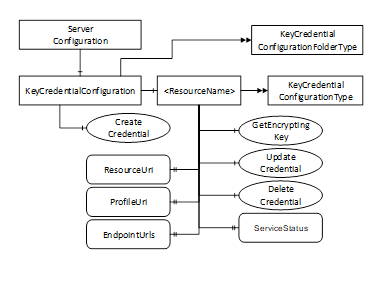
Figure 26 – The Address Space used for Push KeyCredential Management
This ObjectType is the TypeDefinition for an Folder Object that contains the KeyCredentialConfiguration Objects which may be accessed via the Server.
Table 93 – KeyCredentialConfigurationFolderType Definition
|
Attribute |
Value |
|||
|
BrowseName |
0:KeyCredentialConfigurationFolderType |
|||
|
IsAbstract |
False |
|||
|
References |
NodeClass |
BrowseName |
TypeDefinition |
Modelling Rule |
|
Subtype of the 0:FolderType defined in OPC 10000-5. |
||||
|
0:HasComponent |
Object |
0:<ServiceName> |
0:KeyCredentialConfigurationType |
Optional Placeholder |
|
0:HasComponent |
Method |
0:CreateCredential |
Defined in 8.6.3. |
Optional |
|
|
||||
|
Conformance Units |
||||
|
GDS Key Credential Service Push Model |
||||
CreateCredential is used to add a new KeyCredentialConfiguration Object.
This Method shall be called from an encrypted SecureChannel and from a Client that has access to the SecurityAdmin Role (see 8.2).
Signature
CreateCredential (
[in] String name
[in] String resourceUri
[in] String profileUri
[in] String[] endpointUrls
[out] NodeId credentialNodeId
);
|
Argument |
Description |
|
name |
This the BrowseName of the new Object. |
|
resourceUri |
The resourceUri uniquely identifies the resource that accepts the KeyCredentials. A valid URI shall be provided. |
|
profileUri |
The specified URI assigned in OPC 10000-7 to the protocol used to communicate with the resource identified by the resourceUri. A valid URI shall be provided. |
|
endpointUrls |
The specifies URLs used by the Server to communicate with the resource identified by the resourceUri. Valid URLs shall be provided. |
|
credentialNodeId |
A unique identifier for the new KeyCredentialConfiguration Object Node. |
Method Result Codes (defined in Call Service)
|
Result Code |
Description |
|
Bad_InvalidArgument |
The resourceUri, profileUri, or one or more endpointUrls are not valid. |
|
Bad_UserAccessDenied |
The current user does not have the rights required. |
|
Bad_SecurityModeInsufficient |
The SecureChannel is not encrypted. |
Table 94 specifies the AddressSpace representation for the CreateCredential Method.
Table 94 – CreateCredential Method AddressSpace Definition
|
Attribute |
Value |
||||
|
BrowseName |
0:CreateCredential |
||||
|
References |
NodeClass |
BrowseName |
DataType |
TypeDefinition |
ModellingRule |
|
0:HasProperty |
Variable |
0:InputArguments |
Argument[] |
0:PropertyType |
Mandatory |
|
0:HasProperty |
Variable |
0:OutputArguments |
Argument[] |
0:PropertyType |
Mandatory |
This Object is an instance of FolderType. It contains The Objects which may be accessed via the Server. It is the target of an HasComponent reference from the ServerConfiguration Object defined in 7.10.3. It is defined in Table 95.
Table 95 – KeyCredentialConfiguration Object Definition
|
Attribute |
Value |
||||
|
BrowseName |
0:KeyCredentialConfiguration |
||||
|
TypeDefinition |
0:KeyCredentialConfigurationFolderType defined in 8.6.2. |
||||
|
References |
NodeClass |
BrowseName |
TypeDefinition |
|
Modelling Rule |
|
|
|||||
|
Conformance Units |
|||||
|
GDS Key Credential Service Push Model |
|||||
This ObjectType is the TypeDefinition for an Object that allows the configuration of KeyCredentials used by the Server. It also includes basic status information which report problems accessing the resource that might be related to bad KeyCredentials. It is defined in Table 96.
Table 96 – KeyCredentialConfigurationType Definition
|
Attribute |
Value |
||||
|
BrowseName |
0:KeyCredentialConfigurationType |
||||
|
IsAbstract |
False |
||||
|
References |
NodeClass |
BrowseName |
DataType |
TypeDefinition |
Modelling Rule |
|
Subtype of the BaseObjectType defined in OPC 10000-5. |
|||||
|
0:HasProperty |
Variable |
0:ResourceUri |
0:String |
0:PropertyType |
Mandatory |
|
0:HasProperty |
Variable |
0:ProfileUri |
0:String |
0:PropertyType |
Mandatory |
|
0:HasProperty |
Variable |
0:EndpointUrls |
0:String[] |
0:PropertyType |
Optional |
|
0:HasProperty |
Variable |
0:CredentialId |
0:String |
0:PropertyType |
Optional |
|
0:HasProperty |
Variable |
0:ServiceStatus |
0:StatusCode |
0:PropertyType |
Optional |
|
0:HasComponent |
Method |
0:GetEncryptingKey |
|
Defined in 8.6.6. |
Optional |
|
0:HasComponent |
Method |
0:UpdateCredential |
|
Defined in 8.6.7. |
Optional |
|
0:HasComponent |
Method |
0:DeleteCredential |
|
Defined in 8.6.8. |
Optional |
|
|
|||||
|
Conformance Units |
|||||
|
GDS Key Credential Service Push Model |
|||||
The ResourceUri Property uniquely identifies the resource that accepts the KeyCredentials.
The ProfileUri Property specifies the protocol used to access the resource.
The EndpointUrls Property specifies the URLs that the Server uses to access the resource.
The CredentialId Property is the identifier, such as a user name, which often needs to be presented when using the credentialSecret.
The ServiceStatus Property indicates the result of the last attempt to communicate with the resource. The following common error values are defined:
|
ServiceStatus |
Description |
|
Bad_OutOfService |
Communication was not attempted by the Server because Enabled is FALSE. |
|
Bad_IdentityTokenRejected |
Communication failed because the KeyCredentials are not valid. |
|
Bad_NoCommunication |
Communication failed because the endpoint is not reachable. Where possible a more specific error code should be used. See OPC 10000-4 for a complete list of standard StatusCodes. |
The GetEncryptingKey Method is used request a Public Key that can be used to encrypt the KeyCredentials.
The UpdateKeyCredential Method is used to change the KeyCredentials used by the Server.
The DeleteKeyCredential Method is used to delete the KeyCredentials stored by the Server.
GetEncryptingKey is used to request a key that can be used to encrypt a KeyCredential.
This Method shall be called from an encrypted SecureChannel and from a Client that has access to the SecurityAdmin Role (see 8.2).
Signature
GetEncryptingKey(
[in] String credentialId
[in] String requestedSecurityPolicyUri
[out] ByteString publicKey
[out] String revisedSecurityPolicyUri
);
|
Argument |
Description |
|
credentialId |
The unique identifier associated with the KeyCredential. |
|
requestedSecurityPolicyUri |
The SecurityPolicy used to encrypt the secret. If not specified the Server chooses a suitable default. |
|
publicKey |
The Public Key used to encrypt the secret. The format depends on the SecurityPolicyUri. |
|
revisedSecurityPolicyUri |
The SecurityPolicy used to encrypt the secret. It also specifies the contents of the publicKey. This may be different from the requestedSecurityPolicyUri. |
Method Result Codes (defined in Call Service)
|
Result Code |
Description |
|
Bad_InvalidArgument |
The credentialId is not valid. |
|
Bad_UserAccessDenied |
The current user does not have the rights required. |
|
Bad_SecurityModeInsufficient |
The SecureChannel is not encrypted. |
Table 97 specifies the AddressSpace representation for the GetEncryptingKey Method.
Table 97 – GetEncryptingKey Method AddressSpace Definition
|
Attribute |
Value |
||||
|
BrowseName |
0:GetEncryptingKey |
||||
|
References |
NodeClass |
BrowseName |
DataType |
TypeDefinition |
ModellingRule |
|
0:HasProperty |
Variable |
0:InputArguments |
0:Argument[] |
0:PropertyType |
Mandatory |
|
0:HasProperty |
Variable |
0:OutputArguments |
0:Argument[] |
0:PropertyType |
Mandatory |
UpdateCredential is used to update a KeyCredential used by a Server.
The KeyCredential secret may be encrypted using the key returned by GetEncryptingKey. The SecurityPolicyUri species the algorithm used for encryption. The format of the encrypted data is described in 8.5.6.
This Method shall be called from an encrypted SecureChannel and from a Client that has access to the SecurityAdmin Role (see 8.2).
Signature
UpdateCredential(
[in] String credentialId
[in] ByteString credentialSecret
[in] String certificateThumbprint
[in] String securityPolicyUri
);
|
Argument |
Description |
|
credentialId |
The credentialId is the identifier, such as a user name, which often needs to be presented when using the credentialSecret. |
|
credentialSecret |
The secret associated with the KeyCredential. |
|
certificateThumbprint |
The thumbprint of the Certificate used to encrypt the secret. For RSA SecurityPolicies this shall be one of the Application Instance Certificates assigned to the Server. For ECC SecurityPolicies this field is not specified.Not specified if the secret is not encrypted. |
|
securityPolicyUri |
The SecurityPolicy used to encrypt the secret. If not specified the secret is not encrypted. |
Method Result Codes (defined in Call Service)
|
Result Code |
Description |
|
Bad_InvalidArgument |
The credentialId or credentialSecret is not valid. |
|
Bad_CertificateInvalid |
The Certificate is invalid or it is not one of the Server’s Certificates. |
|
Bad_SecurityPolicyRejected |
The SecurityPolicy is unrecognized or not allowed. |
|
Bad_UserAccessDenied |
The current user does not have the rights required. |
|
Bad_SecurityModeInsufficient |
The SecureChannel is not encrypted. |
Table 99 specifies the AddressSpace representation for the UpdateKeyCredential Method.
Table 98 – UpdateCredential Method AddressSpace Definition
|
Attribute |
Value |
||||
|
BrowseName |
0:UpdateCredential |
||||
|
References |
NodeClass |
BrowseName |
DataType |
TypeDefinition |
ModellingRule |
|
0:HasProperty |
Variable |
0:InputArguments |
0:Argument[] |
0:PropertyType |
Mandatory |
DeleteCredential is used to delete a KeyCredential used by a Server.
This Method shall be called from an encrypted SecureChannel and from a Client that has access to the SecurityAdmin Role (see 8.2).
Signature
DeleteCredential();
Method Result Codes (defined in Call Service)
|
Result Code |
Description |
|
Bad_UserAccessDenied |
The current user does not have the rights required. |
|
Bad_SecurityModeInsufficient |
The SecureChannel is not encrypted. |
Table 98 specifies the AddressSpace representation for the DeleteKeyCredential Method.
Table 99 – DeleteCredential Method AddressSpace Definition
|
Attribute |
Value |
||||
|
BrowseName |
0:DeleteCredential |
||||
|
References |
NodeClass |
BrowseName |
DataType |
TypeDefinition |
ModellingRule |
This event is raised when a KeyCredential is updated.
This Event and its subtypes report sensitive security related information. Servers shall only report these Events to Clients which are authorized to view such information.
This is the result of a UpdateCredential Method completing.
Its representation in the AddressSpace is formally defined in Table 100.
Table 100 – KeyCredentialUpdatedAuditEventType Definition
|
Attribute |
Value |
||||
|
BrowseName |
0:KeyCredentialUpdatedAuditEventType |
||||
|
IsAbstract |
False |
||||
|
References |
NodeClass |
BrowseName |
DataType |
TypeDefinition |
Modelling Rule |
|
Subtype of the 0:KeyCredentialAuditEventType defined in 8.5.8. |
|||||
|
|
|||||
|
Conformance Units |
|||||
|
Push Model for KeyCredential Service |
|||||
This EventType inherits all Properties of the KeyCredentialAuditEventType.
This event is raised when a KeyCredential is updated.
This is the result of a DeleteCredential Method completing.
Its representation in the AddressSpace is formally defined in Table 101.
Table 101 – KeyCredentialDeletedAuditEventType Definition
|
Attribute |
Value |
||||
|
BrowseName |
0:KeyCredentialDeletedAuditEventType |
||||
|
IsAbstract |
False |
||||
|
References |
NodeClass |
BrowseName |
DataType |
TypeDefinition |
Modelling Rule |
|
Subtype of the 0:KeyCredentialAuditEventType defined in 8.5.8. |
|||||
|
|
|||||
|
Conformance Units |
|||||
|
GDS Key Credential Service Push Model |
|||||
This EventType inherits all Properties of the KeyCredentialAuditEventType.
AuthorizationServices provide Access Tokens to Clients that may use them to access resources. A Server, such as a GDS, with AuthorizationService capabilities may support one or more AuthorizationService Objects (see 9.6.2) which may represent an internal AuthorizationService or be an API to an external AuthorizationService. The AuthorizationService is best used in conjunction with the Role model defined in OPC 10000-5. In this scenario, the mapping rules assigned to the Roles known to the Server are used to populate an Access Token with the Roles associated with the UserIdentity provided when the Client submits the request. This scenario is illustrated in Figure 27.
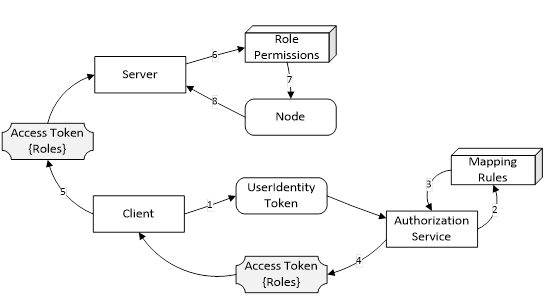
Figure 27 – Roles and AuthorizationServices
When requesting Access Tokens from an AuthorizationService Object there are three primary use cases based on where the UserIdentityToken comes from: Implicit, Explicit and Chained. These use cases are discussed below. The Implicit and Explicit use cases are implementations of the ‘Indirect’ model for AuthorizationServices described in OPC 10000-4. The Chained use case is an implementation of the ‘Direct’ model.
AuthorizationServices restrict access to many of the features they provide. These restrictions are described either by referring to well-known Roles which a Session must have access to or by referring to Privileges which are assigned to Sessions using mechanisms other than the well-known Roles. The well-known Roles for an AuthorizationService are listed in Table 102.
Table 102 – Well-known Roles for an AuthorizationService
|
Name |
Description |
|
AuthorizationServiceAdmin |
This Role grants the right to manage the configuration of an AuthorizationService. |
|
SecurityAdmin |
This Role grants the right to change the security configuration of an AuthorizationService. |
The Privileges for an AuthorizationService are listed in Table 103.
Table 103 – Privileges for an AuthorizationService
|
Name |
Description |
|
AccessTokenRequestor |
This Privilege grants an OPC UA Application the right to request AccessTokens. The Certificate used to create the SecureChannel is used to determine the identity of the OPC UA Application. A KeyCredential (see 0) provided as a UserIdentityToken may also be used to determine if the Client has access to this Privilege. |
The implicit use case means the Client’s Application Certificate and any UserIdentityToken associated with the Session is used to determine whether an Access Token is permitted and what claims are available. This use case is illustrated in Figure 28.
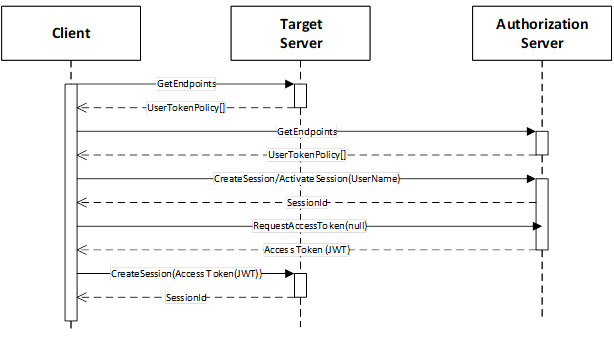
Figure 28 – Implicit Authorization
The Target Server is the Server that the Client wishes to access. It publishes a UserTokenPolicy that indicates that it accepts Access Tokens from an Authorization Server at a URL specified in the policy. The policy also contains the NodeId of the AuthorizationService Object which then is used to request the Access Token.
The Client needs to be trusted by the Authorization Server and this could require the Client to present user credentials. These credentials can be provided to the Client out-of-band (e.g. an administrator specified them in the Client configuration file). The user credentials used can be any type of user credential including X.509 and JWT.
The Session may be created explicitly with a call to CreateSession or it can be implicit via a Session-less Method Call.
After creating the Session, the Client calls the RequestAccessToken Method on the AuthorizationService Object. The Authorization Server determines if the Client is permitted to receive an Access Token and populates it with any claims granted to the Client. This claims may include Roles granted to the Session by applying the mapping rules for the Roles (see OPC 10000-3).
Once the Client has the Access Token, it passes the Access Token to the Target Server which validates the Access Token, as described in OPC 10000-4. The Target Server is configured out-of-band with the Certificate needed to validate the Access Tokens issued by the Authorization Server.
The explicit use case means the Client provides the UserIdentityToken used to determine whether an Access Token is permitted and what claims are available in the call to RequestAccessToken. This use case is illustrated in Figure 29.
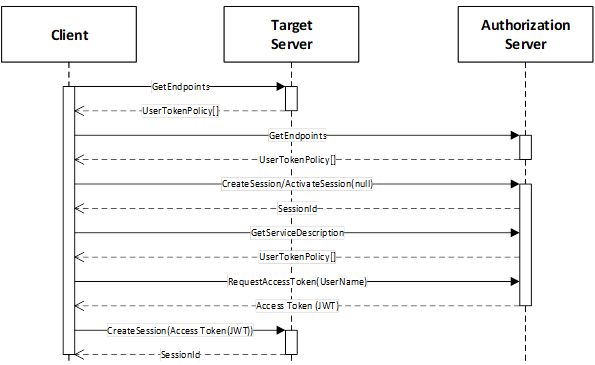
Figure 29 – Explicit Authorization
The Target Server is the Server that the Client wishes to access. The initial interactions are the same as with the Implicit use case described in 9.3.
The Session may be created explicitly with a call to CreateSession or it can be implicit via a Session-less Method Call.
After creating the Session, the Client reads the available UserTokenPolicies from the AuthorizationService Object if it has not previously cached the information. It then chooses one that matches credentials that it has been provided out-of-band. The Client then calls the RequestAccessToken Method on the AuthorizationService Object.
The Authorization Server determines if the Client is permitted to receive an Access Token. The rest of the interactions are the same as described in 9.3.
The chained use case means the Client provides an Access Token issued by another AuthorizationService acting as an Identity Provider. This use case is illustrated in Figure 30.
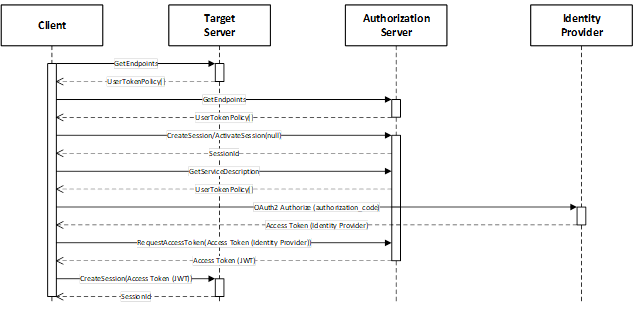
Figure 30 – Chained Authorization
The Target Server is the Server that the Client wishes to access. The initial interactions are the same as with the Implicit use case described in 9.3.
The Session may be created explicitly with a call to CreateSession or it can be implicit via a Session-less Method Call.
After creating the Session, the Client reads the available UserTokenPolicies from the AuthorizationService Object if it has not previously cached the information. It then chooses one that references an Identity Provider for the user identities that it has available. The user identities may be provided out-of-band or they may be provided by an interactive user. The Client then requests an Access Token from the Identity Provider.
The Client then calls the RequestAccessToken Method on the AuthorizationService Object and passes the Access Token from the Identity Provider.
The Authorization Server determines if the Client is permitted to receive an Access Token based on the claims granted by the Identity Provider. The rest of the interactions are the same as described in 9.3.
The information model for AuthorizationServices which allow Clients to request Access Tokens from a Server is shown in Figure 31.
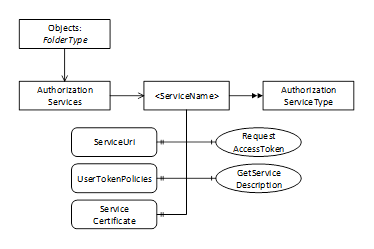
Figure 31 – The Model for Requesting Access Tokens from AuthorizationServices
This ObjectType represents a folder that contains AuthorizationService Objects which may be accessed via the Server. It is defined in Table 104.
Table 104 – AuthorizationServicesFolderType Definition
|
Attribute |
Value |
|||
|
BrowseName |
||||
|
IsAbstract |
False |
|||
|
References |
NodeClass |
BrowseName |
TypeDefinition |
Modelling Rule |
|
Subtype of the FolderType defined in OPC 10000-5. |
||||
|
0:Organizes |
Object |
2:<ServiceName> |
2:AuthorizationServiceType |
OptionalPlaceholder |
|
|
||||
|
Conformance Units |
||||
|
GDS Authorization Service Server |
||||
This Object is an instance of AuthorizationServicesFolderType It contains The AuthorizationService Objects which may be accessed via the GDS. It is the target of an Organizes reference from the Objects Folder defined in OPC 10000-5. It is defined in Table 105.
Table 105 – AuthorizationServices Object Definition
|
Attribute |
Value |
|||
|
BrowseName |
2:AuthorizationServices |
|||
|
TypeDefinition |
2:AuthorizationServicesFolderType defined in 9.6.2. |
|||
|
References |
NodeClass |
BrowseName |
TypeDefinition |
Modelling Rule |
|
|
||||
|
Conformance Units |
||||
|
GDS Authorization Service Server |
||||
This ObjectType is the TypeDefinition for an Object that allows access to an AuthorizationService. It is defined in Table 106.
Table 106 – AuthorizationServiceType Definition
|
Attribute |
Value |
||||
|
BrowseName |
2:AuthorizationServiceType |
||||
|
IsAbstract |
False |
||||
|
References |
NodeClass |
BrowseName |
DataType |
TypeDefinition |
Modelling Rule |
|
Subtype of the BaseObjectType defined in OPC 10000-5. |
|||||
|
0:HasProperty |
Variable |
2:ServiceUri |
0:String |
0:PropertyType |
Mandatory |
|
0:HasProperty |
Variable |
2:ServiceCertificate |
0:ByteString |
0:PropertyType |
Mandatory |
|
0:HasProperty |
Variable |
2:UserTokenPolicies |
0:UserTokenPolicy [] |
0:PropertyType |
Optional |
|
0:HasComponent |
Method |
2:GetServiceDescription |
Defined in 9.6.6. |
Mandatory |
|
|
0:HasComponent |
Method |
2:RequestAccessToken |
Defined in 9.6.5. |
Optional |
|
|
|
|||||
|
Conformance Units |
|||||
|
GDS Authorization Service Server |
|||||
The ServiceUri is a globally unique identifier that allows a Client to correlate an instance of AuthorizationServiceType with instances of AuthorizationServiceConfigurationType (see 9.7.4).
The ServiceCertificate is the Certificate required to check any Signature that is included with the Access Tokens. The ServiceCertificate may be a complete chain (see OPC 10000-6 for information on encoding chains).
The UserTokenPolicies Property specifies the UserIdentityTokens which are accepted by the RequestAccessToken Method.
The GetServiceDescription Method is used read the metadata needed to request Access Tokens.
The RequestAccessToken Method is used to request an Access Token from the AuthorizationService.
RequestAccessToken is used to request an Access Token from an AuthorizationService. The scenarios where this Method is used are described fully in 9.3, 9.4 and 9.5.
The PolicyId and UserTokenType of the identityToken shall match one of the elements of the UserTokenPolicies Property. If the identityToken is not provided the Server should use the ApplicationInstanceCertificate and/or the UserIdentityToken provided for the Session (or the request if using a Session-less Method Call) to determine privileges.
If the associated UserTokenPolicy provides a SecurityPolicyUri, then the identityToken is encrypted and digitally signed using the format defined for UserIdentityToken secrets in OPC 10000-4.
For UserNameIdentityTokens the secret is the password and the signature is created with the Client ApplicationInstanceCertificate. The signed and encrypted secret is passed in the password field.
For X.509 v3 IdentityTokens the secret is null and signature is created with the key associated with user Certificate. The signed and encrypted secret is passed in the certificateData field.
For IssuedIdentityTokens the secret is the token and the signature is created with the key associated a user Certificate or the Client ApplicationInstanceCertificate. The signed and encrypted secret is passed in the tokenData field.
The Server shall check the signingTime in against the current system clock. The Server shall reject the request if the signingTime is outside of a configurable range. A suitable default value is 5 minutes. The permitted clock skew is a Server configuration parameter.
This Method shall be called from an encrypted SecureChannel and from a Client that has access to the AccessTokenRequestor Privilege (see 9.2).
Signature
RequestAccessToken (
[in] UserIdentityToken identityToken
[in] String resourceId
[out] String accessToken
);
|
Argument |
Description |
|
identityToken |
The identity used to authorize the Access Token request. |
|
resourceId |
The identifier for the Resource that the Access Token is used to access. This is usually the ApplicationUri for a Server. |
|
accessToken |
The Access Token granted to the application. |
Method Result Codes (defined in Call Service)
|
Result Code |
Description |
|
Bad_IdentityTokenInvalid |
The identityToken does not match one of the allowed UserTokenPolicies. |
|
Bad_IdentityTokenRejected |
The identityToken was rejected. |
|
Bad_NotFound |
The resourceId is not known to the Server. |
|
Bad_UserAccessDenied |
The current user does not have the rights required. |
|
Bad_SecurityModeInsufficient |
The SecureChannel is not encrypted. |
Table 107 specifies the AddressSpace representation for the RequestAccessToken Method.
Table 107 – RequestAccessToken Method AddressSpace Definition
|
Attribute |
Value |
||||
|
BrowseName |
2:RequestAccessToken |
||||
|
References |
NodeClass |
BrowseName |
DataType |
TypeDefinition |
ModellingRule |
|
0:HasProperty |
Variable |
0:InputArguments |
0:Argument[] |
0:PropertyType |
Mandatory |
|
0:HasProperty |
Variable |
0:OutputArguments |
0:Argument[] |
0:PropertyType |
Mandatory |
GetServiceDescription is used to read the metadata needed to request Access Tokens from the AuthorizationService.
Signature
GetServiceDescription (
[out] String serviceUri
[out] ByteString serviceCertificate
[out] UserTokenPolicy[] userTokenPolicies
);
|
Argument |
Description |
|
serviceUri |
A globally unique identifier for the AuthorizationService. |
|
serviceCertificate |
The complete chain of Certificates needed to validate the Access Tokens provided by the AuthorizationService. |
|
userTokenPolicies |
The UserIdentityTokens accepted by the AuthorizationService. |
Method Result Codes (defined in Call Service)
|
Result Code |
Description |
|
Bad_UserAccessDenied |
The current user does not have the rights required. |
Table 108 specifies the AddressSpace representation for the GetServiceDescription Method.
Table 108 – GetServiceDescription Method AddressSpace Definition
|
Attribute |
Value |
||||
|
BrowseName |
2:GetServiceDescription |
||||
|
References |
NodeClass |
BrowseName |
DataType |
TypeDefinition |
ModellingRule |
|
0:HasProperty |
Variable |
0:OutputArguments |
0:Argument[] |
0:PropertyType |
Mandatory |
This event is raised when a AccessToken is issued.
This is the result of a RequestAccessToken Method completing.
This Event and it subtypes are security related and Servers shall only report them to users authorized to view security related audit events.
Its representation in the AddressSpace is formally defined in Table 109.
Table 109 – AccessTokenIssuedAuditEventType Definition
|
Attribute |
Value |
||||
|
BrowseName |
2:AccessTokenIssuedAuditEventType |
||||
|
IsAbstract |
True |
||||
|
References |
NodeClass |
BrowseName |
DataType |
TypeDefinition |
Modelling Rule |
|
Subtype of the 0:AuditUpdateMethodEventType defined in OPC 10000-5. |
|||||
|
|
|||||
|
Conformance Units |
|||||
|
GDS Authorization Service Server |
|||||
This EventType inherits all Properties of the AuditUpdateMethodEventType. Their semantic is defined in OPC 10000-5.
The information model used to provide Servers with the information needed to accept Access Tokens from AuthorizationServices in Figure 32.
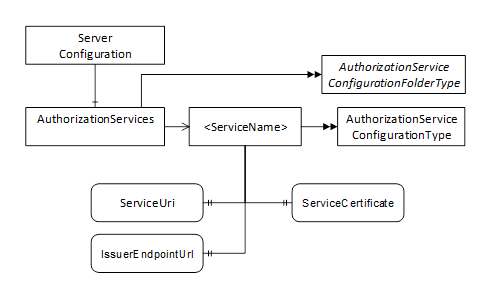
Figure 32 – The Model for Configuring Servers to use AuthorizationServices
If a Server is also a Client that needs to access the AuthorizationService, the necessary KeyCredentials can be provided with the push configuration management model (see 8.4).
This ObjectType represents a folder that contains AuthorizationServiceConfiguration Objects which may be accessed via the Server. It is defined in Table 110.
Table 110 – AuthorizationServicesFolderType Definition
|
Attribute |
Value |
|||
|
BrowseName |
0:AuthorizationServicesConfigurationFolderType |
|||
|
IsAbstract |
False |
|||
|
References |
NodeClass |
BrowseName |
TypeDefinition |
Modelling Rule |
|
Subtype of the 0:FolderType defined in OPC 10000-5. |
||||
|
0:HasComponent |
Object |
0:<ServiceName> |
0:AuthorizationService |
OptionalPlaceholder |
|
|
||||
|
Conformance Units |
||||
|
Authorization Service Configuration Server |
||||
This Object is an instance of FolderType. It contains The AuthorizationServiceConfiguration Objects which may be accessed via the Server. It is the target of an HasComponent reference from the ServerConfiguration Object defined in 7.10.3. It is defined in Table 111.
Table 111 – AuthorizationServices Object Definition
|
Attribute |
Value |
|||
|
BrowseName |
0:AuthorizationServices |
|||
|
TypeDefinition |
0:AuthorizationServicesConfigurationFolderType defined in 9.6.2. |
|||
|
References |
NodeClass |
BrowseName |
TypeDefinition |
Modelling Rule |
|
|
||||
|
Conformance Units |
||||
|
Authorization Service Configuration Server |
||||
This ObjectType is the TypeDefinition for an Object that allows the configuration of an AuthorizationService used by a Server. It is defined in Table 112.
Table 112 – AuthorizationServiceConfigurationType Definition
|
Attribute |
Value |
||||
|
BrowseName |
0:AuthorizationServiceConfigurationType |
||||
|
IsAbstract |
False |
||||
|
References |
NodeClass |
BrowseName |
DataType |
TypeDefinition |
Modelling Rule |
|
Subtype of the 0:BaseObjectType defined in OPC 10000-5. |
|||||
|
0:HasProperty |
Variable |
0:ServiceUri |
0:String |
0:PropertyType |
Mandatory |
|
0:HasProperty |
Variable |
0:ServiceCertificate |
0:ByteString |
0:PropertyType |
Mandatory |
|
0:HasProperty |
Variable |
0:IssuerEndpointUrl |
0:String |
0:PropertyType |
Mandatory |
|
|
|||||
|
Conformance Units |
|||||
|
Authorization Service Configuration Server |
|||||
The ServiceUri Property uniquely identifies the AuthorizationService.
The ServiceCertificate Property has the Certificate(s) needed to verify Access Tokens issued by the AuthorizationService. The value is the complete chain of Certificate needed for verification (see OPC 10000-6 for information on encoding chains).
The IssuerEndpointUrl is the value of the IssuerEndpointUrl in UserTokenPolicies which require the use of the AuthorizationService. This contents of the field depend on the AuthorizationService and are described in OPC 10000-6.
Table 113 defines the namespace metadata for this document. The Object is used to provide version information for the namespace and an indication about static Nodes. Static Nodes are identical for all Attributes in all Servers, including the Value Attribute. See OPC 10000-5 for more details.
The information is provided as Object of type NamespaceMetadataType. This Object is a component of the Namespaces Object that is part of the Server Object. The NamespaceMetadataType ObjectType and its Properties are defined in OPC 10000-5.
The version information is also provided as part of the ModelTableEntry in the UANodeSet XML file. The UANodeSet XML schema is defined in OPC 10000-6.
Table 113 – NamespaceMetadata Object for this Document
|
Attribute |
Value |
||
|
BrowseName |
2:http://opcfoundation.org/UA/GDS/ |
||
|
Property |
DataType |
Value |
|
|
0:NamespaceUri |
0:String |
http://opcfoundation.org/UA/GDS/ |
|
|
0:NamespaceVersion |
0:String |
1.05.04 |
|
|
0:NamespacePublicationDate |
0:DateTime |
2024-07-01 |
|
|
0:IsNamespaceSubset |
0:Boolean |
False |
|
|
0:StaticNodeIdTypes |
0:IdType [] |
0 |
|
|
0:StaticNumericNodeIdRange |
0:NumericRange [] |
|
|
|
0:StaticStringNodeIdPattern |
0:String |
|
|
Namespaces are used by OPC UA to create unique identifiers across different naming authorities. The Attributes NodeId and BrowseName are identifiers. A Node in the UA AddressSpace is unambiguously identified using a NodeId. Unlike NodeIds, the BrowseName cannot be used to unambiguously identify a Node. Different Nodes may have the same BrowseName. They are used to build a browse path between two Nodes or to define a standard Property.
Servers may often choose to use the same namespace for the NodeId and the BrowseName. However, if they want to provide a standard Property, its BrowseName shall have the namespace of the standards body although the namespace of the NodeId reflects something else, for example the EngineeringUnits Property. All NodeIds of Nodes not defined in this document shall not use the standard namespaces.
Table 114 provides a list of namespaces and their index used for BrowseNames in this document. The default namespace of this document is not listed since all BrowseNames without prefix use this default namespace.
Table 114 – Namespaces used in this document
|
NamespaceURI |
Namespace Index |
Example |
|
http://opcfoundation.org/UA/ |
0 |
0:EngineeringUnits |
|
http://opcfoundation.org/UA/GDS/ |
2 |
2:ApplicationRecordDataType |
Annex A
(informative)
Deployment and Configuration
Many systems will have multiple networks that are isolated by firewalls. These firewalls will frequently hide the network addresses of the hosts behind them unless the Administrator has specifically configured the firewall to allow external access. In some networks the Administrator will place hosts with externally available Servers outside the firewall as shown in Figure 33.
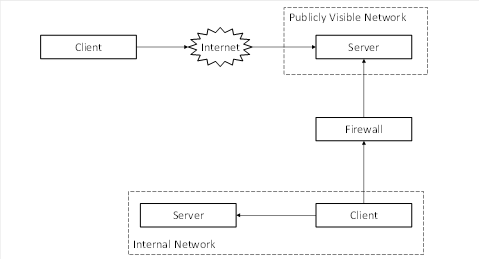
Figure 33 – Discovering Servers Outside a Firewall
In this configuration Servers running on the publicly visible network will have the same network address from the perspective of all Clients which means the URLs returned by DiscoveryServers are not affected by the location of the Client.
In other networks the Administrator will configure the firewall to allow access to selected Servers. An example is shown in Figure 34.
Figure 34 – Discovering Servers Behind a Firewall
In this configuration the address of the Server that the Internet Client sees will be different from the address that the internal Client sees. This means that the Server’s DiscoveryEndpoint would return incorrect URLs to the Internet Client (assuming it was configured to provide the internal URLs).
Administrators can correct this problem by configuring the Server to use multiple HostNames. A Server that has multiple HostNames shall look at the EndpointUrl passed to the GetEndpoints or CreateSession services and return EndpointDescriptions with URLs that use the same HostName. A Server with multiple HostNames shall also return an Application Instance Certificate that specifies the HostName used in the URL it returns. An Administrator may create a single Certificate with multiple HostNames or assign different Certificates for each HostName that the Server supports.
Note that Servers may not be aware of all HostNames which can be used to access the Server (i.e. a NAT firewall) so Clients need to handle the case where the URL used to access the Server is different from the HostNames in the Certificate. This is discussed in more detail in OPC 10000-4.
Administrators may also wish to set up a DiscoveryServer that is configured with the ApplicationDescriptions for Servers that are accessible to external Clients. This DiscoveryServer would have to substitute its own Endpoint for the DiscoveryUrls in all ApplicationDescriptions that it returns when a Client calls FindServers. This would tell the Client to call the DiscoveryServer back when it wishes to connect to the Server. The DiscoveryServer would then request the EndpointDescriptions from the actual Server as shown in Figure 35. At this point the Client would have all the information it needs to establish a secure channel with the Server behind the firewall.
Figure 35 – Using a Discovery Server with a Firewall
In this example, the DiscoveryServer outside of the firewall allows the Administrator to close off the Server’s DiscoveryEndpoints to every Client other than the DiscoveryServer. The Administrator could eliminate that hole as well if it stored the EndpointDescriptions on the DiscoveryServer. This allows an Administrator to configure a system in which no public access is allowed to any application behind the firewall. The only access behind the firewall is via a secure connection.
The DiscoveryServer could also be replaced with a DirectoryService that stores the ApplicationDescriptions and/or the EndpointDescriptions for the Servers behind the firewalls.
A.2 Resolving References to Remote Servers
The UA AddressSpace supports references between Nodes that exist in different Server AddressSpace spaces. These references are specified with a ExpandedNodeId that includes the URI of the Server which owns the Node. A Client that wishes to follow a reference to an external Node should map the ApplicationUri onto an EndpointUrl that it can use. A Client can do this by using the GlobalDiscoveryServer that knows about the Server. The process of connecting to a Server containing a remote Node is illustrated in Figure 36.
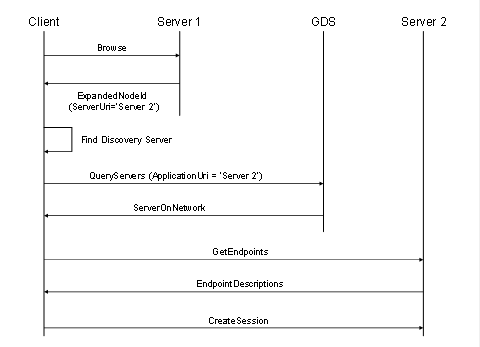
Figure 36 – Following References to Remote Servers
If a GDS not available Client may use other strategies to find the Server associated with the URI.
Annex B
(normative)
NodeSet and Constants
The OPC UA NodeSet includes the complete Information Model defined in this document. It follows the XML Information Model schema syntax defined in OPC 10000-6 and can thus be read and processed by a computer program.
The complete Information Model Schema for this version of this document (including any amendments and errata) can be found here:
http://www.opcfoundation.org/UA/schemas/1.05/Opc.Ua.Gds.NodeSet2.xml
NOTE The latest Information Model schema that is compatible with this version of this document can be found here:
http://www.opcfoundation.org/UA/schemas/Opc.Ua.Gds.NodeSet2.xml
The complete Information Model Schema includes many types which are only used in Service Requests and Responses and should not be used by Servers to populate their Address Space.
This document defines Nodes which are part of the base OPC UA Specification. The numeric identifiers for these Nodes are part of the complete list of identifiers defined in OPC 10000-6.
In addition, this document defines Nodes which are only used by GlobalDiscoveryServers.
The NamespaceUri for any GDS specific NodeIds is http://opcfoundation.org/UA/GDS/
The CSV released with this version of the standards can be found here:
http://www.opcfoundation.org/UA/schemas/1.05/Opc.Ua.Gds.NodeIds.csv
NOTE The latest CSV that is compatible with this version of the standard can be found here:
http://www.opcfoundation.org/UA/schemas/Opc.Ua.Gds.NodeIds.csv
Annex C
(normative)
OPC UA Mapping to mDNS
C.1 DNS Server (SRV) Record Syntax
Annex C describes the OPC UA specific requirements which are above and beyond the more general requirements of the mDNS specification.
mDNS uses DNS SRV records to advertise the services (a.k.a. the DiscoveryUrls for the Servers) available on the network.
An SRV record has the form:
_service._proto.name TTL class SRV priority weight port targetservice: the symbolic name of the desired service. For OPC UA this field shall be one of service names for OPC UA which are defined in Table 115.
Table 115 – Allowed mDNS Service Names
|
Service Name |
Description |
|
_opcua-tcp |
The DiscoveryUrl supports the OPC UA TCP mapping (see OPC 10000-6). This name is assigned by IANA. |
|
_opcua-tls |
The DiscoveryUrl supports the OPC UA WebSockets mapping (see OPC 10000-6). Note that WebSockets mapping supports multiple encodings. If a Client supports more than one encoding it should attempt to use the alternate encodings if an error occurs during connect. This name is assigned by IANA. |
proto: the transport protocol of the desired service; For OPC UA this field shall be ‘_tcp’.
The other fields have no OPC UA specific requirements.
An example SRV record in textual form that might be found in a zone file might be the following:
_opcua-tcp._tcp.example.com. 86400 IN SRV 0 5 4840 uaserver.example.com.This points to a server named uaserver.example.com listening on TCP port 4840 for OPC UA TCP requests. The priority given here is 0, and the weight is 5 (the priority and weights are not important for OPC UA). The mDNS specification describes the rest of the fields in detail.
C.2 DNS Text (TXT) Record Syntax
The SRV record has a TXT record associated with it that provides additional information about the DiscoveryUrl. The format of this record is a sequence of strings prefixed by a length. This specification adopts the key-value syntax for TXT records described in DNS-SD.
Table 116 defines the syntax for strings that may in the TXT record.
Table 116 – DNS TXT Record String Format
|
Key-Value Format |
Description |
|
path=/<path> |
Specifies the text that appears after the port number when constructing a URL. This text always starts with a forward slash (/). |
|
caps=<capability1>,<capability2> |
Specifies the capabilities supported by the Server. These are short (<=8 character) strings which are published by the OPC Foundation (see Annex D). The number of capabilities supported by a Server should be less than 10. |
The MulticastExtension shall convert DiscoveryUrls to and from these SRV records.
An DiscoveryUrl has the form:
scheme://hostname:port/pathscheme: the protocol used to establish a connection.
hostname: the domain name or IPAddress of the host where the Server is running.
port: the TCP port on which the Server is to be found.
path: additional data used to identify a specific Server.
Table 117 – DiscoveryUrl to DNS SRV and TXT Record Mapping
|
URL Field |
Mapping |
||||||
|
scheme |
The scheme maps onto SRV record service field. The following mappings are defined at this time:
The first two are OPC UA service names assigned by IANA. Additional service names may be added in the future. The endpoint shall support the default transport profile for the scheme. |
||||||
|
hostname |
The hostname maps onto the SRV record target field. If the hostname is an IPAddress then it shall be converted to a domain name. If this cannot be done then LDS shall report an error. |
||||||
|
port |
The port maps onto the SRV record port field. |
||||||
|
path |
The path maps onto the path string in the TXT record (see Table 116). |
Suitable default values should be chosen for fields in a SRV record that do not have a mapping specified in Table 117. e.g. TTL=86400, class=IN, priority=0, weight=5
Annex D
(normative)
Server Capability Identifiers
Clients benefit if they have more information about a Server before they connect, however, providing this information imposes a burden on the mechanisms used to discover Servers. The challenge is to find the right balance between the two objectives.
CapabilityIdentifiers are the way this specification achieves the balance. These identifiers are short and map onto a subset of OPC UA features which are likely to be useful during the discovery process. The identifiers are short because of length restrictions for fields used in the mDNS specification. Table 118 is a non-normative list of possible identifiers.
Table 118 – Examples of CapabilityIdentifiers
|
Identifier |
Description |
|
NA |
No capability information is available. Cannot be used in combination with any other capability. |
|
DA |
Provides current data. |
|
HD |
Provides historical data. |
|
AC |
Provides alarms and conditions that may require operator interaction. |
|
HE |
Provides historical alarms and events. |
|
GDS |
Supports the Global Discovery Server information model. |
|
LDS |
The ApplicationType is DiscoveryServer. Only used by a standalone LDS implementation. |
|
DI |
Supports the Device Integration (DI) information model (see DI). |
|
ADI |
Supports the Analyser Device Integration (ADI) information model (see ADI). |
|
FDI |
Supports the Field Device Integration (FDI) information model (see FDI). |
|
FDIC |
Supports the Field Device Integration (FDI) Communication Server information model (see FDI). |
|
PLC |
Supports the PLCopen information model (see PLCopen). |
|
S95 |
Supports the ISA95 information model (see ISA-95). |
|
RCP |
Accepts reverse connect requests as defined in OPC 10000-6. |
|
PUB |
Supports the Publisher capabilities defined in OPC 10000-14. |
|
PSC |
Supports the PubSub Configuration model defined in OPC 10000-14. |
|
ALIAS |
Supports the Alias Names capabilities defined in OPC 10000-17. |
|
SKS |
Supports the Security Key Server (SKS) capabilities defined in OPC 10000-14. |
|
REGISTRAR |
Supports the Registrar model defined in OPC 10000-21. |
|
DCA |
Supports the Device Configuration Application (DCA) model defined in OPC 10000-21. |
The normative set of CapabilityIdentifiers can be found here:
http://www.opcfoundation.org/UA/schemas/ServerCapabilities.csv
This CSV will be changed to meet the needs of companion specifications and will not trigger an update to this document. Application developers shall always use the linked CSV.
Applications that support the PUB capability can send PubSub Messages but may not support the PubSub information model.
Client applications that support the RCP capability allow Servers to connect, however, they do not support GetEndpoints Service.
Annex E
(normative)
DirectoryServices
E.1 Global Discovery via Other Directory Services
Many organizations will deploy DirectoryServices such as LDAP or UDDI to manage resources available on their network. A Client can use these services as a way to find Servers by using APIs specific to DirectoryService to query for UA Servers or UA DiscoveryServers available on the network. The Client would then use the URLs for DiscoveryEndpoints stored in the DirectoryService to request the EndpointDescriptions necessary to connect to an individual servers
Some implementations of a GlobalDiscoveryServer will be a front-end for a standard Directory Service. In these cases, the QueryApplications method will return the same information as the DirectoryService API. The discovery process for this scenario is illustrated in Figure 37.
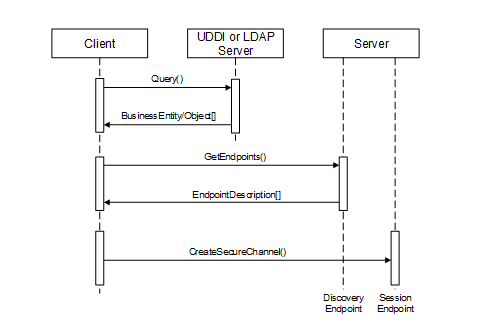
Figure 37 – The UDDI or LDAP Discovery Process
UDDI registries contain businessEntities which provide one or more businessServices. The businessServices have one or more bindingTemplates. bindingTemplates specify a physical address and a Server Interface (called a tModel). Figure 38 illustrates the relationships between the UDDI registry elements.
Figure 38 – UDDI Registry Structure
This specification defines standard tModels which shall be referenced by businessServices that support UA. The standard UA tModels shown in Table 119.
Table 119 – UDDI tModels
|
Name |
domainKey |
uuidKey |
|
Server |
uddi:server.ua.opcfoundation.org |
uddi:AA206B41-EC9E-49a4-B789-4478C74120B5 |
|
DiscoveryServer |
uddi:discoveryserver.ua.opcfoundation.org |
uddi:AA206B42-EC9E-49a4-B789-4478C74120B5 |
The name of the businessService elements should be the same as the ApplicationName for the UA application. The serviceKey shall be the ApplicationUri. At least one bindingTemplate shall be present and the accessPoint shall be the URL of the DiscoveryEndpoint for the UA server identified by the serviceKey. Servers with multiple DiscoveryEndpoints would have multiple bindingTemplates
A UDDI registry will generally only contain UA servers, however, there are situations where the administrators cannot know what Servers are available at any given time and will find it more convenient to place a DiscoveryServer in the registry instead.
LDAP servers contain objects organized into hierarchies. Each object has an objectClass which specifies a number of attributes. Attributes have values which describe an object. Figure 39 illustrates a sample LDAP hierarchy which contains entries describing UA servers.
Figure 39 – Sample LDAP Hierarchy
UA applications are stored in LDAP servers as entries with the UA defined objectClasses associated with them. The schema for the objectClasses defined for UA are shown in Table 120.
Table 120 – LDAP Object Class Schema
|
Name |
LDAP Name |
Type |
OID |
|
Application |
opcuaApplication |
Structural |
1.2.840.113556.1.8000.2264.1.12.1 |
|
ApplicationName |
cn |
String (Required) |
Built-in |
|
HostName |
dNSName |
String |
Built-in |
|
ApplicationUri |
opcuaApplicationUri |
Name |
1.2.840.113556.1.8000.2264.1.12.1.1 |
|
ApplicationType |
opcuaApplicationType |
Boolean |
1.2.840.113556.1.8000.2264.1.12.1.3 |
|
DiscoveryUrl |
opcuaDiscoveryUrl |
String, Multi-valued |
1.2.840.113556.1.8000.2264.1.12.1.4 |
This OID is globally unique and can use used with any LDAP implementation.
Administrators may extend the LDAP schema by adding new attributes.
Annex F
(normative)
Local Discovery Server
F.1 Certificate Store Directory Layout
A recommended directory layout for Applications that store their Certificates on a file system is shown in Table 121. The Local Discovery Server shall use this structure.
This structure is based on the rules defined in OPC 10000-6.
Table 121 – Application Certificate Store Directory Layout
|
Path |
Description |
|
<root> |
A descriptive name for the TrustList. |
|
|
|
|
<root>/own |
The Certificate store which contains private keys used by the application. |
|
<root>/own/certs |
Contains the X.509 v3 Certificates associated with the private keys in the ./private directory. |
|
<root>/own/private |
Contains the private keys used by the application. |
|
|
|
|
<root>/trusted |
The Certificate store which contains trusted Certificates. |
|
<root>/trusted/certs |
Contains the X.509 v3 Certificates which are trusted. |
|
<root>/trusted/crl |
Contains the X.509 v3 CRLs for any Certificates in the ./certs directory. |
|
|
|
|
<root>/issuer |
The Certificate store which contains the CA Certificates needed for validation. |
|
<root>/issuer/certs |
Contains the X.509 v3 Certificates which are needed for validation. |
|
<root>/issuer/crl |
Contains the X.509 v3 CRLs for any Certificates in the ./certs directory. |
|
|
|
|
<root>/rejected |
The Certificate store which contains certificates which have been rejected. |
|
<root>/rejected/certs |
Contains the X.509 v3 Certificates which have been rejected. |
All X.509 v3 certificates are stored in DER format and have a ‘.der’ extension on the file name.
All CRLs are stored in DER format and have a ‘.crl’ extension on the file name.
Private keys should be in PKCS #12 format with a ‘.pfx’ extension or in the OpenSSL PEM format. The OpenSSL PEM format is not formally defined and should only be used by applications which use the OpenSSL libraries to implement security. Other private key formats may exist.
The base name of the Private Key file shall be the same as the base file name for the matching Certificate file stored in the ./certs directory.
A recommended naming convention is:
<CommonName>-[<Algorithm>-<Thumbprint>].(der | pem | pfx)
Where the CommonName is the CommonName of the Certificate, the Algorithm is the key-pair algorithm and the Thumbprint is the CertificateDigest of the certificate formatted as a hexadecimal string.
The currently supported key-pair algorithms are: RSA, nistP256, nistP384, brainpoolP256r1, brainpoolP384r1, curve25519 and curve448.
F.2 Installation Directories on Windows
The LocalDiscoveryServer executable shall be installed in the following location:
%CommonProgramFiles%\OPC Foundation\UA\Discovery
where %CommonProgramFiles% is the value of the CommonProgramFiles environment variable on 32-bit systems. On 64-bit systems the value of the CommonProgramFiles(x86) environment variable is used instead.
The configuration files used by the LocalDiscoveryServer executable shall be installed in the following location:
%CommonApplicationData%\OPC Foundation\UA\Discovery
where %CommonApplicationData% is the location of the application data folder shared by all users. The exact location depends on the operating system, however, under Windows 7 or later the common application data folder is usually C:\ProgramData.
The certificates stores used by the LocalDiscoveryServer shall be organized as described in F.1. The root of the certificates stores shall be in the following location:
%CommonApplicationData%\OPC Foundation\UA\pki
Annex G
(normative)
Application Setup
G.1 Application Setup with PullManagement
Applications that use PullManagement (see 7.3) to setup their configuration need to know the location of the CertificateManager which they can use to request Certificates and download TrustLists. This location may be auto-discovered via mDNS by looking for Servers with the GDS capability (see Annex D) or by providing a URL via and out of band mechanism such as e-mail or a web page.
Once the location is known the Application can connect to the CertificateManager and establish a SecureChannel. The Application may choose to connect even if it has not been pre-configured to trust the CertificateManager, however, Applications should not provide any secret information to a CertificateManager that is not trusted.
After establishing a SecureChannel with the CertificateManager, the Application needs demonstrate that it has permission to request Certificates and TrustLists. This permission may be granted if the CertificateManager is pre-configured with CAs and/or Certificates used by Applications on the network (see OPC 10000-21).
Permissions can also be granted if the Application provides user credentials that give it ApplicationAdmin rights (see 7.2). If the CertificateManager is not pre-configured to be trusted by the Application then the Application shall not provide any secrets, such as passwords, to the CertificateManager. It may use UserIdentityTokens, such as X509IdentityTokens, that do not require a secret to be sent to a potentially malicious CertificateManager.
If an Application prompts the user to enter the credentials to use it shall not persist these credentials for use in the future.
A CertificateManager may accept a CertificateRequest from unknown Applications that provide anonymous credentials if there is a process for manual review by a CertificateManager administrator. The Certificate is not issued until the CertificateRequest is approved.
Once an Application has received its first Certificate then the Certificate can be used in lieu of user credentials when the Application needs to renew its Certificate or update its TrustList.
G.2 Application setup with the PushManagement
Servers that use PushManagement (see 7.4) to initialize their configuration shall have a default Certificate assigned before the PushManagement process can start.
In addition, Servers shall go into an application setup state (for example, see OPC 10000-21) that makes it possible for remote Clients to update the security configuration via the ServerConfiguration Object (see 7.10.3). When a Server is in the application setup state it shall limit the available functionality. The value of the ServerState Property shall be NoConfiguration.
It is good practice for a Client to always check the ServerState after creating a Session. If the ServerState is NoConfiguration then the Client should check the InApplicationSetup Property on the ServerConfiguration Object to confirm that the Server is in the application setup state.
In some cases, cached user credentials will no longer work because of Server has been reset. Clients can determine that the Server is in the Application Setup state by reconnecting using Anonymous user credentials and checking the ServerState Property.
Once a Server has been configured it automatically leaves the application setup state. This step is necessary to ensure that security is not compromised.
A possible workflow for implementing the Application Setup state is:
1. A flag in the configuration file that defaults to ON;
2. Always allow Clients to connect securely and assign the SecurityAdmin Role to Anonymous user if the TrustList is empty;
3. Connect to the Server after toggling a physical switch on the device which enables access for a short period.
4. Add Client ApplicationUri to SecurityAdmin Role, remove Anonymous from SecurityAdmin Role;
5. Provide a new Certificate and TrustList;
6. Set the configuration flag to OFF.
Subsequent updates to TrustLists or Certificates can be allowed if the Client has a trusted Certificate and has access to the SecurityAdmin Role. During the setup state the Client shall configure the SecurityAdmin Role. If the Client fails to do this Server shall stay in application setup state.
In some cases, the Application distributor or installer will know the CA used to sign the Certificate used by the CertificateManager and can add this CA to the Application’s TrustList during installation. If practical, this approach provides the best protection against accidental configuration by malicious Clients.
If the device is automatically discovered by the CertificateManager the CertificateManager needs some way to ensure that the device belongs on the network. The manufacturer can provide a unique ApplicationInstance Certificate during manufacture and provide the serial numbers to the device installer. The installer would then register the serial number or Certificate with the CertificateManager. When the CertificateManager discovers the device it would check that the Certificate is for one of the pre-authorized devices and continue with automatic onboarding of the device. OPC 10000-21 formally defines mechanisms for onboarding new devices when they are connected to the network.
If a Private Key is stored on a regular file system it shall be protected from unauthorized access. This is best done by setting operating system permissions on the private key file that deny read/write access to anyone who is not using an account authorized to run the Application.
In some cases, additional protection can be added by protecting the Private Key with a password. Saving Private Key passwords in files should be avoided. This mode may also work in conjunction with “smart cards” that use hardware to protect the Private Key.
In addition to the Private Key, Applications shall be protected from unauthorized updates to their TrustList. This can also be done by setting operating system permissions on the directory where the TrustList is stored that deny write access to anyone who is not using an account authorized to administer the Application.
Finally, Applications may depend on one or more configuration files and/or databases which tell them where their TrustList and Private Key can be found. The source of any security related configuration information shall be protected from unauthorized updates. The exact mechanism used to implement these protections depends on the source of the information.
Annex H
(informative)
Comparison with RFC 7030
RFC 7030 (Enrolment over Secure Transport or EST) defines a mechanism for the distribution of Certificates to devices. This appendix summarizes the capabilities provided by EST and how the same capabilities are provided by the CertificateManager defined in 7.
In EST a web operation returns the CA certificates. In OPC UA the CA Certificates are returned when the CertificateManager client reads the TrustList assigned to the application from the CertificateManager. Prior to these operations the Client should verify that the server is authorized to provide CAs. Table 122 compares how EST clients verify the EST server with how CertificateManager clients verify a CertificateManager.
Table 122 – Verifying that a Server is allowed to Provide Certificates
|
EST |
OPC UA |
|
Compare the URL for the EST server with the HTTPS certificate returned in the TLS handshake. |
Compare the URL for the CertificateManager with the OPC UA Certificate returned in GetEndpoints. |
|
Preconfigure the client to trust the EST Server’s HTTPS certificate. |
Preconfigure the client by adding the CertificateManager Certificate to the client TrustList. |
|
Manual approval of the CA Certificate after comparing the certificate with out of band information. |
Manual approval of the CertificateManager Certificate after comparing the Certificate with out of band information. |
|
Pre-shared credentials for use with certificate-less TLS. |
No equivalent. |
In EST a web operation is used to enrol a client. The EST server authenticates and authorizes the EST client before allowing the operation to proceed. In OPC UA, a Method is used to request a Certificate. The CertificateManager also authenticates and authorizes the client before allowing the operation to proceed. Table 123 compares how EST servers verify the EST client with how a CertificateManager verifies a CertificateManager client.
Table 123 – Verifying that a Client is allowed to request Certificates
|
EST |
OPC UA |
|
TLS with a client certificate which is previously issued by the EST server. |
The CertificateManager client has a previously certificate previously issued by the GDS. |
|
TLS with a previously installed certificate which is trusted by the EST server. |
The CertificateManager client has a certificate which is trusted by the CertificateManager. |
|
Shared credentials distributed out of band which are used for certificate-less TLS. |
No equivalent. |
|
HTTPS username/password authentication. |
The CertificateManager client provides appropriate user credentials when it establishes the session. |
H.4 Client Certificate Reissuance
In EST a certificate issued by the EST server can be used as an HTTPS client certificate. This can be used to authorize the re-issue of the certificate. In OPC UA a certificate issued by the GDS can be used to establish a secure channel. This would then allow the GDS client to request that the certificate be re-issued.
In both EST and OPC UA clients can fall back to the authentication mechanisms used for Initial Enrolment if it is not possible to use the current certificate to establish a secure channel with the server.
Both EST and OPC UA allow clients to request new private keys. Both specifications require that encryption be used when returning private key data.
EST allows clients to explicitly request that separate encryption be applied to the private key. The algorithms are specified in the CSR (certificate signing request).
OPC UA allows clients to password protect the key (which uses encryption), however, OPC UA does not allow the client to directly specify the algorithm used. That said, the envelope used to transport private keys can be specified with the PrivateKeyFormat parameter and the set of envelope formats supported by the CertificateManager is published in the AddressSpace. It is expected that the envelope format will specify the algorithms used either by explicitly encoding the algorithm within the envelope or as part of the definition of the envelope.
H.6 Certificate Signing Request (CSR) Attributes Request
EST allows the client to request the list of CSR attributes the EST server supports. The attributes can indicate what additional metadata the client can provide or the algorithms that will be used.
In OPC UA the CSR metadata required is fixed by the specification and there is no mechanism to publish extensions. Clients are free to include additional metadata in the CSR, however, the CertificateManager may ignore it.
There is no mechanism in OPC UA to publish the algorithms which need to be used for the CSR, however, the CertificateManager will reject CSRs that do not meet its requirements.
____________